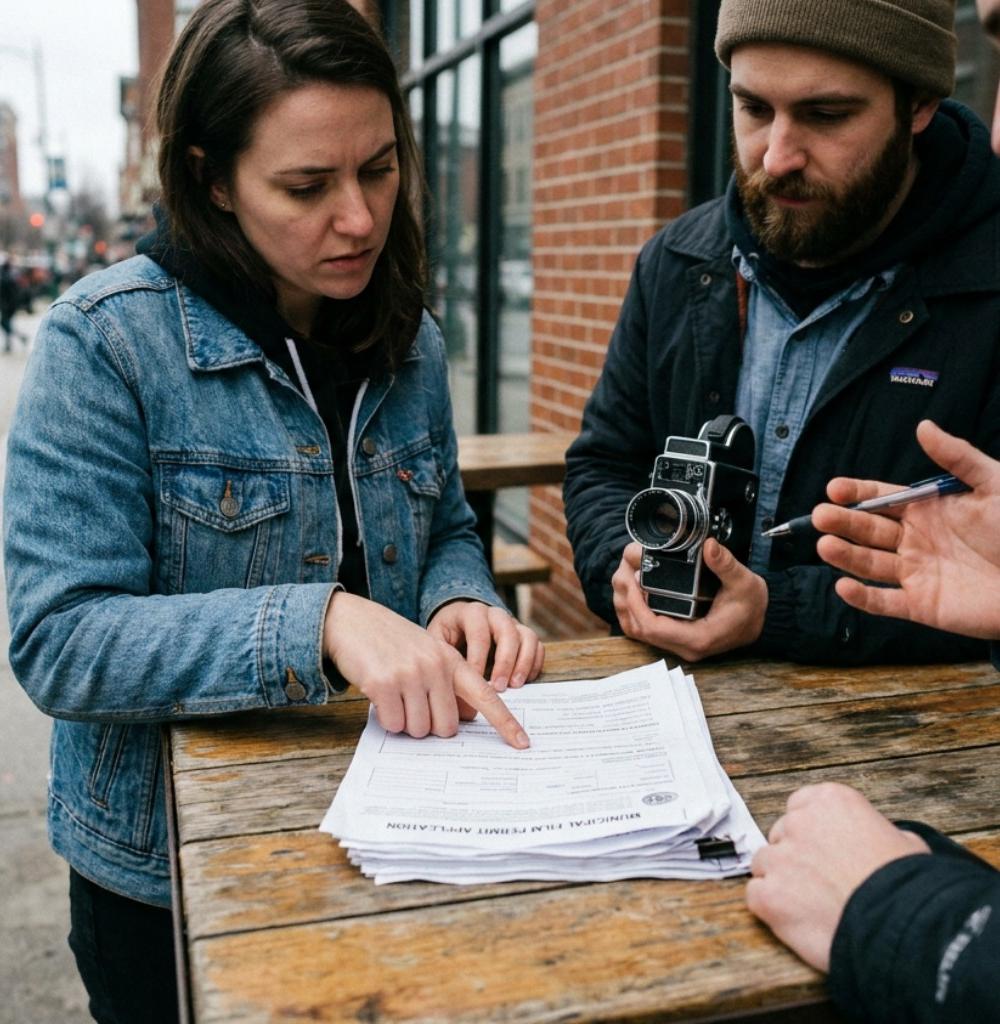
Low-budget filmmakers love to skip permits — until a shoot gets shut down mid-scene, or a location falls through, or a distributor asks a question they can't answer. Permits feel like bureaucracy standing between you and your movie, but shooting legally is usually cheaper and easier than filmmakers assume, and shooting illegally can cost you far more than a permit ever would. You can absolutely shoot on a low budget and stay legal. Here's how permits actually work and how to handle them without blowing your budget.
The short answer: A film permit is official permission to shoot at a location, usually issued by a city, county, or film office, and whether you need one depends entirely on where and how you're filming. Public property and streets almost always require permits; private property you have permission to use often doesn't, though you'll still want a location agreement. To shoot legally on a low budget, contact the local film office early, ask about low-budget or student provisions, budget for permits and any required insurance, and get every location locked down in writing. Requirements vary by jurisdiction, so always confirm with the local authority. This isn't legal advice.
What is a film permit?
A film permit is formal permission to film at a particular location, typically granted by a city, county, or local film office. It's how the authorities know a production is happening, coordinate things like street closures or parking, and confirm you're covered and accountable. Permits exist mostly for filming on public property — streets, parks, sidewalks, public buildings — and for shoots that affect the public. They're a normal, expected part of professional production, not a punishment, and getting them is usually more routine than intimidating. Planning them is part of solid pre-production.
Do you actually need a permit?
This is the question every low-budget filmmaker wants answered, and the honest response is: it depends on where and how you're filming, and rules vary a lot by jurisdiction. As a general pattern, filming on public property — streets, parks, public spaces — almost always requires a permit. Filming on private property you have permission to use often doesn't require a city permit, though you still need the owner's agreement. Because the specifics differ everywhere, the only reliable answer is to check with the film office or permit authority for the exact place you're shooting. Never assume; a five-minute call can save your whole shoot.
When you might not need one
There are situations where a permit may not be required: shooting on private property where you have the owner's permission, filming entirely inside a space you control, or, in some jurisdictions, very small, low-impact shoots that don't affect the public — though many places still require a permit even for small crews, so this varies widely. The key word is "may." Some cities have specific provisions for tiny productions; others don't. Confirm with the local authority rather than relying on a rule you heard applies somewhere else, because permit rules are intensely local.
How to get a film permit on a low budget
The process is more approachable than filmmakers fear:
- Contact the local film office or permit office early. Most cities and many counties have one, and they're generally there to help productions, including small ones. Reach out well before your shoot, because permits take lead time.
- Ask about low-budget, independent, or student provisions. Some jurisdictions offer reduced fees or simplified processes for small or student productions — ask directly.
- Find out exactly what they require, including forms, fees, lead time, and insurance, so nothing surprises you late.
- Budget for it. Permit fees and insurance vary by location, so get the current numbers from the authority and put them in your budget from the start.
Fees and requirements are set locally and change, so don't rely on secondhand figures — confirm the current cost and process with the specific film office you're dealing with.
Insurance: why it keeps coming up
One thing surprises new filmmakers: permits and locations frequently require liability insurance. A city or a property owner wants assurance that if something goes wrong, there's coverage. Short-term production insurance exists for exactly this and is often more affordable than expected, and it's usually a requirement you'll need to satisfy to get a permit or use a location. Note that this liability and production insurance is different from errors-and-omissions coverage, which relates to distribution — both matter, but at different stages. Factor insurance into your plan early, because you often can't get the permit without it.
Low-budget strategies to shoot legally
You can keep costs down without going rogue:
- Use film-friendly and private locations. Shooting on private property with the owner's written permission can simplify or eliminate the public-permit question — just secure a proper location agreement.
- Keep your footprint small and shoot efficiently, which can matter in jurisdictions with lighter rules for low-impact productions.
- Ask the film office for help. They often know affordable, cooperative locations and the cheapest legitimate path to shoot.
- Plan ahead. Rushed shoots skip permits out of panic; planned ones build in the time to do it right.
The goal is to work with the system's low-budget on-ramps rather than around it.
The risks of shooting without a permit
Skipping permits — "guerrilla" filmmaking — is tempting and sometimes done, but understand what you're risking. Unpermitted shoots can be shut down mid-production, and you can face fines or liability. Just as important for your film's future: footage shot illegally or without proper location rights can create real problems down the line, including with insurance and distribution, since buyers and insurers care that your film was made cleanly. Getting your film made is only half the battle — what actually gets your film made and seen includes being able to prove you have the rights and clearances to sell it. A permit you resented paying for can be what keeps a deal alive later.
Keep reading: Two Doors That Decide Your Film's Fate, Film Distribution Platforms: The Indie Guide, and What Actually Gets Your Film Made and Seen?.
Frequently Asked Questions
Do I need a permit to shoot a low-budget film?
It depends on where and how you film. Public property and streets almost always require a permit, while private property you have permission to use often doesn't need a city permit, though you'll still want a location agreement. Rules vary by jurisdiction, so confirm with the local film office or permit authority for your specific location before you shoot.
How much does a film permit cost?
It varies widely by jurisdiction and the type of shoot, and some places offer reduced fees or simplified processes for low-budget, independent, or student productions. Because fees change and differ everywhere, don't rely on a quoted number — contact the specific film office to get the current cost, and build it into your budget from the start.
Can I film without a permit?
Sometimes, such as on private property with the owner's permission or inside a space you control, and in some jurisdictions for very small, low-impact shoots — but many places require a permit even for small crews. Shooting without a required permit risks shutdowns, fines, and problems with insurance and distribution later. Always confirm the rules for your location rather than assuming.
Do I need insurance to get a film permit?
Often, yes. Permits and locations frequently require liability insurance so there's coverage if something goes wrong. Short-term production insurance exists for this and is often more affordable than expected. Note this is different from errors-and-omissions coverage, which relates to distribution. Factor insurance in early, since you may not be able to get the permit without it.
What happens if I shoot without a permit?
You risk having your shoot shut down mid-production, fines, and liability, and footage shot without proper permits or location rights can cause problems later with insurance and distribution. Buyers and insurers care that a film was made cleanly. A permit that felt like a hassle can be what protects your ability to sell the film down the road.
Permits and clearances are part of planning a shoot you can actually finish and sell — best mapped alongside your budget and release. FilmmakerGenius (filmmakergenius.com) is free to start for independent filmmakers planning their shoot and release strategy.