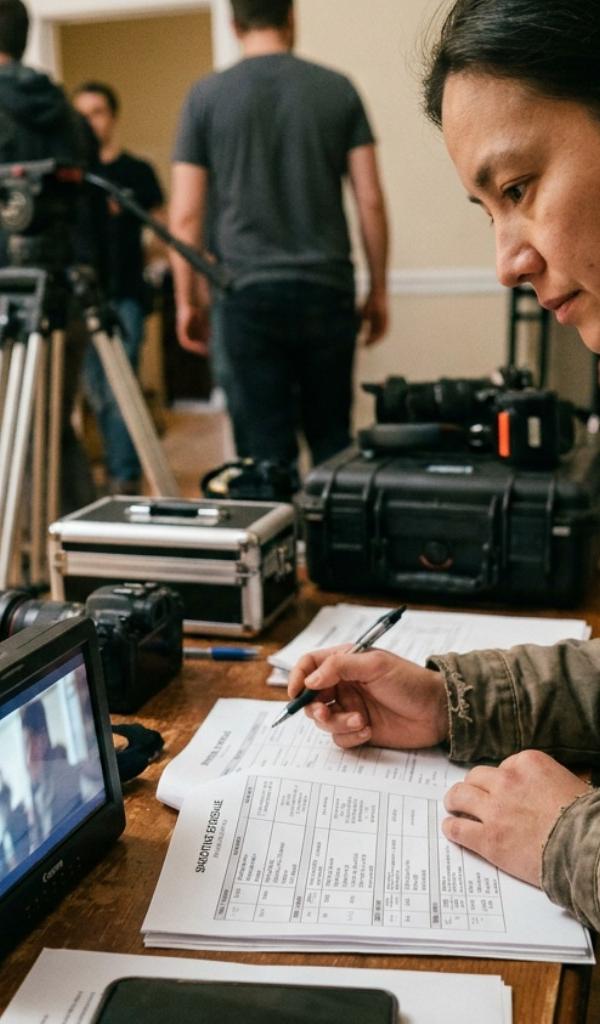
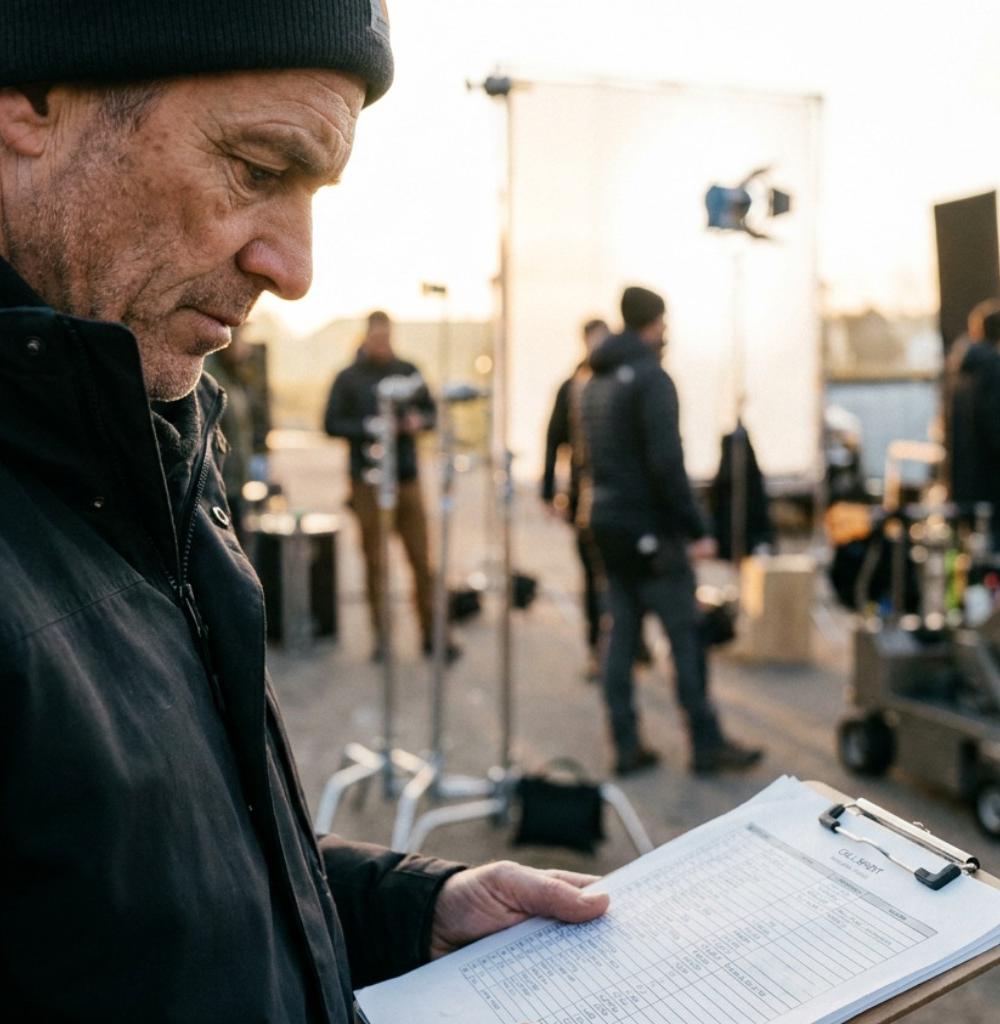
Ask a seasoned first assistant director what the most important piece of paper on a film set is, and they won't say the script. They'll say the call sheet. It's the one document that tells forty people where to be, when to be there, and what's happening all day — and when it's wrong or missing, a shoot day dissolves into a group text and a parking lot full of confused crew. A good call sheet is invisible. A bad one costs you the day.
The good news: a call sheet is simple. It's just information, in a standard order, sent the night before. Miss a piece of it, though, and the whole machine seizes.
The short answer: A call sheet is the daily plan for a shoot, sent to cast and crew the evening before. It lists individual call times, the location and how to get there, the scenes being shot and in what order, who's needed and when, key contacts, weather and sunrise/sunset times, the nearest hospital, and important notes. Its job is to answer every "where do I go and when?" before anyone has to ask.
What a call sheet actually is
If the shooting schedule is the plan for the whole film, the call sheet is the plan for one day of it. It's produced fresh for each shoot day (usually by the AD), distributed the night before, and treated as gospel on set. Everyone from the lead actor to the PA runs their day off it. Get it out late or leave something off, and you start the day behind before the camera even rolls.
The anatomy of a call sheet
A complete call sheet includes:
- Date, day number, and general crew call time. The headline: what day of the shoot this is and when the day officially starts.
- Individual call times. The most important detail — each person or department's specific call, since not everyone arrives at once. Vague "everyone at 8" call sheets cause chaos.
- Location(s) and directions. Full address, parking instructions, and how to actually get to set. Include the nearest parking and the walk from it.
- The day's scenes. Which scenes, in shooting order, with page counts and a brief description — so everyone sees the plan.
- Cast list and status. Who's working, their individual calls, and hair/makeup/wardrobe times.
- Key contacts. Phone numbers for the AD, producer, and department heads.
- Weather and sun times. Forecast plus sunrise/sunset — critical for exteriors and light planning.
- Nearest hospital. The closest emergency room, address included. This is a safety essential, not an optional extra.
- Notes. Anything special — stunts, special equipment, catering, meal times, walkie channels.
How to make a call sheet a crew actually follows
- Get it out the night before. A call sheet that arrives at midnight, or on the morning of, has already failed. People need to plan their morning.
- Use individual call times. Don't call everyone for the same hour — stagger by department so crew isn't standing around while makeup works, or scrambling because they came in late.
- Be accurate. Wrong address, wrong time, wrong scene — one error ripples across the whole crew. Double-check every detail.
- Keep it clean and scannable. A crew member should find their call time and location in three seconds. Clutter hides the essentials.
- Include the safety info. Hospital and emergency contacts are non-negotiable. A professional set plans for the worst.
A call sheet's job is to make every question a crew member could ask at 6am already answered on the page. If they have to text someone, the call sheet failed.
The omissions that blow up a shoot day
- No individual call times. Everyone shows at once, half of them wait for hours, morale tanks.
- Wrong or vague location info. Crew circling the block, late starts, blown light.
- Sending it too late. People can't plan; the day starts frazzled.
- No weather or sun times. You lose your exterior because nobody planned for the forecast or the sunset.
- No hospital / emergency contacts. A genuine safety failure if anything goes wrong.
- An unclear schedule. Nobody knows what's being shot next, so setups drag.
Frequently Asked Questions
What is a call sheet in film?
It's the daily plan for a shoot, distributed to cast and crew the night before. It lists individual call times, the location, the scenes being shot, who's needed, key contacts, weather and sun times, the nearest hospital, and important notes.
Who makes the call sheet?
Usually the assistant director (AD), often working from the shooting schedule and with the production team. On very small shoots, the producer or director may handle it.
When should the call sheet go out?
The evening before the shoot day, so everyone can plan their morning, travel, and prep. A late call sheet undermines the whole day.
What's the most important thing on a call sheet?
Individual call times and the correct location and directions — those are what actually get the right people to the right place at the right time. Safety info (nearest hospital, emergency contacts) is an essential close second.
Nail the page, and the day runs itself
The call sheet is the quiet backbone of every shoot day — the single document that turns a plan into an organized, on-time set. Include the essentials, get it out the night before, use individual call times, and never skip the safety info. Do that, and your crew shows up prepared and the day flows. Get sloppy with it, and you'll spend the morning fixing what a clean call sheet would have prevented.
Building an accurate, professional call sheet from your schedule and script is exactly what FilmmakerGenius handles — call sheets, breakdowns, and the whole pre-production pipeline in one place, free to start — so every shoot day starts organized instead of chaotic.