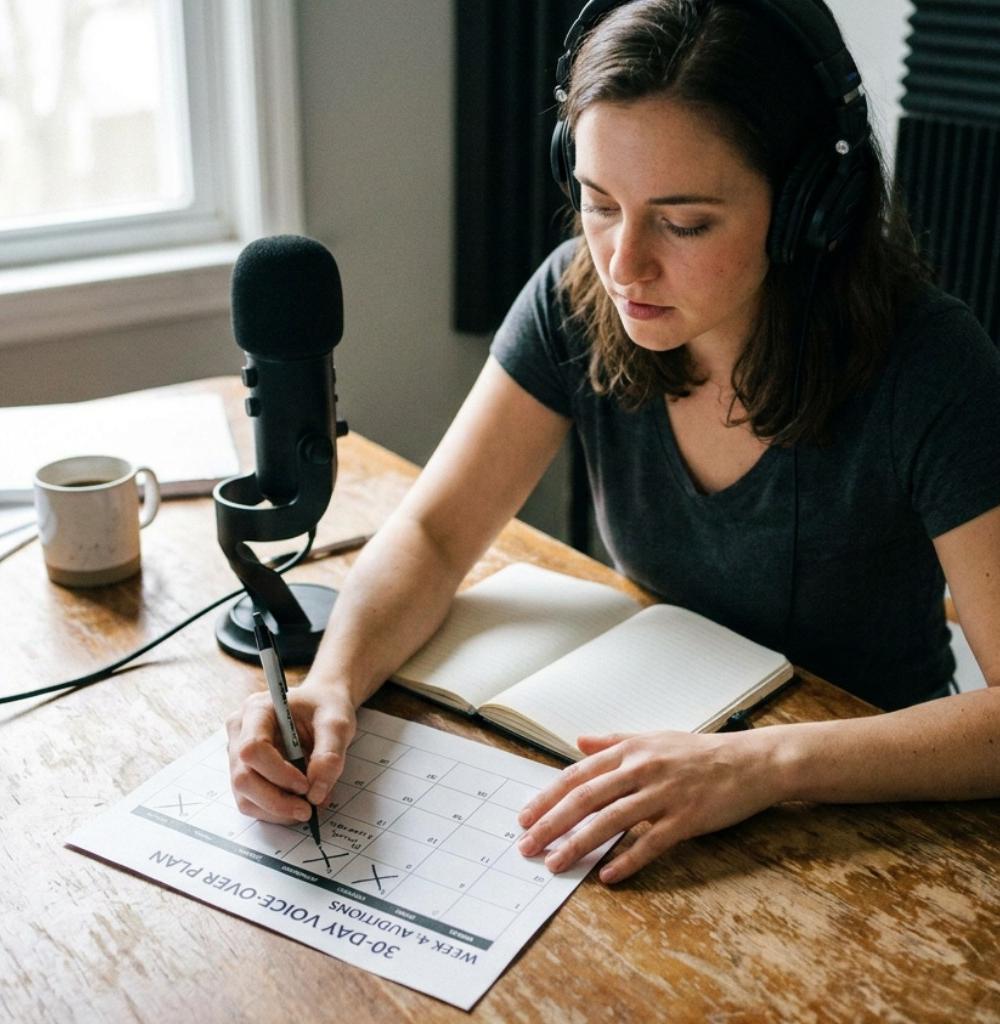
You don't need a year to break into voice over. You don't need to move to a bigger market, save up for a studio, land an agent, or wait until you "feel ready." You need thirty focused days — because the barriers that used to make this a years-long slog have collapsed, and the tools are already sitting in your hands. Everything expensive and hard, you already did when you built a self-tape practice. What's left is a month of deliberate work that takes you from "I've been quietly ignoring this" to "I have real auditions out in the world." Here's exactly how that month goes, week by week.
Week 1 — Build the Booth and the Ear
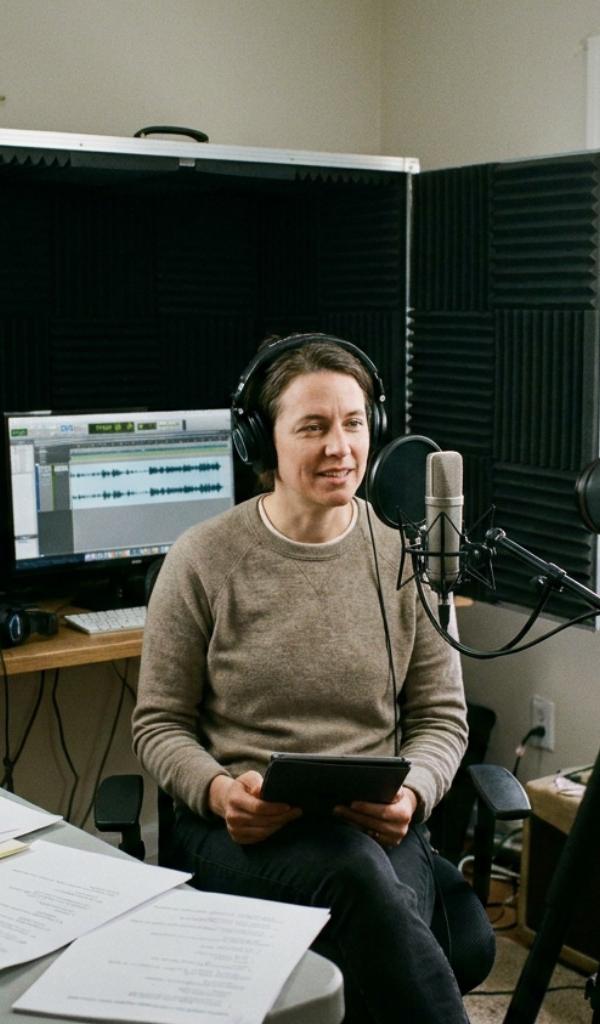
This week is about turning your self-tape corner into a working voice-over booth and learning to hear like a pro. Treat your space: pack a closet with hanging clothes or build a blanket-draped corner, and run the clap test repeatedly — clap, listen for ring, add soft material, clap again — until the echo is dead and flat. That's your booth, free. Set up your USB mic with a consistent distance (mark the spot) and a pop filter. Then spend a couple of evenings learning the basics of Audacity or GarageBand: trim silence off the ends, remove clicks and stray breaths, normalize your level, export a clean file. These are small skills that take one afternoon each. Finally, record a baseline read — any script, performed honestly — and save it. Not to judge it, but so that at the end of the month you can hear how far you moved. Week 1 has no performing goal. It has an infrastructure goal: by Sunday, you can capture clean, professional-sounding audio on demand.
Week 2 — Reps and Range
Now you build the muscle, and the rule is daily. Read out loud every single day — commercial copy, narration passages, animation sides, junk mail, cereal boxes, whatever's in reach — training the see-it-understand-it-perform-it reflex until it's instant. Run the five-ways drill on one 30-second script: hard sell, intimate whisper, best-friend confession, bored teenager, confident expert — same words, five different humans. Load VO copy into your AI scene partner and drill cold reads against it, exactly like on-camera sides. And here's the non-negotiable habit that makes this week actually work: record yourself, listen back honestly, and note what's inconsistent — where your level drifts, where the read goes flat, where you lose the character. Self-critique is uncomfortable and it's the entire engine of improvement. This is the week you stop thinking about voice acting and start doing it, badly at first, better by Friday.
Week 3 — Find Your Lane
You can't be all twelve genres, and this is the week you stop trying. Listen honestly to your own instrument and identify the two genres it fits best — warm and conversational leans commercial and e-learning; big and flexible leans animation and games; steady and intelligent leans narration and audiobooks. Pick your two, and drill those specifically instead of scattering your energy. Study how great reads in those categories actually sound. And this week, learn to hit a real platform spec cleanly — ACX is the perfect target because its loudness and noise-floor standards are strict, public, and checkable, so meeting them forces your room treatment and editing to genuinely professional level. By Sunday you should be able to produce a clean, on-spec read in your chosen lane that you'd actually be willing to send to a stranger.
Week 4 — First Auditions
This is the week the plan becomes real, and it's the week most people would chicken out of — so don't. Set up your profiles: ACX for audiobooks, one pay-to-play platform (Voices or Voice123), and your existing casting sites (Casting Networks, Backstage, Actors Access — which already post voice work you've been walking past). Then do the thing: submit real auditions. This week. Not someday. Record custom auditions for actual posted jobs and send them into the world, imperfect and terrifying as that feels. The goal of month one was never to book — it was to be in the game, with live submissions out there. And then you keep the flywheel turning: reliability, clean files, fast direction-taking, repeat. Every audition is a rep, every rep sharpens the next, and the reviews and relationships compound from here.
What 30 Days Does and Doesn't Do
Be clear-eyed about what thirty days does and doesn't do. It won't make you a master — mastery is years, and anyone who promises otherwise is lying. But it will make you something specific and valuable: a working beginner with a real booth, a developing skill, a chosen lane, and live auditions actively out in the world. And that is infinitely further than the actor still telling themselves — for the fifth year running — that voice over is someone else's career. The gap between those two people isn't talent. It's thirty days of doing instead of wondering. You already own the hard part. Start the clock.
Day one is turning the rig you already own into a booth. HowToSelfTape is free to start and walks you through the space, mic, and daily reps that make this 30-day plan actually happen.