
Most independent filmmakers think getting their film on Amazon Prime Video is the finish line. It isn't. It's a parking lot. Thousands of films sit there, invisible, racking up zero streams and zero dollars — because the filmmakers handed Amazon exactly what they asked for on paper, without understanding what Amazon actually wants from your film at a deeper, commercial level. The difference between a film that earns and a film that collects digital dust comes down to a handful of decisions you should have made before you ever hit record.
A film that fits Amazon's algorithm is not a compromise — it's a strategy. Compromise is what happens when you ignore the algorithm and then beg it to notice you.
What Amazon Actually Wants From Your Film: The Short Answer
Amazon wants films that attract and retain subscribers, belong to a clearly searchable genre, have a competitive thumbnail and title, and come backed by enough external audience signal — reviews, festival laurels, social proof — to justify surfacing them. Quality matters, but discoverability is the engine. A technically imperfect film with a laser-focused niche outperforms a beautiful film with no audience identity every single time.
Why Amazon Is Not a Film Festival, and Treating It Like One Will Sink You
The first mistake most indie filmmakers make is applying a festival mindset to a retail platform. At a festival, a programmer watches your film and champions it. On Amazon, an algorithm decides whether to show your thumbnail to a stranger scrolling at 10:47 on a Wednesday night. Those are two entirely different gatekeepers with entirely different appetites.
Amazon Prime Video's recommendation engine works a lot like any other product search: it favors items with clear category signals, strong early engagement, and low return rates. A "return rate" in streaming terms means someone clicked play and clicked away in the first eight minutes. That early dropout tanks your film's ranking fast. So the question isn't just "Is my film good?" It's "Does my film deliver on the promise its thumbnail and genre tag make in the first scene?"
That's a production decision, not a post-production one. It starts at the script stage. Filmmakers who think about genre discipline at the screenplay level are already ahead of everyone else in the distribution conversation.
The Metadata Problem Nobody Talks About in Film School
Say you've made a tight, 78-minute psychological thriller. You're proud of it. But when you submit it through an aggregator, you tag it as "Drama / Thriller / Horror" because you want to cast the widest possible net. Amazon's system now has no clean signal. The drama audience finds it too scary. The horror audience finds it too slow. The thriller audience gets served something else first. Your film gets buried under its own ambiguity.
Metadata — your genre tags, your keywords, your short description, your long description — is not administrative paperwork. It is the first creative decision of your distribution campaign. Nail one primary genre and one tonal modifier. "Psychological thriller" is a lane. "Drama / thriller / horror / mystery" is a traffic jam.
This is where a lot of filmmakers realize, too late, that distribution thinking has to live inside pre-production, not after the festival run is over.
What Amazon's Acquisition Teams Actually Look For
If you're pitching for a licensing deal — actual money upfront, not just self-distribution via an aggregator — Amazon's acquisition teams are looking at a different checklist. Here's what genuinely moves the needle:
- Proven audience signal. Festival wins, strong Letterboxd ratings, a press quote from a publication with real readership. They want evidence that humans outside your friend group have responded.
- Cast recognizability. Not necessarily stars — but someone with a searchable name on IMDb, even a recognizable face from a popular TV series, gives the algorithm a hook.
- Genre clarity and runtime discipline. Feature films under 85 minutes in commercially friendly genres perform better in acquisition conversations than sprawling art films, full stop.
- Technical delivery compliance. Amazon's technical delivery requirements are detailed and unforgiving. ProRes, specific audio loudness specs, closed captions in a specific format. Films that arrive delivery-ready get taken more seriously.
- Rights that are clean. Music clearances, actor releases, location agreements — everything locked. A film in turnaround over a music license is a film that doesn't get acquired.
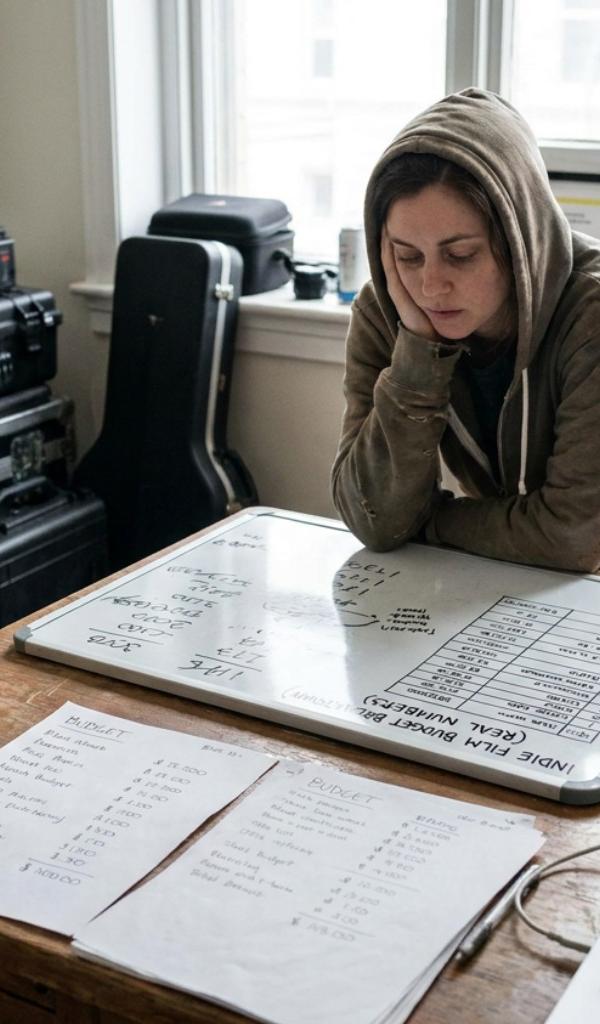
The common mistake here is spending the entire budget on production and arriving at delivery with an underfunded post workflow and murky music rights. A $15,000 film with locked rights and a clean Pro Tools mix is more acquirable than a $60,000 film whose director "figured the music would work out." It rarely works out.
The Thumbnail Is a Movie Poster, and Your Movie Poster Is a Sales Tool
Nobody in traditional film school spends three hours on thumbnail strategy. They should. On Amazon, your film's key art — the image a potential viewer sees in a 250×375 pixel rectangle while half-watching their phone — is doing more selling than your trailer ever will. Faces in close-up outperform landscapes. High contrast outperforms moody darkness. A single clear subject outperforms ensemble compositions at thumbnail scale.
Hire a graphic designer who has worked on streaming key art, not a poster designer who works in print. The skills overlap but the deliverable is different. This is a $300–$800 investment that directly affects your click-through rate, which directly affects your algorithm ranking, which directly affects your revenue. It is not optional.
Review what your cinematographer captured for key stills on set with this specific end use in mind. If you didn't budget for a unit photographer, you're already working harder in post to find a frame that does the job.
How to Use Film Festivals as Amazon Ammunition
Here's the counterintuitive move: don't think of festivals and streaming as sequential. Think of them as parallel campaigns. A strong festival run — even regional festivals with real audiences — generates the review quotes, the audience Q&A moments, the press coverage, and the social proof that makes your Amazon page look credible when it goes live.
An Amazon page with zero reviews and no external links is a dead product listing. An Amazon page with a Rotten Tomatoes score, a handful of verified ratings, and a "Official Selection" badge on the key art is a product that has been validated by humans. That validation lowers the psychological barrier for a stranger to press play.
Use your festival strategy as the first chapter of your distribution story, not a detour from it. Build your audience there. Then bring them to the platform.
Common Mistakes That Kill Amazon Revenue Before Launch
These are the ones that show up again and again. Not enough people talk about them plainly.
- Launching with no email list and expecting Amazon to do all the audience-building for you. It won't.
- Using a music track that wasn't properly licensed for streaming distribution. Royalty-free doesn't automatically mean streaming-cleared — read the license.
- Writing a description that describes the plot instead of selling the emotional experience. "A young woman discovers a secret" tells me nothing. "A tense psychological thriller about the lies we tell to survive" makes me lean in.
- Ignoring the pricing tier when self-distributing. TVOD (transactional — pay per view) versus AVOD (ad-supported) versus Prime inclusion all have different revenue models and different audience behaviors. Know what you're opting into.
- Not updating the page. A stale Amazon listing with no new activity signals to the algorithm that no humans care. Refresh your description, add new press when it comes in, run a promotion during a relevant cultural moment.
FAQ
Do I need a distributor to get my film on Amazon Prime Video?
No. You can self-distribute through aggregators — services that handle delivery and rights management for a flat fee or revenue split. The tradeoff is that you do all the marketing yourself. A traditional distributor brings relationships and marketing muscle but takes a significant cut. For most micro-budget films, starting with self-distribution is the pragmatic move.
How long does it take to start earning money on Amazon?
After technical delivery is accepted, the film typically goes live within a few weeks. Revenue reports — if you're in the Prime lending library or AVOD tiers — are usually delayed 60–90 days. Don't plan your cash flow around a fast turnaround. Budget for a gap and treat early streaming revenue as a slow burn, not a launch spike.
Does Amazon favor films with bigger budgets?
The algorithm doesn't know your budget. It knows engagement: play rate, completion rate, ratings. A low-budget film in a clear genre with a strong thumbnail and an audience that was primed before launch can absolutely outperform a mid-budget film that launched cold. Budget affects production quality, which affects completion rate — but it's not a direct signal to the platform.
What technical specs does Amazon require for film delivery?
Amazon's delivery requirements are detailed and updated periodically. The core specs typically involve a high-resolution ProRes or MXF master, Dolby or PCM audio at specific loudness levels, and closed captions in a supported format. Always verify the current requirements directly on Amazon's Prime Video Direct portal, since specs change and a single non-compliant file can delay your launch by weeks.
Should I release my film on Amazon before or after other platforms?
The conventional wisdom is to establish a windowed release: limited theatrical or festival first, then TVOD, then SVOD (subscription platforms like Prime). Each window builds audience awareness for the next. Putting your film everywhere simultaneously on day one often means it performs weakly everywhere. Give each window a chance to build word of mouth before opening the next door.
The Dream Isn't a Listing — It's an Audience
Every filmmaker who has ever uploaded a film to Amazon and checked the dashboard three times a day knows the quiet panic of single-digit streams. The dream isn't a URL on a streaming platform. The dream is strangers watching your film at midnight in cities you've never been to, feeling something, and telling someone else. That only happens when you treat distribution as a craft — with the same discipline you brought to the screenplay, the shoot, and the edit.
If you want a step-by-step framework for thinking through your distribution strategy before you lock picture — not after — FilmmakerGenius is free to start and built specifically for independent filmmakers navigating exactly this terrain.
Amazon is a powerful platform. But it rewards the filmmaker who did the homework, not the one who got lucky with a listing. Do the homework.