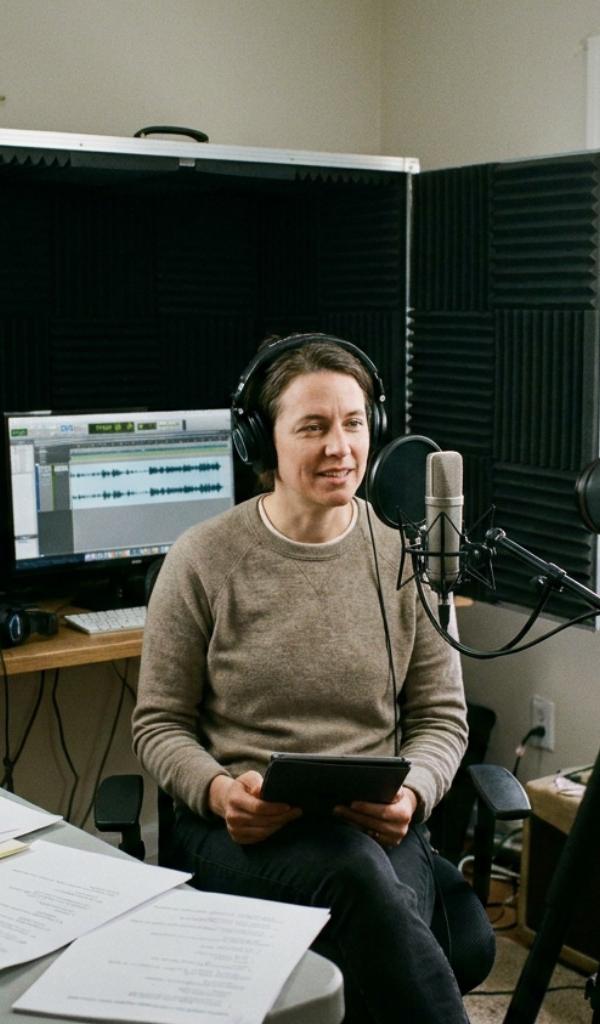
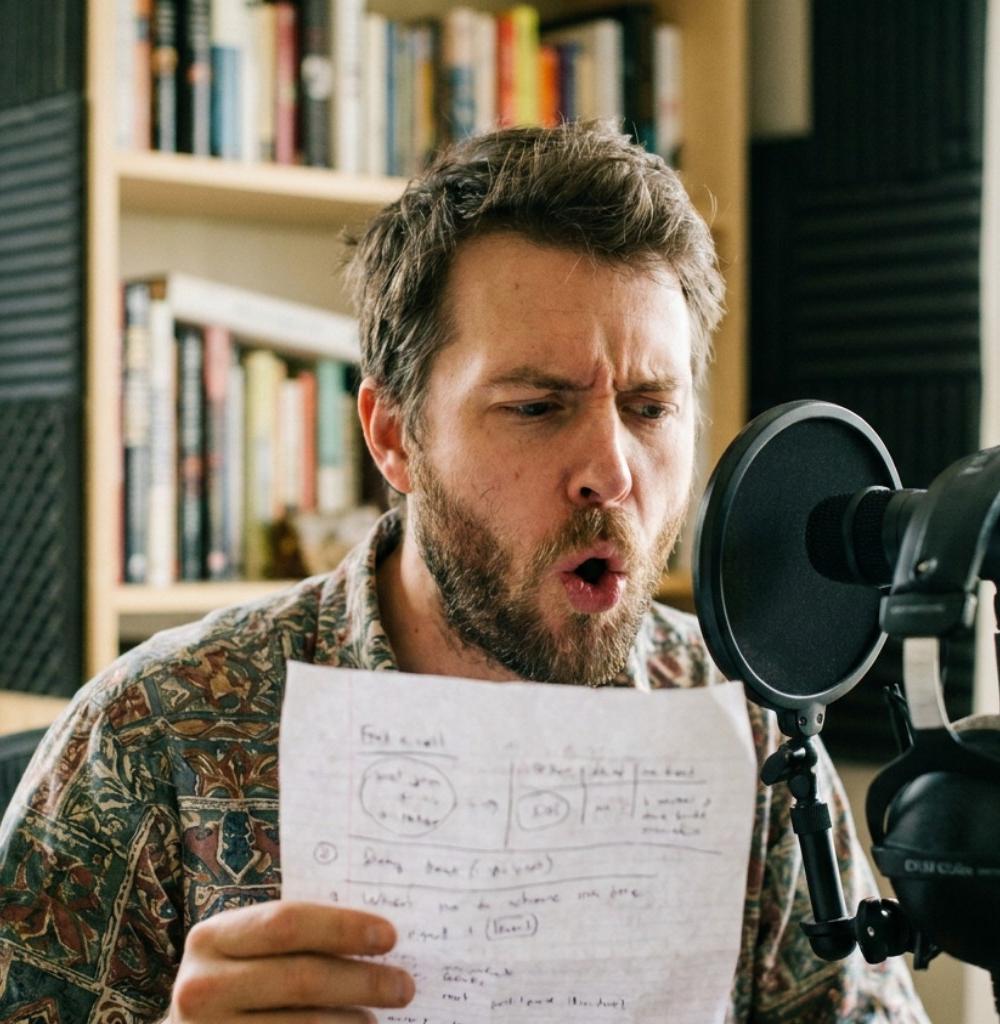
Here's the belief that keeps most actors stuck: that range and reliability in voice over are gifts — that some people are just born with a flexible instrument and a pro's consistency, and the rest are out of luck. It's nonsense, and it's expensive nonsense, because it gives you permission not to try. Range and reliability aren't gifts. They're built by reps — and the best reps cost absolutely nothing. No client, no demo, no agent, no permission, no gear beyond what you already own. Here's a set of free drills you can start today, in the next ten minutes, that will move your instrument further than most people move it in a year of wishing.
The Five-Ways Drill
Take any 30-second commercial script — pull one off any brand's website — and perform it five completely different ways: hard sell, whisper-close confession, bored teenager, confident expert, warm best friend. Not five slightly different readings — five distinct human beings saying the same words. This single drill builds more usable range than any class you could pay for, because it forces you to stop performing "the copy" and start finding genuinely different people and intentions inside identical text. Range is the ability to be many believable someones on demand — the same acting muscle you already train — and this is how you build it. Do it with a new script every day and your ceiling rises weekly.
The Read-Everything Drill
Read out loud, constantly, all day, as a way of life — cereal boxes, ad copy, terms of service, Wikipedia paragraphs, movie synopses, the back of the shampoo bottle. The content is irrelevant; the goal is to shrink the gap between "see it, understand it, perform it" until those three become one instantaneous motion. That's precisely the cold-reading reflex that VO auditions live and die on, and you build it not in special practice sessions but by turning your whole day into low-stakes sight-reading. Make it a habit and "cold" reads stop being cold.
The Consistency Drill
Record the same 20-second read three times in a row, deliberately matching your distance, level, and tone on each pass. Then — and this is the part people skip — listen back critically: can you tell the three apart on level or mic placement? At first you'll hear yourself drift, and that's the point. Training your body to return to the exact same spot, take after take, is the single unglamorous habit that separates the rehired from the replaced. This drill is boring, which is exactly why almost nobody does it, which is exactly why doing it makes you stand out.
The Direction Drill
Record a line, then hand yourself an abstract note the way a director would — "make it more purple," "more blue," "warmer," "more dangerous," "give me Tuesday" — and immediately record three new versions responding to it, no stalling, no arguing with yourself. This trains the fast, ego-free adjustability that directors literally pay for, the skill that keeps a session loose and gets you called "easy to work with." You're rehearsing the exact moment that decides whether you get rehired, and you're doing it alone, for free, until it's automatic.
The Efforts Drill — Carefully
For game and action work, practice supported grunts, screams, and exertions produced from the body, never squeezed from a tight throat — and stop the instant anything feels strained. This one comes with the loudest warning in the series: efforts are how untrained voices get injured, so build them gently, support everything, and never trade a day of impressive screaming for a week of a wrecked instrument. Trained safely, this drill opens a whole lucrative category. Trained recklessly, it closes your career. Respect it.
The Scene-Partner Drill
Load VO copy into your AI scene partner — commercial scripts, animation sides, narration — and run cold reads against it daily, exactly the way you already drill on-camera sides. This is the leverage move: the practice that sharpens your on-camera work sharpens your voice work in the same session. One workout, two returns.
Two More: Character Bank and Pace
A couple more to round out the toolkit. The character bank drill — invent and record three quick distinct characters (an old sailor, a nervous intern, a smug villain), then a week later try to reproduce them exactly, which trains the consistency games and audiobooks demand. And the pace drill — take a paragraph of dry, informational text and read it for genuine comprehension, slow enough that a listener could actually learn from it, training the e-learning and corporate control that pays the rent.
No Permission Required
Look at that whole list and notice what's true of every single item: none of it requires permission, money, or an agent. Every drill needs exactly two things — a quiet room and the willingness to sound silly, alone, with nobody watching. And if you already self-tape, you obviously have both; you've been performing full-out to an empty room for years. You've already cleared the only real barrier these drills ask of you. Do a few of them every day for a single month, and I promise you this: you will not recognize your own instrument.
A quiet room and daily reps are the whole program — and you already built the room. HowToSelfTape is free to start and helps you turn your self-tape corner into the practice space where these drills actually stick.