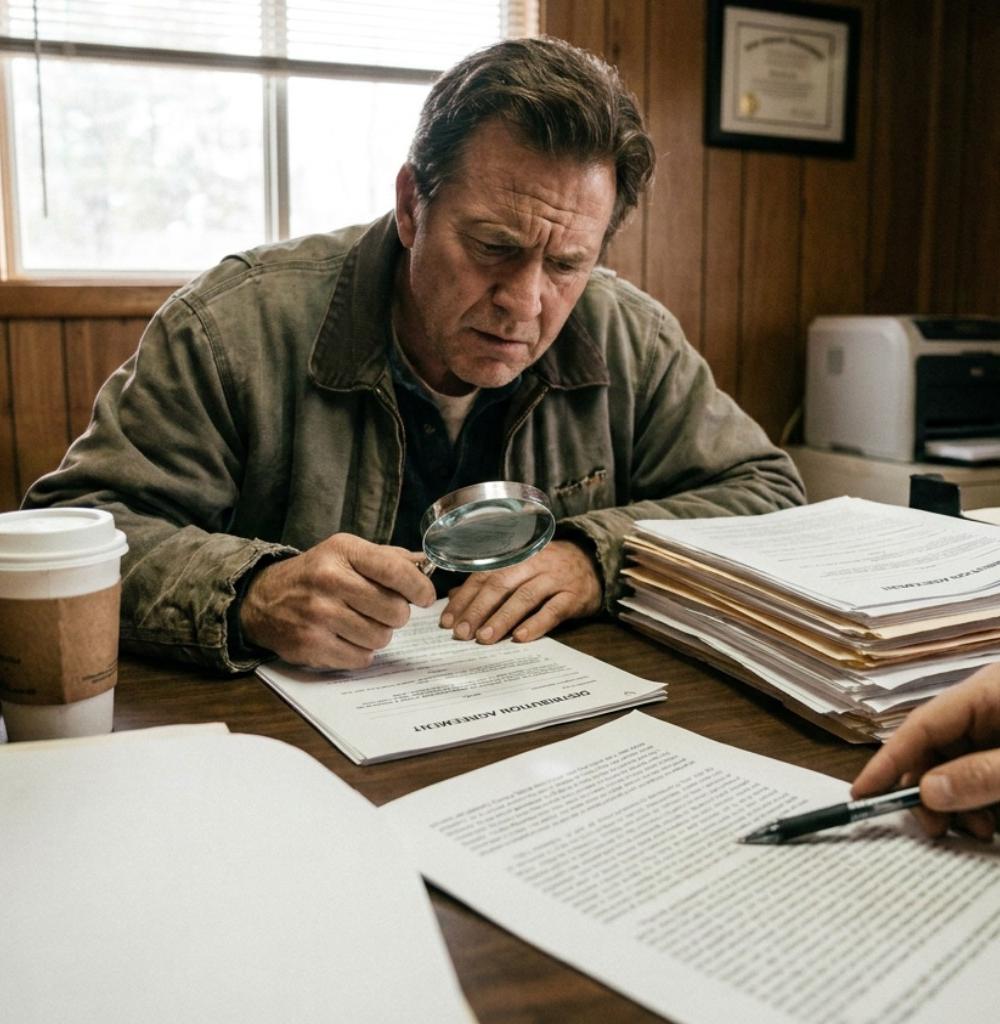
The filmmaker who poured four years and $180,000 into a documentary — only to watch it disappear into a distributor's vault while retaining zero rights to do anything about it — is not a rare cautionary tale. It is a Tuesday. The contract clause that kills distribution doesn't arrive wearing a villain's cape. It arrives in the middle of page eleven, in font designed for people who have already stopped reading.
If you're about to sign a distribution agreement, or you're shopping a finished film on the festival circuit right now, this is the article you needed six months ago. Read it anyway. There's still time.
The most dangerous contract is the one that sounds generous until the day you need it to be.
What "The Contract Clause That Kills Distribution" Actually Looks Like
It goes by several names — "term of license," "reversion clause," or its absence altogether. In practice, the killer clause is usually a combination of two things traveling together: an excessively long license term bundled with vague or missing reversion language. Something like: "Distributor shall hold exclusive worldwide rights in all media, now known or hereafter devised, for a period of twenty-five (25) years."
Twenty-five years. Your film is effectively gone for a professional lifetime. And if that language isn't paired with a hard reversion trigger — a specific condition under which rights return to you if performance targets aren't met — you have no legal foothold to get it back early. Ever.
The "hereafter devised" language is its own catastrophe. It means whatever streaming format, platform, or delivery mechanism gets invented tomorrow, the distributor already owns the right to exploit your film on it. You signed away things that don't exist yet.
Why Distributors Write Contracts This Way
Before you decide every distributor is a predator, understand the business logic. A distributor spends real money acquiring, encoding, marketing, and placing a film. They want security. A ten-year exclusive window with a good film is a reasonable investment horizon. The problem isn't the concept of a long term — it's the absence of accountability built into it.
When there's no minimum guarantee, no reporting schedule, no reversion trigger tied to actual revenue or active distribution, the distributor has every incentive to shelf your film the moment a bigger title demands their attention. Your film costs them nothing to hold. Releasing it costs them time and energy. Inaction is their rational choice. The contract, as written, rewards that inaction.
This is where most first-time filmmakers get crushed. They mistake an offer from a distributor for validation — and it is validation, genuinely — but validation and a fair contract are two completely different things.
The Specific Language to Find Before You Sign
Pull out any distribution agreement you're holding and search for these sections before you read anything else.
- Term and Territory: How long, and where? Worldwide rights in perpetuity or 25 years should trigger immediate negotiation. Ten years or fewer with clear renewal options is a more defensible starting position.
- Reversion Clause: What happens if the distributor doesn't hit a minimum sales threshold in year one or two? The contract should spell out a specific dollar figure or platform placement — and if those aren't met, rights revert to you automatically, without litigation.
- Reporting and Accounting: You should receive quarterly statements. If the contract says "annual" or says nothing, that's the sound of your royalties evaporating.
- Delivery Requirements: Some contracts bury a list of technical deliverables — ProRes masters, closed captions, E&O insurance, chain of title documents — that you may not have ready. Failure to deliver can void your right to revenue, even while the distributor retains the license.
- Expenses Against Revenue: Read every line that uses the phrase "recoupable expenses." Some agreements allow the distributor to deduct marketing, encoding, and administrative costs from your gross before calculating your share. A 25% net deal can pay you zero if expenses are uncapped.
The Most Common Mistake Filmmakers Make at This Stage
They hire an entertainment lawyer after they've already verbally agreed to terms — or worse, after they've signed. An entertainment attorney reviewing a distribution agreement before signature typically costs between $500 and $1,500 for a standard review. That is the cheapest insurance in independent film. The filmmaker who skips it to save money is the one paying $15,000 in litigation fees two years later trying to get their own film back.
The second most common mistake: treating every clause as non-negotiable because the distributor "said it's standard." There is no standard. Every clause in a contract was written by a human being who wants something. You can want something back.
If you're deep in the festival circuit right now and fielding offers, the moment a distributor sends you paperwork is not the moment to get excited and reply in two hours. It's the moment to send it to your attorney and wait a week.
What a Fair Distribution Agreement Actually Contains
A filmmaker-friendly deal is not a myth. It exists. It has these bones: a defined term of seven to ten years maximum; a reversion trigger tied to a specific minimum advance or minimum number of platforms within 18 months; uncapped gross revenue reporting with quarterly statements; a clear rights schedule that lists what the distributor gets (SVOD, AVOD, theatrical) versus what you keep (educational, airlines, foreign language dub rights); and a termination-for-cause clause that lets you exit if the distributor goes bankrupt, is acquired, or simply stops actively distributing.
Some filmmakers also negotiate a "step deal" — the distributor gets a short initial window of 18 to 24 months, and you only extend to the full term if specific milestones are hit. This is harder to get from a large sales agent, but with a mid-tier or boutique distributor, it's absolutely possible. You have to ask.
For the filmmakers still in pre-production or early post: the time to understand distribution contracts is before you need one. Build a basic literacy now. You'll negotiate from a completely different position than someone reading these clauses for the first time under deadline pressure.
Self-Distribution as a Negotiating Chip (Not Just a Backup Plan)
Here's a shift in perspective that changes how you walk into every distributor meeting: a filmmaker who credibly can self-distribute has leverage. Period. When you know how to deliver your film to platforms directly, how to run a split-rights deal, how to drive a theatrical one-week qualifying run — you are not desperate. Desperation is what bad contracts feed on.
Self-distribution isn't the consolation prize. It's a real option with real revenue on films that traditional distributors would shelf. An indie drama that a distributor offers a $5,000 advance on might clear $30,000 over three years through a well-run direct-to-platform strategy. Not every film. But enough films that you should know the math before you decide the offer sounds good.
Understanding your full range of options — from alternative funding and deal structures to direct platform delivery — is what separates filmmakers who build careers from filmmakers who build one film and a cautionary story.
Before You Sign Anything: A Practical Checklist
- Send the agreement to an entertainment attorney. Budget $500–$1,500 and consider it production insurance.
- Search the contract for the word "hereafter." If it's there, get it scoped or removed.
- Find the reversion clause. If there isn't one, write one in as a counteroffer.
- Count the years in the term. Push back on anything over ten.
- Get the expense deductions capped in writing, as a fixed percentage or a fixed dollar amount.
- Confirm your delivery requirements before signing — get E&O insurance quotes, prepare your deliverables list.
- Ask for a termination-for-cause clause that triggers if they stop actively distributing within 12 months.
If a distributor refuses every one of these points without explanation, that refusal is information. Walk.
FAQ
What is a reversion clause in a film distribution contract?
A reversion clause is a contractual provision that returns your film's rights to you if the distributor fails to meet specific performance benchmarks — a minimum advance payment, a minimum number of active platforms, or a revenue threshold — within a defined window, typically 12 to 24 months after delivery.
Can I negotiate a distribution agreement if I'm a first-time filmmaker?
Yes. Distributors expect negotiation. The leverage you have is your film itself — they want it, or they wouldn't have made an offer. Reasonable requests like a shorter term, a reversion trigger, or quarterly reporting are standard negotiating positions, not insults. Hire an entertainment lawyer to draft your counteroffer professionally.
How long should a film distribution agreement last?
Seven to ten years is a defensible range for most independent films. Twenty-five years is excessive and should be countered immediately. Perpetuity clauses are almost never appropriate for a filmmaker who wants any future control over their work — including sequel rights, remakes, or eventual estate considerations.
What does "all media now known or hereafter devised" mean in a contract?
It means the distributor claims rights to distribute your film on every platform or format that exists today and every one that gets invented in the future — including technologies no one has built yet. This language should be replaced with a specific list of licensed media: SVOD, AVOD, EST, theatrical, television. Name each one. Leave nothing open-ended.
Should I self-distribute instead of signing with a distributor?
Not necessarily instead — but possibly alongside or as your primary strategy. Self-distribution gives you higher revenue per unit and full creative control over release timing. It requires more operational work. The real answer is that knowing self-distribution is viable gives you negotiating power even if you ultimately choose a traditional deal.
The gap between a filmmaker who loses their film to a bad contract and one who builds a real distribution strategy is mostly education and preparation — not talent, not budget, not luck. If you want a structured place to build that knowledge before your next project reaches the offer stage, FilmmakerGenius is free to start and built specifically for independent filmmakers navigating exactly this terrain. No hard sell — just the framework that makes the next contract a conversation you walk into prepared.
Your film took years of your life. Read the whole contract. Then read it again.