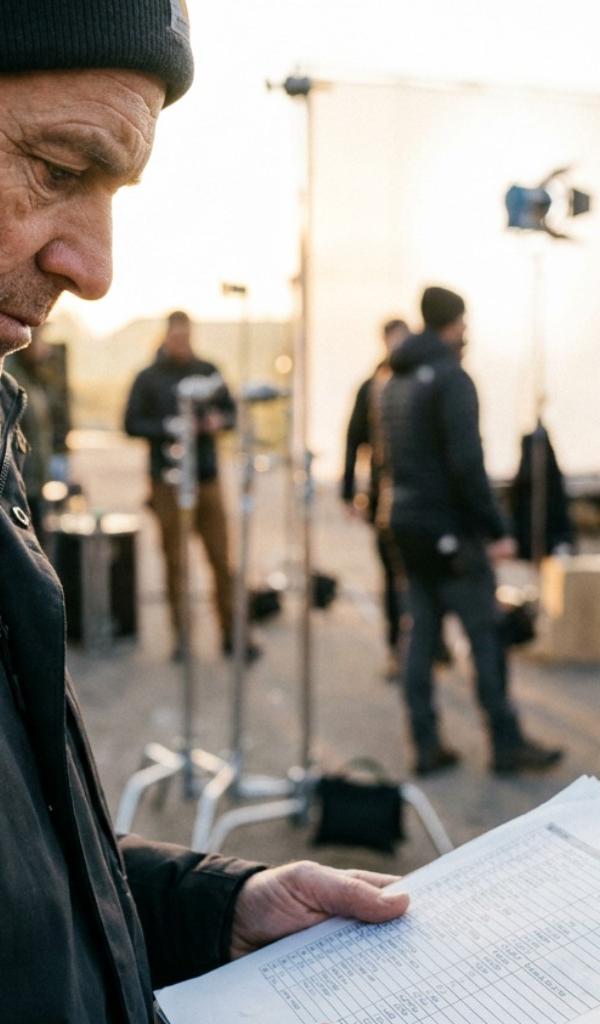
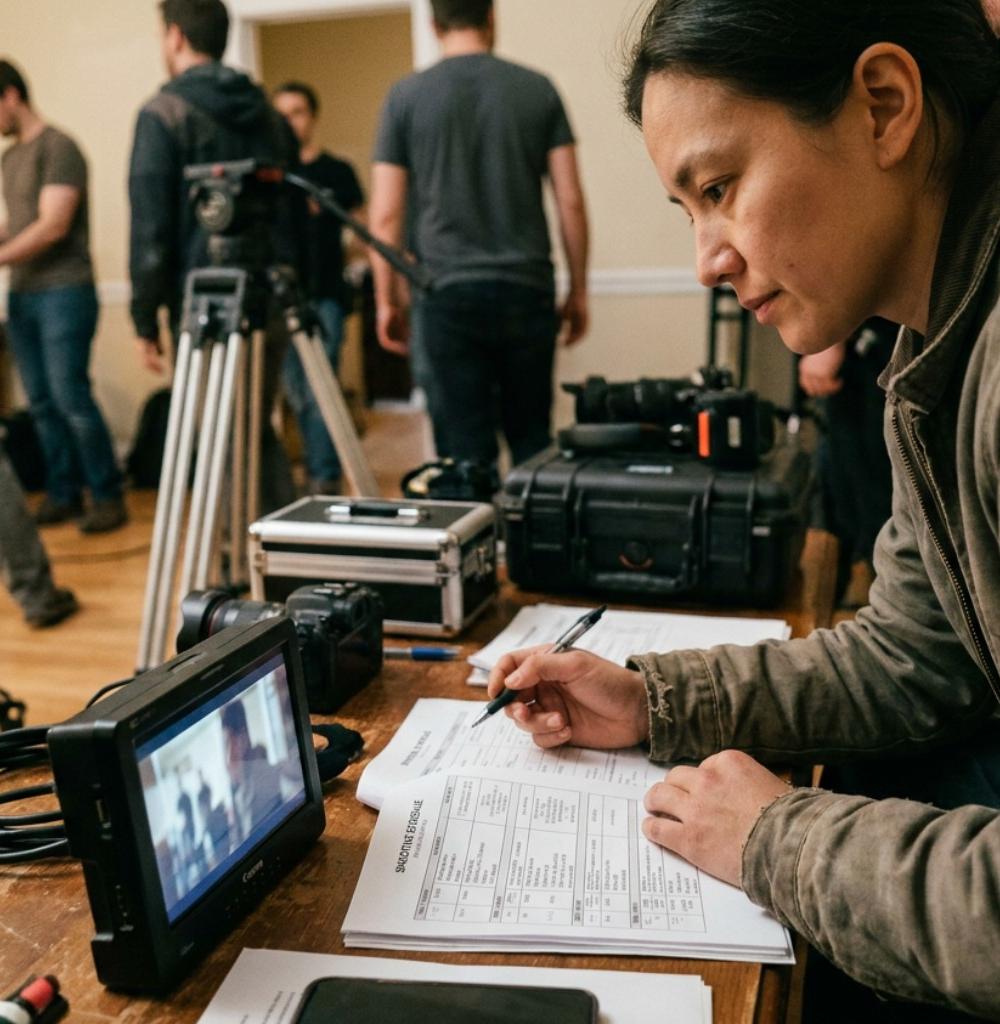
Every indie film that collapses mid-shoot collapses the same way: not because of talent or money, but because of a broken shooting schedule. It's day two, you're three hours behind, the light's gone, and the whole plan unravels because it was never built to survive contact with a real set. A good schedule isn't a wish list of scenes — it's a machine engineered to keep moving when things go wrong. And on a film set, things always go wrong.
The filmmakers who finish on time aren't luckier. They just built a schedule that assumed the worst and planned around it.
The short answer: A shooting schedule tells you which scenes you shoot, in what order, on which days — organized not by story order but by what's most efficient to shoot together (same location, same cast, same light). You build it by breaking down the script, grouping scenes by location, ordering them for efficiency, and stacking in buffer time for when reality hits.
What a shooting schedule actually is
A shooting schedule is the plan for how you'll capture the movie — the reverse-engineered order of production. Films are almost never shot in story order. You shoot everything at one location before you move, every scene with an expensive actor while you have them, every exterior while the sun cooperates. The schedule is the document that turns a 90-page script into a sane, day-by-day battle plan.
Get it right and every shoot day has a clear, achievable target. Get it wrong and you're improvising with a crew on the clock — the most expensive way to make a film.
How pros build a shooting schedule, step by step
- Break down the script. Go scene by scene and tag every element — cast, location, props, time of day, special needs. You can't schedule what you haven't broken down.
- Group by location. Company moves (packing up and relocating) eat hours. Shoot everything at Location A — every scene, no matter where it falls in the story — before you move to Location B.
- Group by cast and time of day. Within a location, batch scenes with the same actors, and shoot day-exteriors while you have daylight and night scenes after dark.
- Order for efficiency, not story. Put the hardest, most complex setups earlier in the day when energy is high. Save the simple pickups for when everyone's tired.
- Build the "day out of days." Lay it across your shoot days with realistic page counts — and leave buffer. This is the master calendar the whole crew runs on.
The rules that keep a schedule from collapsing
- Shoot by location, never by story order. The single biggest efficiency lever. Minimize company moves at all costs.
- Front-load the hard stuff. Complex scenes, stunts, big setups — do them early in the day and early in the shoot, while you still have time and stamina to recover.
- Build in buffer. Every scene runs longer than you think. A schedule with zero slack is a schedule that's already behind.
- Have weather cover. Always know which interior scene you can jump to if the exterior gets rained out. A shoot with no cover set loses the whole day.
- Be honest about page counts. A realistic 3–4 pages a day beats an optimistic 8 that you'll never hit — and then chase for the rest of the shoot.
Amateurs schedule the movie they hope to shoot. Pros schedule the movie they can actually shoot when the day goes sideways — because it will.
The mistakes that blow up a shoot
- Scheduling in story order. The classic first-timer error — endless company moves and wasted hours.
- No buffer time. One slow scene and the entire day dominoes.
- Saving the hard scenes for last. By then you're behind and exhausted — the worst time to attempt your biggest setup.
- No weather cover. One bad forecast erases a full day.
- Ignoring cast availability. Schedule around your actors' real dates, or you'll lose a scene you can't reshoot.
- Fantasy page counts. Planning for more than you can shoot guarantees you finish behind.
Keep reading: Call Sheet: The One Document That Runs Your Shoot Day, Film Script Breakdown: The Complete Guide for Indie Filmmakers, and Film Budget: How Indie Budgets Really Work (and Where You'll Overspend).
Frequently Asked Questions
Why aren't films shot in story order?
Because shooting in order means constant, costly moves between locations and pulling actors back repeatedly. Grouping scenes by location, cast, and time of day is dramatically cheaper and faster — so the schedule is built around efficiency, and the story is reassembled in the edit.
How many script pages can you shoot in a day?
For indie work, a realistic target is often 3–5 pages a day, less for complex or action-heavy material. Schedule to what you can truly achieve, not the optimistic number — the honest count keeps you on track.
What's a "day out of days"?
It's the master grid showing which cast and elements are needed on each shoot day. It lets you see everyone's workdays at a glance and schedule around real availability.
What tools do I use to build a shooting schedule?
It starts with a script breakdown, then a scheduling tool to arrange the strips by location, cast, and time of day. The key isn't the software — it's the logic of grouping for efficiency and building in buffer.
Plan the shoot you can actually finish
A shooting schedule isn't paperwork — it's the backbone that decides whether your film gets made or falls apart on day two. Break down the script, group ruthlessly by location and cast, front-load the hard stuff, and leave room for the day to go wrong. Do that, and when reality hits your set — and it will — you keep rolling instead of collapsing.
Turning a script into a real breakdown, schedule, and call sheet is exactly what FilmmakerGenius handles — the whole pre-production pipeline in one place, free to start — so your shoot day has a plan built to survive contact with the set.