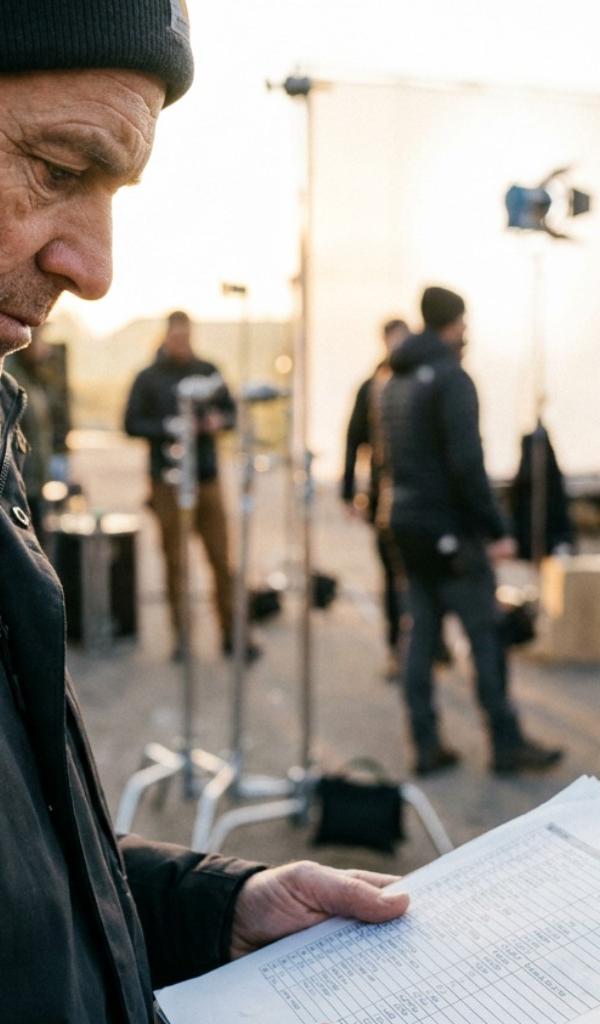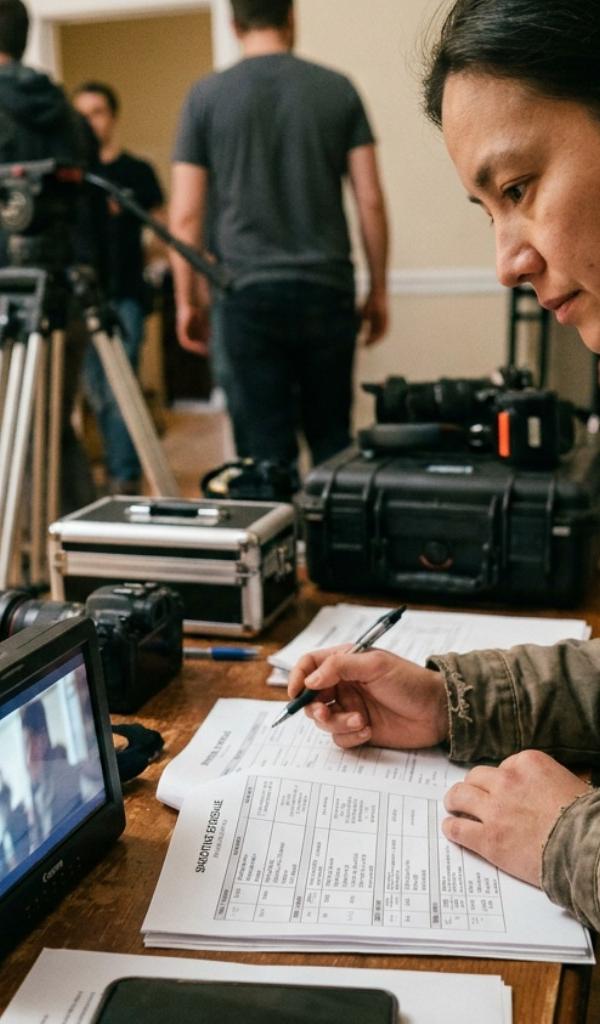

Nobody tells you this about filmmaking until you're standing in a parking lot at 11 p.m., your lead actor has gone home, your location permit expired forty minutes ago, and you still have three pages left to shoot. The camera was perfect. The lighting was beautiful. The problem was everything else. That's the gap between film school and the real thing — and it's wider than most people admit.
Here's the short version: the craft of filmmaking is learnable in a classroom. The job of filmmaking — managing people, money, time, ego, weather, and entropy — is learned on location, usually the hard way. The good news is that the lessons are finite. Someone just has to tell you what they are before you burn your budget finding out.
The movie that gets made is not the movie you planned — it's the movie you were prepared enough to save.
Nobody Tells You This About Filmmaking: The Real Killer Is Enthusiasm Without Infrastructure
Every first feature starts with a surge of pure belief. You have the script, the vision, maybe a friend with a camera. That energy is not a problem — it's the fuel. The problem is when enthusiasm substitutes for infrastructure. Passion does not pay location fees. It does not get your actor to set on time. It does not prevent the sound recordist from double-booking your shoot day.
The indie films that actually finish — not the ones that stall in post forever — share one quiet trait: they were over-prepared on the boring stuff. Call sheets out the night before. Contracts signed before anyone touches a light stand. A realistic one-page schedule that accounts for setup, not just shooting. Infrastructure is unglamorous and it is the whole thing.
Before you touch a camera, lock your pre-production process like your film depends on it. Because it does.
Your Budget Is Already Wrong — Here's How to Fix It Before You Start
Say you budget $15,000 for your short. You've itemized equipment, cast, and food. What you haven't itemized: the location permit that costs $400 and takes three weeks to process, the hard drive that dies with your only footage copy on it, the half-day you lose because the gaffer's van broke down, and the color grade that runs twice as long as quoted because your on-set exposure was inconsistent. That's not bad luck. That's a standard shoot.
The rule that working producers use: whatever your honest line-item budget is, add 15 percent as a contingency and treat it as already spent. If you finish without touching it, you win. If you need it — and you will need it — you don't have to make a panicked decision on day two of a five-day shoot.
Also: never budget for the number of shooting days you want. Budget for the number your script actually demands. Count your locations, your company moves, your night exteriors. Be brutal. A five-day shoot you can actually complete beats a seven-day shoot you have to abandon.
The Crew Problem Nobody Warns You About
Imagine you're a first-time director. You hire people you know because it feels safer. Your DP is your college roommate, your sound person is someone's cousin who "has gear." What you've done is mix friendship with a professional hierarchy, and the moment you need to redirect someone's work, the friendship makes it nearly impossible to be honest.
Hire by skill first, relationship second. That doesn't mean hiring strangers — it means being clear, even with friends, about what the job requires. A short written agreement, even a simple one-page deal memo, transforms a favor into a professional engagement. It protects everyone. More importantly, it changes the psychology: once someone signs something, they show up differently.
The biggest crew mistake new filmmakers make isn't hiring the wrong people. It's hiring the right people and then not being a clear enough leader for them to do their jobs. Your crew cannot read your vision. They can only read your communication. Learn to give clear, specific direction — not "make it feel more cinematic," but "I want the camera lower and slower on this one." Specificity is kindness on set.
Dig deeper into the craft of working with your team in our directing-on-set section.
The Post-Production Trap That Eats Films Alive
Here is a number that should alarm you: the average indie feature that finishes principal photography takes between eighteen months and three years to reach any kind of release. Not because post-production is slow. Because filmmakers consistently underestimate what post actually costs — in time, money, and decision-making energy.
The trap works like this. You spend everything on production. You get to post with a fraction of your budget left, so you cut corners on the edit, the sound mix, and the color. The film looks like it was finished in a hurry, because it was. Programmers at festivals — the ones deciding whether your film screens or not — can hear a bad mix in thirty seconds. They can see a rough color grade in the first shot. Those things signal "amateur" before your story gets a chance.
Reserve at least 20 to 25 percent of your total budget for post. If that math doesn't work with your current budget, your current budget isn't big enough for the film you're trying to make. That's a hard truth, but it's a cheaper lesson learned here than in a rejection email from a festival you've been dreaming about.
When you're ready to think seriously about where your finished film goes, start learning the film festival landscape early — not after picture lock.
What Casting Actually Does to Your Film's Chances
New filmmakers obsess over the look of their film. Experienced filmmakers obsess over the cast. Here's why: a great performance filmed on a phone will hold an audience. A mediocre performance shot on an Alexa with a prime lens will lose them in four minutes.
For no-budget and micro-budget films, casting is your single highest-leverage creative decision. One recognizable name — even a television actor with regional recognition — can open festival doors, attract a sales agent's attention, and give your poster a real selling point. The math on a small name attachment often justifies the cost of their rate many times over in distribution value.
Even if you're working with entirely unknown actors, take casting as seriously as you'd take hiring a DP. Hold proper auditions. Prep your actors before the shoot, not on the day. Give them the material early enough to actually live with it. The performances you get from a prepared actor versus an underprepared one are not comparable.
The Funding Truth That Will Save You Years
Most first-time filmmakers assume the path is: finish the film, then find money for the next one. The filmmakers who actually build careers invert that. They learn the funding landscape — grants, fiscal sponsorship, co-production deals, regional film funds — before they need it, so they're not scrambling after the fact.
There are legitimate grants available specifically for emerging filmmakers — through state arts councils, through film commissions, through foundations that fund documentary and narrative work. The applications take time, which is exactly why you start before you're desperate. A grant of even $5,000 to $10,000 can cover your entire post-production budget on a short film. That's not nothing. That's the difference between a finished film and a hard drive in a drawer.
Fiscal sponsorship through an established nonprofit — where donations to your project become tax-deductible — is another tool most new filmmakers don't discover until year three. Discover it now.
Common Mistakes That Kill Good Films Before They're Finished
- Starting production without signed location agreements and assuming a handshake will hold.
- Shooting without proper backup — at minimum, two copies of every card, on two separate drives, stored separately.
- Letting the schedule slip by "just one hour" six times in a row and being shocked when you lose a full shooting day.
- Forgetting to get behind-the-scenes footage and stills on set, then having nothing to market the film with later.
- Writing a script that requires twenty locations when your budget supports five.
- Not reading your script aloud before production to catch the lines nobody can actually say.
FAQ
What is the most important thing to do before your first shoot day?
Lock your schedule, confirm every location in writing, and make sure every crew member has a signed deal memo. Then do a technical scout of every location with your DP and sound recordist together. Most on-set disasters are visible in advance if you're standing in the space before the camera arrives.
How do you handle a film that's gone over budget mid-shoot?
Stop, assess, and prioritize ruthlessly. Identify which scenes are essential to the story's core and protect those at all costs. Cut locations before you cut shooting days. Cut extras before you cut crew. Never cut your sound recordist — bad audio is the fastest way to make a film unwatchable.
Do you need film school to become a working filmmaker?
No. What you need is a finished film, another finished film, and a network of collaborators who trust you. Film school can accelerate both — but so can making things. The filmmakers who work consistently are the ones who kept making things even when the things weren't good yet.
When should you start thinking about distribution?
Before you shoot. Knowing your target audience and your likely distribution path — festival circuit, streaming, educational, theatrical — should directly influence decisions about length, content, and format. A 47-minute film is genuinely hard to place. A 22-minute short and a 90-minute feature are both programmable. Length is a distribution decision.
Is it worth submitting to film festivals?
Yes — selectively. Research each festival's programming history and submit to ones that have actually championed films like yours. Submitting to fifty festivals at $40 to $75 a submission adds up to real money fast. Target twenty well-chosen festivals with a clear strategy rather than blanketing every open call you find.
The Film That Gets Made Is the One You Were Ready to Save
Nobody tells you this about filmmaking when you're in love with the idea of it: the moments you'll be proudest of are almost never the ones you planned. They're the performances you got because you gave the actor real space. They're the shot you found because you lost the location you'd scouted. They're the cut that works because you were honest enough to kill a scene you loved.
Filmmaking rewards preparation not because preparation prevents chaos — it doesn't — but because preparation gives you enough headroom to respond to chaos creatively instead of just surviving it. The directors who work again and again are the ones their crews trust to stay calm and keep moving. You build that reputation one finished film at a time.
If you're ready to move from dreaming about your film to actually making it, FilmmakerGenius is a free starting point built for exactly where you are right now — no gatekeeping, no fluff, just the practical foundation working filmmakers actually use.
Make the film. Finish the film. Then make another one. The whole thing starts there.