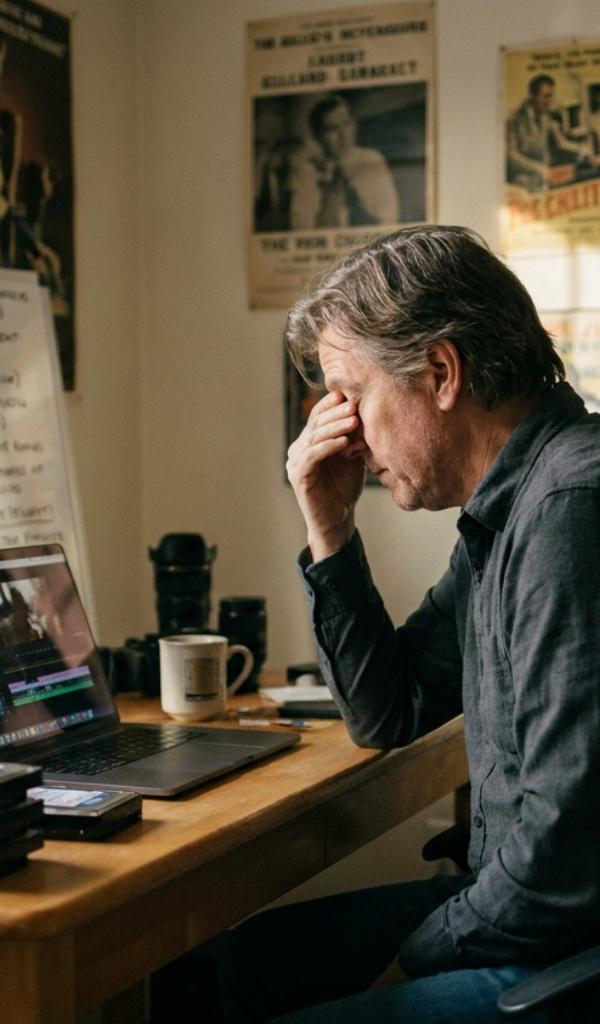
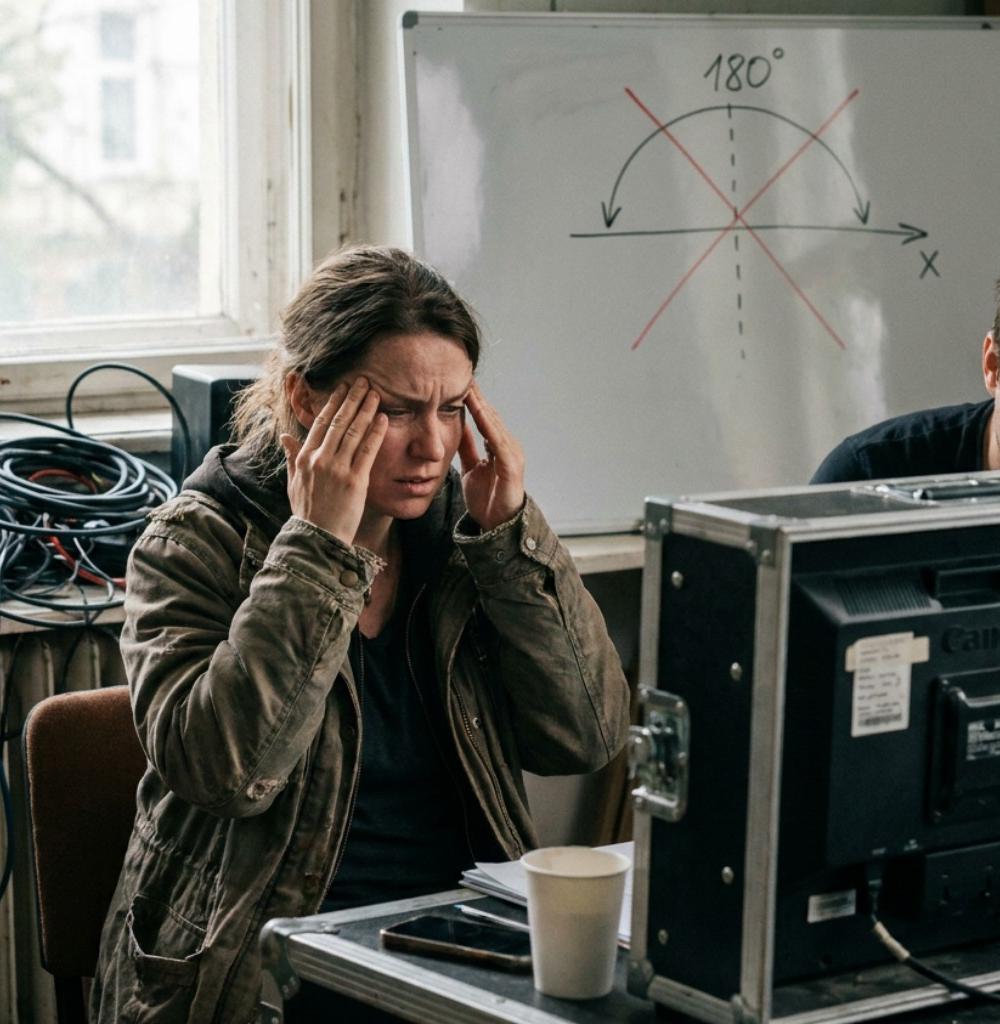
The rule every filmmaker breaks first isn't about lighting ratios or lens choice or even casting. It's simpler and more devastating than any of that. It's the rule that says: lock your script before you touch a single other thing. Not "mostly done." Not "we'll fix it on the day." Locked. Stamped. Everybody-has-the-same-draft locked. And yet, every week, somewhere, a first-time filmmaker is loading camera gear into a van with three different versions of the script floating across four people's inboxes — and nobody knows which one is current.
The edit doesn't lie. Every shortcut you took in pre-production shows up on screen, right where your audience stops caring.
What "The Rule Every Filmmaker Breaks First" Actually Means
Call it the pre-production lock principle, call it script discipline, call it whatever you want. The idea is blunt: every decision made on a film set flows downstream from what's on the page. Your production designer can't build the right room if the scene keeps changing. Your DP can't prep the right shot list if the action is still in flux. Your lead actor can't commit to an emotional arc if the ending is undecided. The script is the blueprint. You wouldn't pour a foundation while the architect is still sketching walls.
The reason filmmakers break this rule first is psychological, not logistical. Writing is uncomfortable. It's slow. It surfaces problems — holes in story logic, scenes that don't pay off, characters who have no reason to exist — and confronting those problems feels less exciting than being on set. So filmmakers rush toward production because production feels like making a movie. Pre-production feels like homework.
It is homework. Do it anyway.
Why an Unlocked Script Destroys Your Budget Faster Than Any Gear Upgrade
Here's the math nobody talks about. Say you're shooting a 10-day indie, and your shooting schedule was built around a script that was 85% finished. Then, three days before principal photography, the writer (who is also you, because of course it is) realizes that the second-act confrontation scene doesn't actually work — the characters have no credible reason to be in the same room. So you rewrite it. The new version takes place in a parking garage instead of a diner. Now your location deal is void, your production designer has wasted a week of dressing work, and your DP's lighting plan is garbage.
That's not a story about bad luck. That's a story about one unlocked script multiplying into cascading costs across every department simultaneously. On a micro-budget production where you're already counting every dollar, this is the difference between finishing the film and running out of money before the final week of shooting.
Check out how smart pre-production discipline actually works in practice — it's one of the most underwritten topics in indie filmmaking and one of the most expensive to learn the hard way.
The Specific Moment Filmmakers Always Break It
It almost never happens randomly. There's a pattern. The filmmaker books a location — a great one, maybe a friend's restaurant that's only available for two weekends. Suddenly, the shoot date is fixed. The calendar is locked before the script is. And from that moment forward, every creative decision bends around the logistics instead of the story. The scene gets rewritten to fit the restaurant instead of the restaurant being chosen to serve the scene.
Logistics should never lead story. When they do, you feel it in the film. The scenes feel placed rather than inevitable. The geography feels forced. Audiences don't consciously notice, but they disengage — and disengagement is death.
The enemy here isn't the location, the date, or even the budget. The enemy is the false urgency that comes from excitement. Forward momentum feels productive. Sitting with an unfinished script feels stalled. That feeling is a liar.
What a Locked Script Actually Gives You (Beyond the Obvious)
A finalized script isn't just a creative document. It's a financial instrument. Every department head reads it and generates their own breakdown — props, wardrobe, set dressing, VFX, stunts, locations. Every line in your budget originates from a line in the script. Lock the script late, and you're building your budget on a moving target. Lock it early, and something almost magical happens: problems reveal themselves on paper, where they cost nothing to fix, instead of on set, where they cost everything.
Locking your script early also changes the energy in your crew. When people can trust that what they're prepping is what they're actually shooting, they can go deep. A production designer who isn't waiting for rewrites can find better materials, build smarter, think beyond the functional and toward the beautiful. A DP who has a stable script for two weeks before the shoot can come to the first day with a visual language, not just a shot list. That depth shows in the footage.
This is also directly tied to what separates a confident director from a reactive one. Directors who locked the script early almost always have more mental bandwidth on set — for performance, for the unexpected, for the work that actually can't be done in pre-production.
How to Actually Lock a Script (Without Losing Your Mind)
The practical process is less romantic than it sounds. Give yourself a hard deadline, three to four weeks before your shoot date minimum — more if you have complex locations or a large cast. On that date, the script stops changing in ways that affect production. Character name changes? Fine. A line of dialogue? Usually fine. A scene that moves locations, adds a speaking role, or changes the time of day? Not fine. Those are structural changes, and structural changes have financial consequences.
Before you lock, do one brutal pass specifically for logistical traps: scenes that require more daylight than your location can guarantee, characters who appear in back-to-back scenes that would require impossible same-day travel, props that need to be sourced from another country. These are the time bombs in a script that nobody finds until someone's on the phone at 11 p.m. trying to source a prop that was written in two weeks ago as a throwaway detail.
Then send the locked draft to every department head on the same day, clearly labeled with a version number and the word LOCKED in the filename. No more separate chains. One draft. Everyone starts from the same page, literally.
For a deeper look at how to structure and stress-test a script before it's production-ready, there's genuinely useful material on building a script that can survive contact with a real shooting schedule.
The Myth That Rewrites on Set Are Creative
There's a romantic idea in filmmaking culture that the best stuff happens in the moment — that great directors improvise, that happy accidents make films memorable, that over-planning kills spontaneity. This is true in a narrow, specific way. It is catastrophically misapplied as an excuse not to finish the script.
The directors you're thinking of when you romanticize on-set improvisation — the ones whose names you want to say right now — had locked scripts. What they improvised was texture, not structure. A line reading. A movement. An unexpected reaction shot. They were riffing inside a form that was solid. That's jazz, and jazz musicians know every note of the melody before they start improvising around it. You can't riff on a foundation that doesn't exist.
On-set rewrites born from an unfinished script are not creative. They are damage control at premium hourly rates.
Common Mistakes Filmmakers Make When Trying to Lock
- Locking the script but continuing to send "just one more revision" emails — undermining the entire point.
- Locking the shooting script without locking the scene order, so the schedule still shifts under departments.
- Treating the lock as a formality rather than a commitment, which means nobody actually trusts it.
- Failing to read the locked script aloud before production — the single fastest way to find lines that don't work in a human mouth.
- Locking too close to the shoot date, leaving department heads with less than a week to prep properly.
If any of those hit home, you're in good company. They hit almost every filmmaker the first time. The ones who grow are the ones who notice and course-correct — on the next project, or better yet, on this one, before it's too late.
The resource that actually helped solidify this for me — and for filmmakers I've talked to who were tired of learning these lessons the expensive way — is FilmmakerGenius, which is free to start and walks through the full pre-production workflow in a way that doesn't treat you like a beginner but doesn't assume you've already made a dozen features either. Worth the time before you touch a single scheduling spreadsheet.
FAQ
Keep reading: The Move Most Filmmakers Never Make (But Should), Shooting Schedule: How Pros Build One That Won't Collapse, and Call Sheet: The One Document That Runs Your Shoot Day.
What does it mean to "lock" a script in film production?
Locking a script means declaring a final version that all departments work from — no structural changes after that point. Pages are numbered permanently, and any late changes are tracked with revision marks and colored pages rather than wholesale rewrites. It's a production management decision as much as a creative one, and it protects every department's prep work.
How early before production should a script be locked?
The working standard on most indie productions is three to four weeks before principal photography begins. Larger productions with more complex logistics often lock six to eight weeks out. The key variable is how long your department heads need to do meaningful prep — that's the number to work backward from, not an arbitrary date on a calendar.
Is it ever okay to rewrite during production?
Yes, with strict boundaries. Line changes, small dialogue trims, minor adjustments to blocking that don't affect locations or wardrobe — those are manageable. Anything that changes a location, adds characters, shifts the time of day, or alters a key story beat is a structural change and carries real production costs. Those decisions require a conversation with every affected department head, not a quiet email at midnight.
What's the difference between a shooting script and a final draft?
A final draft is the last creative pass on the story. A shooting script is that same draft reformatted for production — scenes numbered, camera directions sometimes added, and structured for scheduling and breakdown purposes. You should have a solid final draft before you move into the shooting script stage. Trying to do both at once is where the wheels come off.
What if the script genuinely isn't ready but the shoot window is fixed?
Then you're facing a real decision, not a scheduling problem. Shooting an unready script rarely produces a fixable result in the edit — it produces a film that needs to be reshot or abandoned. If the window is truly immovable, consider shooting only the scenes that are locked and delaying the scenes that aren't. A partial shoot on a solid script beats a full shoot on a shaky one every single time.