Somewhere right now, a filmmaker is staring at a $12,000 credit card limit and wondering if that's enough to make a real movie. The answer — the honest, no-fluff answer — is yes. But only if you stop trying to make a $2 million film for $12,000 and start making a $12,000 film with all $12,000 of it. That distinction is everything. A microbudget film isn't a compromised version of a bigger film. It's its own discipline, with its own rules, and the filmmakers who understand that are the ones who end up at Sundance, SXSW, or licensing their debut to a streaming platform inside 18 months.
The ones who don't understand it? They're still in post, three years later, chasing a visual effects shot they couldn't afford on day one.
What Is a Microbudget Film, and Where Does the Money Actually Go?
In the independent film world, "microbudget" generally means anything under $50,000 — though most working definitions cluster around $5,000 to $30,000. SAG-AFTRA offers several low-budget agreements — including a Micro-Budget Project Agreement aimed at the smallest productions — that open the door to union talent at sharply reduced rates. The exact budget thresholds and day rates change periodically, so check sagaftra.org for the current tiers before you cast a single person; knowing which agreement you qualify for shapes your entire budget.
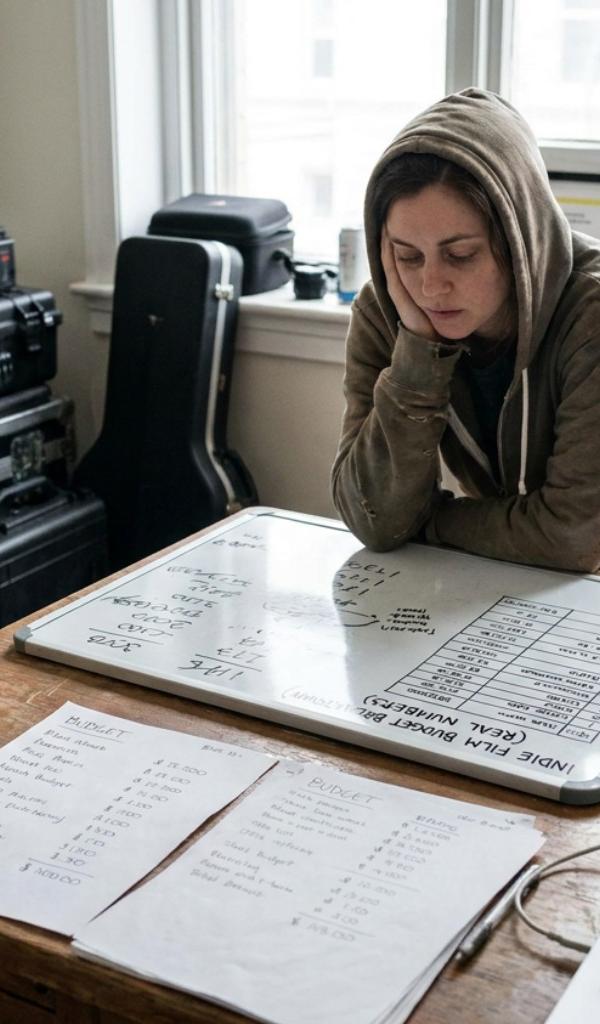
Here's where the money actually goes on a lean production: roughly 30–40% to crew (even deferred deals cost something), 20–25% to equipment rental or purchase, 15% to locations and permits, 10% to catering (feed your crew or lose your crew), and the remainder to post-production, sound mix, and deliverables. The deliverables budget is the one first-timers always gut. Don't. A festival-ready DCP and a proper sound mix can run $1,500–$3,000 combined, and without them, your film doesn't screen.
The Script Is Your Budget — Write to What You Own
This is the most important sentence in this article: your microbudget screenplay should be an inventory of assets, not a wish list. Before you write a single scene, make a list. What locations do you have free access to? What cars, props, and wardrobe do you already own or can borrow? Who in your network has a skill the story needs — a nurse friend, a mechanic, a musician? Now write from that list outward.
Say you have access to a lakeside cabin for a weekend. That's not a location. That's a contained thriller, a grief drama, a bottle-episode character piece. The constraint isn't a limitation — it's the premise. Some of the sharpest microbudget films in recent memory were built exactly this way: one location, a handful of characters, a ticking clock. Coherent, contained, and completely achievable.
The common mistake is writing the film you want to see and then trying to reverse-engineer a budget around it. A car chase written on spec looks exactly like what it is: an IOU the production can't cash. Rewrite it as a phone call where someone describes the crash. Now you have tension, no stunt budget, and a scene that's actually scarier.
The screenplay that fits your resources isn't the lesser script — it's the one that actually gets made.
Microbudget Film Crew: Small Is Fast, and Fast Is Money
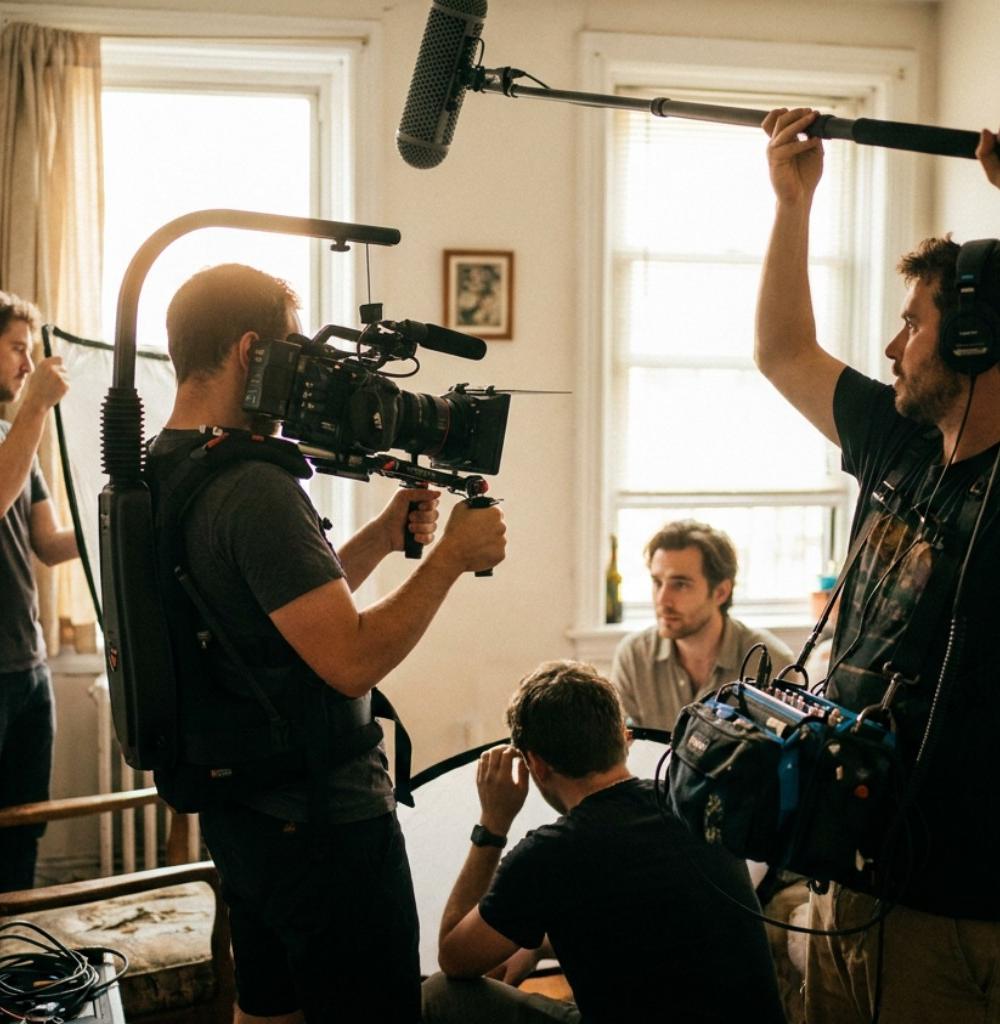
On a microbudget film, every person on set is either saving you time or costing you time. Time is the only currency that matters when you're shooting a five-day feature. A lean crew of eight experienced people will outperform a bloated crew of twenty every single day.
The non-negotiables: a skilled DP who can also operate (camera operators who won't also pull focus slow you down), a production sound mixer with their own gear (bad production sound is the number-one reason microbudget films feel cheap — not the camera, not the lighting), and a first AD who genuinely knows how to run a set. Everything else can flex. Directors often pull double duty as their own producers. That's not romantic, but it works.
On gear: you don't need to own a cinema camera. Renting a Sony FX3 or a Blackmagic Cinema Camera 6K for a week runs $300–$600 from a local rental house or through peer-to-peer platforms like ShareGrid or KitSplit. A cheap ring light won't cut it for drama, but two rented ARRI SkyPanels and a bounce board will make your film look like it cost ten times what it did. Learn how to light like a pro on any budget in our cinematography section.
Locations, Permits, and the Art of the Favor
Location fees will eat a microbudget film alive if you let them. The fix isn't to skip permits and pray — that's how you lose a day's footage to a cease-and-desist on day three. The fix is to build relationships before you need them.
Local business owners will often trade a location for a credit, a copy of the film, and the guarantee that you leave the place cleaner than you found it. City film offices in smaller markets are frequently more accessible than you'd think — many have microbudget-friendly permit structures that run $50–$200 for a small crew. The Los Angeles Film Office, the New York Mayor's Office of Media and Entertainment, and most state film commissions publish their fee schedules publicly. Look before you assume.
The golden rule of microbudget locations: never scout a place you cannot afford. If you fall in love with a location you can't have, you've wasted emotional energy and killed your own momentum.
Post-Production: Where Microbudget Films Go to Die (or Get Saved)
Here's an ugly truth about the microbudget world: most of these films don't fail in production. They fail in post. The footage exists. The performances are there. But the edit drags, the color grade looks like a YouTube tutorial gone wrong, the mix is so thin that dialogue sounds like it was recorded inside a paper bag — and the filmmaker, exhausted and out of money, uploads it to Vimeo and calls it done.
Don't be that filmmaker. Build post into your budget from the start, not as an afterthought. DaVinci Resolve is free and is genuinely professional-grade for both editing and color. A freelance colorist with strong microbudget credits will charge $800–$2,000 for a feature color pass — worth every cent. Sound design and mix, handled by someone who knows what they're doing, is the single upgrade that makes the most perceptible difference to a festival programmer watching your screener at 11 p.m.
For a deeper dive into finishing your film on a shoestring, the OnSet Report directing section covers post workflows that save time and money.
How Do You Actually Get a Microbudget Film Seen?
You finish it. Completely. With proper deliverables. Then you build a targeted festival strategy — not a scatter-shot approach where you spend $3,000 in entry fees chasing every festival with a FilmFreeway listing. Research the festivals that have programmed films similar to yours in the past two years. Tribeca, SXSW, Fantastic Fest, Chattanooga, Overlook, NewFest — every niche has a home. Start with five to ten festivals that are genuinely right for your film, not just the most famous ones.
After the festival run, the landscape for microbudget distribution has opened considerably. Curated platforms like Kinema and MUBI accept independently distributed films. Aggregators — services that place your film on major SVOD/AVOD platforms for a flat fee rather than a revenue split that pays you nothing for years — are worth researching, but vet any aggregator's current reputation and payment history carefully before you sign. This corner of the industry has a history of companies collapsing and leaving filmmakers unpaid, so protect yourself.
Your film also lives in the world beyond distribution. It's your calling card. It's the thing you send a production company when they ask what you've made. It's the proof. Our film festival strategy guide breaks down exactly how to build a smart submission plan.
If you're building your microbudget project from the ground up and want a framework that covers development through distribution in one place, FilmmakerGenius is free to start and built specifically for independent filmmakers who are doing this without a studio behind them.
Keep reading: Grants for Filmmakers: Where to Find & Win Them, What Indie Films Actually Cost to Make (Real Numbers), and Film Budget: How Indie Budgets Really Work (and Where You'll Overspend).
Frequently Asked Questions About Microbudget Films
Can you really make a good film for under $10,000?
Yes — with the right script. The budget isn't the ceiling; the screenplay and performances are. Tangerine, for instance, was shot on iPhones and still premiered at Sundance — proof that resourcefulness beats expensive gear. Under $10,000 is realistic when your story is contained, your locations are controlled, and you've built the script around what you actually have access to. Keep the cast small, the locations few, and the schedule tight.
Do I need to use SAG-AFTRA actors on a microbudget film?
Not required, but worth considering. SAG-AFTRA's low-budget agreements let you hire union talent at sharply reduced day rates, and access to experienced union actors often improves your film more than any piece of gear. Rates and thresholds change, so check the SAG-AFTRA website directly for the current schedules before you budget.
What's the biggest mistake first-time microbudget filmmakers make?
Overscheduling. Trying to shoot 10 pages a day with a crew of six on locations spread across a city is a plan for unusable footage and a mutinous crew. Three to five pages per day, in controlled locations, with proper turnaround time — that's how you actually finish. Ambition lives in the script. Discipline lives in the schedule.
How do I fund a microbudget film without investors?
Crowdfunding via Seed&Spark or Kickstarter, fiscal sponsorship through organizations like Fractured Atlas or Film Independent, and state film commission grants are the three most accessible paths. Seed&Spark in particular has a strong track record with narrative microbudget projects and offers promotional tools alongside the fundraising infrastructure. Explore our full funding guide for independent filmmakers.
What camera should I use for a microbudget film?
Rent, don't buy, for your first feature. A Blackmagic Pocket Cinema Camera 6K or Sony FX3 rented through ShareGrid or a local rental house gives you cinema-quality images for $300–$600 a week. What matters more than the camera body is your DP's lighting knowledge. A great DP with a mediocre camera beats the reverse every time.
The microbudget film that changes your career is not the one you're planning — it's the one you actually finish. Start smaller than you think you should. Shoot cleaner than you think you need to. Post it properly. Then get it out into the world and let it work for you. That's the whole game.