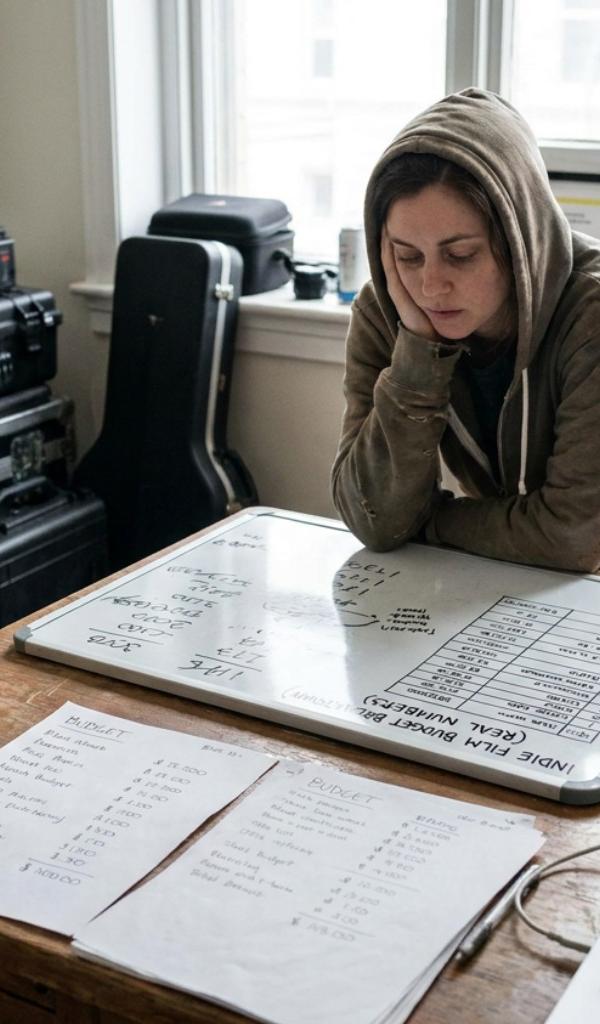
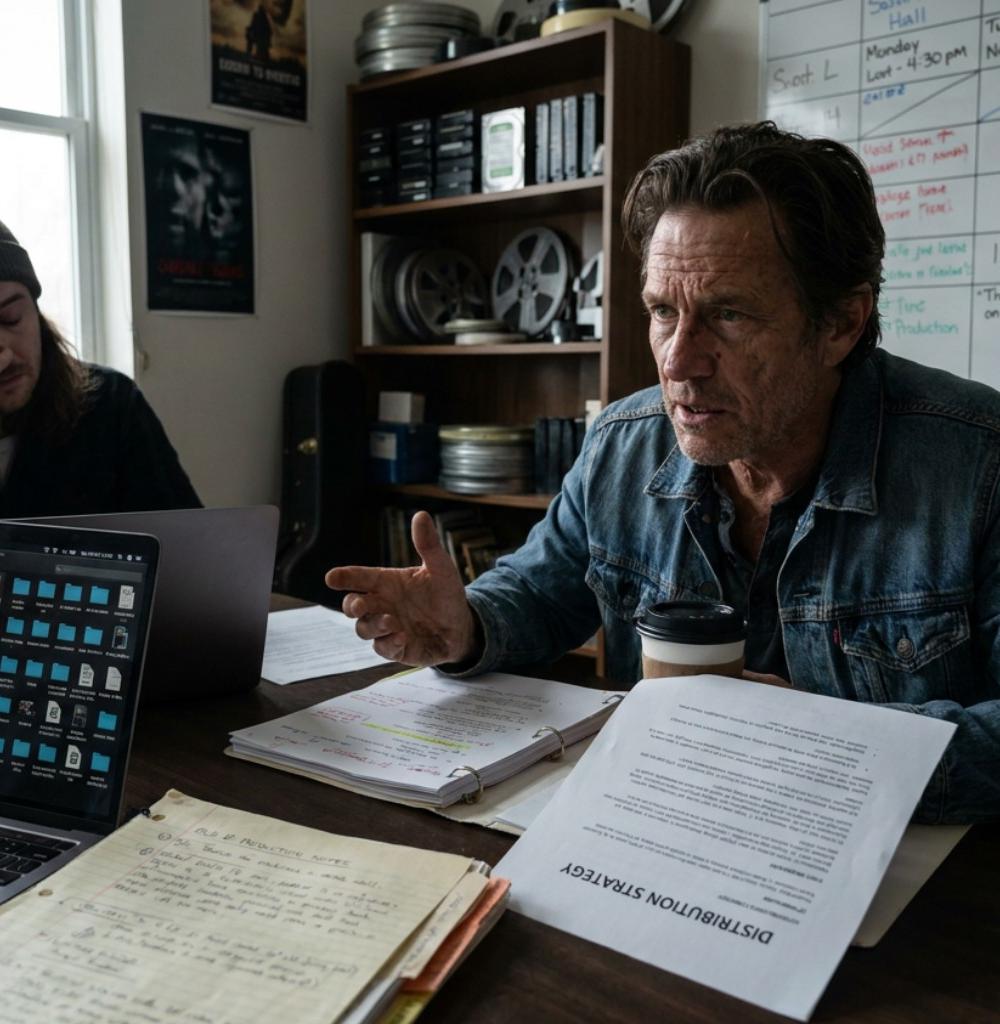
Picture a filmmaker who has rewritten their script fourteen times, has a mood board that would make Roger Deakins weep, and still can't get a single investor on the phone. Meanwhile, someone else raises $80,000 on a crowdfunding campaign for a horror short about a haunted laundromat. The difference between those two people has almost nothing to do with talent. It has everything to do with understanding what actually gets your film made and seen — and building every decision around that.
The short answer: your film gets made when you stop waiting for permission and start building proof. It gets seen when you treat distribution as a creative act, not an afterthought. Everything in between — the money, the crew, the festival run — flows from those two ideas.
Why "Getting a Film Made" Is Really a Trust Problem
Nobody hands a stranger $50,000. What investors, crew members, and collaborators are actually buying is confidence — confidence that you will finish, that you will deliver, and that they won't be embarrassed for being attached to your project. Your job, before you write a single budget line, is to manufacture that confidence.
Proof of concept is the most underused tool in independent film. A three-minute short, a single scene shot on a Sony ZV-E10 with a $35 LED panel — something that shows the look, the tone, the world. It does more work than a 40-page pitch deck. Investors page through decks. They feel footage.
The common mistake here is treating the proof of concept as a luxury you make after funding. Flip it. Make the proof of concept to get the funding. One weekend, a skeleton crew, your best actor friend. Done.
What Actually Gets Your Film Funded (Without a Rich Uncle)
Independent film money comes from three real buckets: grants, private investors, and crowdfunding. Most filmmakers chase one and ignore the other two. Stack all three and you stop being fragile.
Grants are slower than you think and faster than you remember. The Sundance Institute, IFP (now known as Gotham Film & Media Institute), and regional arts councils in nearly every U.S. state offer filmmaker grants — some as small as $2,500 and some reaching into six figures. The key is lead time: most grant cycles close six to nine months before the money lands. Apply now for the film you want to shoot next year. Check your state arts council website and the Foundation Center database (search "arts grants" in your region) for listings. Always verify current deadlines directly at each organization.
Private investors — friends, family, local business owners — respond to stories, not spreadsheets. Give them a one-page "look book" with a logline, three reference images, a budget summary, and your distribution plan. The distribution plan is the part almost every first-time filmmaker omits, and it's the first thing a smart investor looks for. Show them you've thought about how they get their money back.
Crowdfunding on platforms like Kickstarter or Indiegogo is not a lottery. It's a 30-day marketing sprint. Films that hit their goals typically have 30% of the target pledged in the first 48 hours — almost always from people the filmmaker personally contacted before launch. Build your list before you press go.
The film that gets made is the one with a producer who treats every phone call like a location scout — looking for what's useful, not what's pretty.
Crew, Gear, and the Art of Making a Dollar Look Like Ten
The single most expensive thing on a low-budget set is inefficiency. A shoot day that runs three hours over costs you money, goodwill, and your next favor to call in. The solution is ruthless pre-production. Not "pretty good" pre-production — obsessive, over-scheduled, every contingency mapped pre-production.
Gear has never been cheaper or better. A used Sony FX3 body and a couple of vintage Rokinon primes can give you a cinematic image that would have cost a rental house $3,000 a day in 2010. Rent strategically — bodies and lenses for shoot days, own your audio kit (a Zoom H5 recorder and a Rode NTG3 shotgun mic is a setup under $700 that will cover you for years).
Defer deals are real. Crew members working on a project they believe in will often defer part of their rate against backend. But you have to earn that — with a contract, with a distribution plan, with clear communication, and with food on set that doesn't make people feel like they're being punished. Feed your crew well. It is not optional.
For pre-production planning that actually holds up on shoot day, including shot lists, call sheet templates, and location agreement basics, check our dedicated section — it's the most-visited part of this site for a reason.
The SAG-AFTRA Question Every Indie Director Has to Answer
Going union opens doors to name talent. The SAG-AFTRA low-budget and ultra-low-budget agreements exist specifically for independent films, with tiered minimums based on your total budget. The specific day rates and budget thresholds change, so verify current figures directly at sagaftra.org — don't rely on what a forum post from three years ago says. The broad truth: if your total budget is under a certain threshold (currently in the low six figures for the modified low-budget tier), the agreements are more accessible than most filmmakers assume.
The mistake is thinking SAG means expensive. SAG means accountable — to the actors and to you. Non-union shoots with no contracts are where projects quietly fall apart at the worst possible moment.
Film Festivals: The Ones That Actually Move the Needle
There are over 3,000 film festivals worldwide. Roughly 40 of them will meaningfully affect your career or your film's distribution prospects. The rest are fine for a trophy and a screener link, but they won't change your life.
The top tier — Sundance, SXSW, Tribeca, AFI, Tribeca — are where acquisitions happen and where press relationships form. Getting into one of them is not about luck; it's about timing, relationships, and a film that fits the moment culturally. Submit when the film is genuinely finished, not when it's "close enough." A mediocre cut seen by a Sundance programmer is a closed door, possibly for years.
The middle tier is where most indie filmmakers should focus energy: strong regional festivals (LAFF, Nashville Film Festival, Overlook, Fantasia) build real audiences in real cities and lead to real press. Win a jury prize at a respected mid-tier festival and you have a marketing line that works for the rest of the film's life.
Use FilmFreeway to manage submissions (it's the standard aggregator the industry uses). Set a submission budget — $800 to $1,500 is a realistic range for a focused 15–20 festival run — and treat every submission as a strategic choice, not a lottery ticket.
Our guide to navigating the festival circuit without burning your budget breaks down which festivals matter for which genres and how to build relationships with programmers before you submit.
Distribution Is Not the Finish Line — It's the Starting Gun
Here's what nobody tells you in film school: the film doesn't get seen because it's good. It gets seen because someone worked tirelessly to make sure people knew it existed. Distribution is not a reward for finishing. It is a campaign you plan before you shoot the first frame.
For most indie films today, the realistic path is: festival run → SVOD or AVOD platforms (think Tubi, Plex, or a service-specific deal) → possible theatrical micro-release in key cities → digital rental and ownership. Theatrical is not dead, but it is expensive and usually reserved for films with marketing budgets to support it. Know which path fits your film before you're finished, not after.
If you are not actively building an audience — a social presence, an email list, a community of people who want to see this specific film — before it's finished, you are starting the distribution race three miles behind everyone else. The filmmaker who builds 4,000 email subscribers during production arrives at a distributor with leverage. The one who finishes and then "starts marketing" arrives empty-handed.
For a deeper look at on-set decisions that affect your film's marketability — from aspect ratio choices to how coverage decisions limit your edit — we have a full resource section that covers both craft and commerce.
The One Move That Connects All of This
Every element above — funding, crew, festivals, distribution — requires one thing underneath it: a clear, compelling reason this film needs to exist right now. Not a high concept. Not a genre hook. A genuine point of view that a specific audience is hungry for and that only you can make.
If you can say that in a sentence, everything else is just logistics. If you can't, go back to the script.
If you're ready to move from circling the idea to actually building the plan, FilmmakerGenius is worth an hour of your time — it's free to start, and it's built specifically for independent filmmakers who need a structured path through development, funding, and distribution without the film school price tag.
FAQ
Keep reading: Grants for Filmmakers: Where to Find & Win Them, How to Make a Microbudget Film That Actually Gets Seen, and Film Distribution Platforms: The Indie Guide.
How much does it realistically cost to make an indie short film?
A competent short film — 10 to 15 minutes, small cast, one or two locations — can be made for $3,000 to $15,000 depending on your market, gear access, and how many favors you can honestly call in. Below $3,000 you are making a proof of concept, which is still worth making. Budget for food, insurance, and hard drives first; everything else negotiates.
Do I need a producer, or can I produce my own film?
You can produce your own film, and many first-time directors do. What you can't do is direct and produce simultaneously without something suffering. Even a single dedicated line producer — someone whose only job is logistics — transforms a shoot. If budget is tight, a strong production coordinator filling that role part-time is better than nothing.
When should I start thinking about distribution?
Before you lock your budget. Distribution strategy should influence decisions about aspect ratio, runtime, clearances, and even casting. A film that can't clear its music rights for a streaming deal, or that runs 97 minutes when the market wants 85, faces preventable problems. Think backwards from the audience, always.
Is crowdfunding worth it for a feature film?
For features, crowdfunding alone rarely covers the full budget — but it validates the audience, demonstrates demand to investors, and funds the proof-of-concept phase. Think of crowdfunding less as a fundraising tool and more as a public audience test with a financial upside. A $25,000 campaign that proves 800 people care about your film is worth more than the money.
How important is the director's previous work when submitting to festivals?
Less important than the film in front of them, but more important than most filmmakers admit. Programmers look at the full package: the film, the bio, the statement, the press kit. A single strong previous short listed on your bio signals you finish things and grow. It is not a prerequisite, but it is never irrelevant.
The film you've been circling deserves a real shot. Not someday — now. Map the funding, build the proof, plan the release before you roll camera, and remember: the filmmakers who get their work made and seen aren't luckier than you. They just stopped waiting for someone to give them permission. Go make the thing. Our funding and grants section has everything you need to start the financial groundwork today.