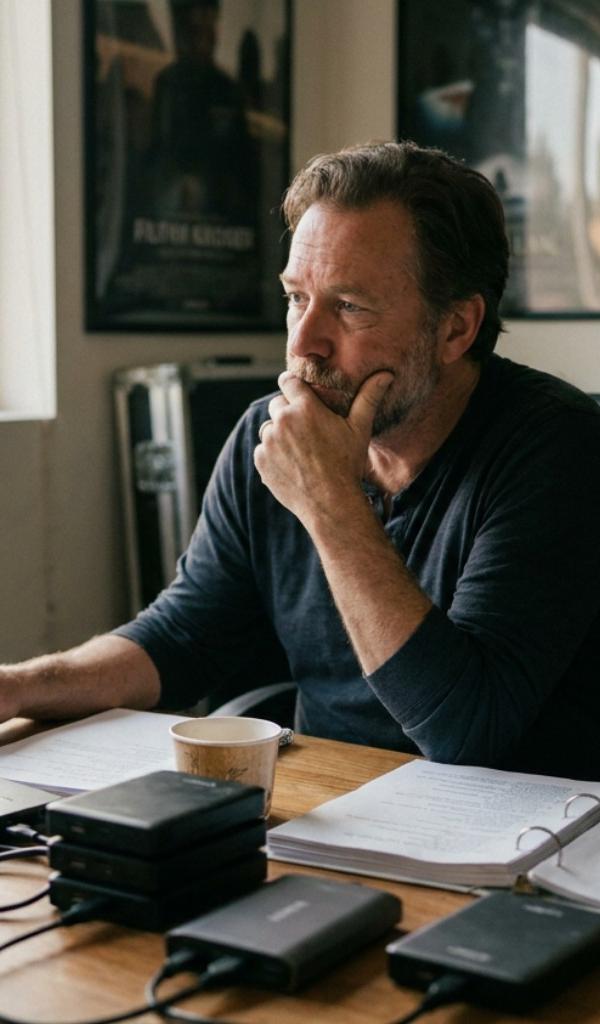
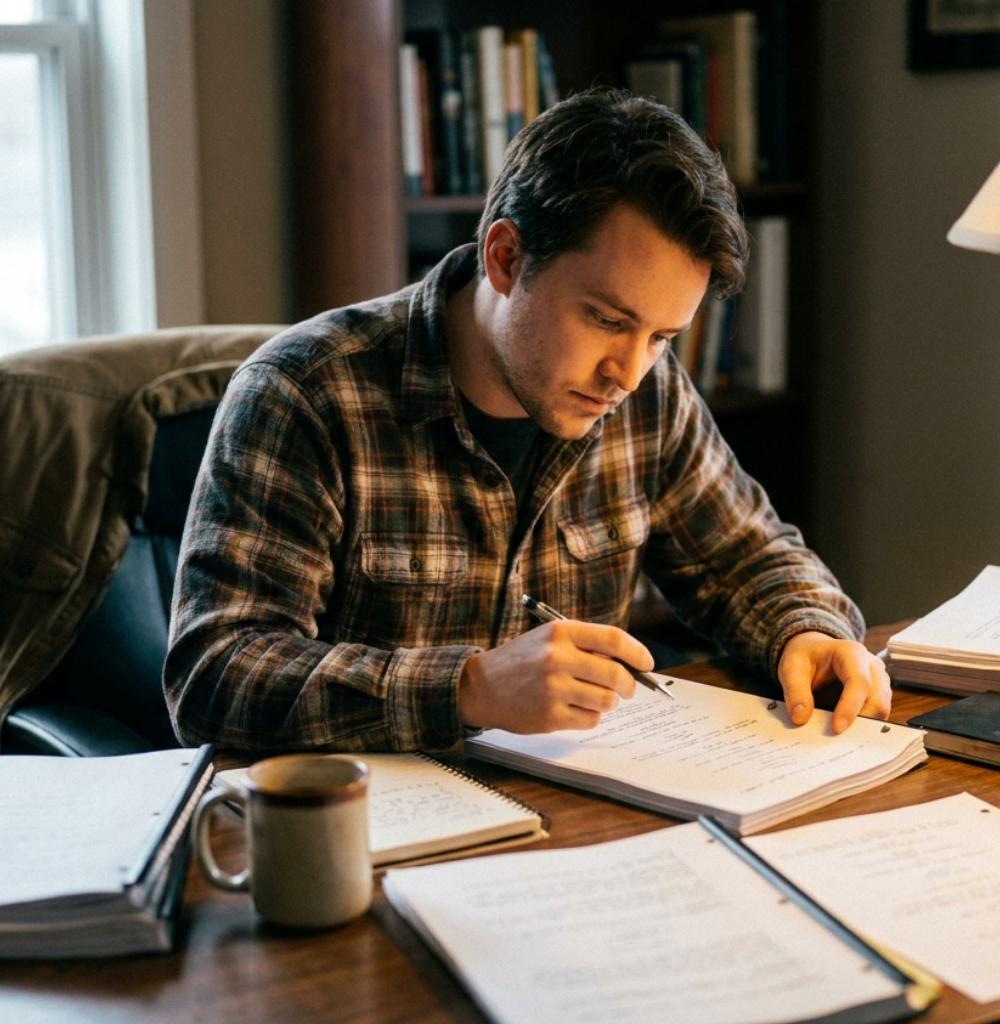
Ask any working screenwriter how they actually learned the craft and you'll hear the same answer: they read screenplay examples — real, produced scripts — until the shape of the form got into their hands. Not a $400 course. Not a guru's ten-step system. Scripts. Dozens of them, read the way a mechanic studies an engine that already runs.
The problem is that most beginners read a screenplay like an audience — chasing the story — instead of like a writer, studying the choices. Same pages, completely different education.
The short answer: The best screenplay examples teach three things at once — how professional format looks on the page, how ruthlessly pros cut everything that isn't essential, and how a distinct voice survives inside a rigid format. Read produced scripts in the genre you're writing, study why each choice was made, and steal the technique, not the story.
Why reading screenplay examples beats any course
A course explains the rules. A screenplay example shows you the rules working — or being broken on purpose by someone who knows exactly why. When you read a produced script, you're seeing what actually got made, greenlit, and shot. That's the real standard, not a theory about it.
And it's free. Studios and screenwriting sites post produced scripts online, especially around awards season. A weekend of reading three great scripts in your genre will teach you more than a month of tutorials.
What to actually look for in a screenplay example
Don't just read for plot. Read for the craft underneath it:
- Format. Notice how clean it is — sluglines, action, dialogue, all in standard form, nothing fancy. Professional format is invisible; it never calls attention to itself.
- White space. Look how short the action paragraphs are — often one to three lines. Pros trust white space. A dense wall of text is the mark of a beginner.
- Economy. Watch how much story a single line of action carries. Great scripts say the most with the least. Every word is doing a job.
- Voice. Notice the personality in the action lines — the rhythm, the wit, the point of view. Format is rigid; voice is where the writer lives.
- The opening. Study the first three pages hard. How fast do they establish tone, character, and a question you need answered? That's the page that sells the script.
Scripts worth studying (and what each one teaches)
You don't need a long list — you need a few great ones read closely. A handful that reward study:
- Whiplash — escalation and economy. Watch how relentlessly the tension ratchets and how little fat there is on the page.
- The Social Network — dialogue and rhythm. A masterclass in how talk can carry momentum like an action sequence.
- Get Out — setup and payoff. Notice how early details quietly pay off later; nothing is wasted.
- Little Miss Sunshine — structure and ensemble. A clean, teachable example of act turns and a cast of wants colliding.
- Nightcrawler — character voice and a protagonist you can't look away from.
Read them once for the story. Then read them again with a pen, marking every choice you'd never have made — and asking why theirs was better.
Read a script once as an audience, twice as a thief. The second read is where you actually learn to write.
How to read a screenplay like a writer
On your second pass, interrogate the page. Where does each act turn, and on what beat? How does the writer introduce a character in a single line so you instantly get them? Where do they break format on purpose, and what did it buy? How short can an action line be and still land? You're not enjoying the movie now — you're reverse-engineering it.
The mistakes screenplay examples expose in your own writing
- Dense action blocks. Pro scripts breathe. If yours are walls of text, you're novelizing.
- Over-directing. You'll notice great scripts rarely dictate camera angles. Let the images imply the shots.
- Flat introductions. Watch how pros make a character vivid in one line, then fix your own.
- Slow openings. If a produced script hooks by page three and yours hooks by page fifteen, that's your note.
Keep reading: How to Write a Screenplay: The Complete 2026 Guide, Screenplay Act Structure: What Every Filmmaker Must Know, and Screenplay Script Format: What Every Filmmaker Must Know.
Frequently Asked Questions
Where can I find screenplay examples to read?
Studios post many produced scripts online for free, especially during awards season, and several screenwriting sites host large script libraries. Read scripts of films you love — and, crucially, in the genre you're actually trying to write.
Should I read scripts in my genre or widely?
Both, but weight it toward your genre. Reading five great scripts in the exact form you're writing teaches you the specific rhythms and expectations of that lane faster than reading widely.
How many should I read before I start writing?
Don't wait — read and write in parallel. Read a few closely to internalize the shape, then start your own outline. You'll learn the most by reading a great script right after struggling with the same problem in your own draft.
Do produced scripts follow the "rules" exactly?
Mostly — and where they break a rule, it's deliberate and earned. Learn the standard format cold first; you break rules well only once you know exactly what you're breaking.
Read like a writer, then write
Studying screenplay examples is the closest thing screenwriting has to an apprenticeship: you sit beside the pros on the page and watch every choice they made. Do it with intent — format, economy, voice — and your own pages start to look and read like the ones that get made.
When you've read enough to start your own, FilmmakerGenius takes you from logline to outline to a properly formatted draft — and on to a pitch deck and production plan — all in one place, free to start, so the script you're learning to write actually becomes a film.