Commercial voice over is where most working voice-over income actually lives. Not the flashy animation gig, not the prestige audiobook — the commercial. It's the highest-volume, most consistent paying work in the business, and it's the category an on-camera actor is most naturally built to win. But to win it, you have to understand the single biggest shift that's happened in the last decade, because most people auditioning still haven't caught up to it: the announcer is dead.
The Announcer Is Dead
For generations, "commercial voice" meant a specific sound — big, polished, authoritative, the voice of God selling you a truck. That voice is gone, and it's not coming back. Brands figured out that audiences have infinite ways to skip, mute, and scroll past anything that sounds like an ad. So the whole industry pivoted. They don't want to be sold at anymore; they want to be talked to. The modern commercial read is warm, specific, and conversational — you're not addressing a stadium, you're telling one friend about something you genuinely like. Half the time they literally want a "real person" read: someone who sounds a little untrained, a little imperfect, like your neighbor recommending a restaurant, because that's what people actually trust now.
Why "Just Talk Like a Person" Is the Hardest Thing in the Category
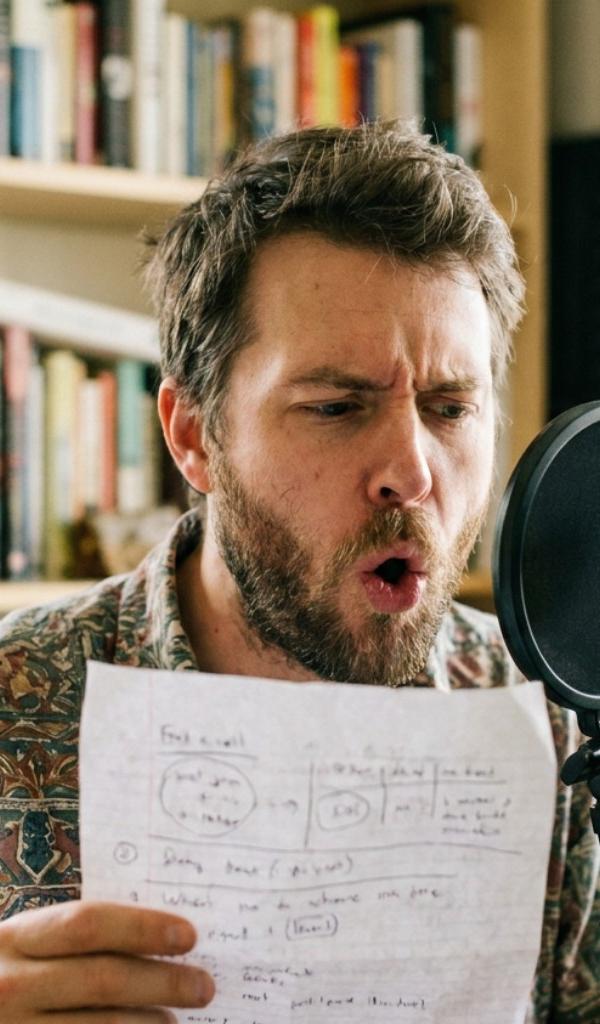
And here's the trap: that sounds easy, and it's the hardest thing in the category. "Just talk like a normal person" is brutally difficult, because commercial copy is written to be read, not spoken. It's built out of marketing sentences no human being would ever say out loud — "Introducing the all-new," "For a limited time," "Because you deserve the best." Your entire job is to find the real person buried underneath that unnatural sentence and let them say it like they mean it. You have to erase the smell of the copywriter and replace it with a human who actually cares. The actors who can't do this sound like they're reading an ad, and casting rejects them in the first three seconds. The ones who can sound like a person caught in a genuine moment — and they book.
Run the Copy Through Three Questions
So before you ever hit record, you run the copy through three questions, and you answer them specifically, not vaguely. One: who am I talking to? Not "the audience" — one person. A specific person, in a specific relationship to you. Your best friend? A skeptical coworker? Your kid? The whole tone changes depending on who's across the table, and "one person" is what makes a read feel intimate instead of broadcast. Two: what do I want them to feel? Reassured? Excited? Let in on a secret? Pick the feeling and play that, not the words. Three: what's the one word in the line that carries it? Every sentence has a load-bearing word — the one that, if you hit it right, the whole line lands. Find it, and let everything else relax around it. Then say the thing like a human being, not a billboard.
Range on Demand
The next thing casting demands, and the thing that separates the hobbyist from the working pro, is range on demand. They don't want your one good read; they want to know you can turn on a dime. So you drill it: take a single 30-second spot and perform it five completely different ways. The best-friend confession, leaning in, almost whispering. The confident expert who knows this cold. The "real person" who sounds like they've never been in a booth. The bright, energetic upsell. The dry, understated, almost throwaway version. You do this until it's automatic — because in the actual session, a director is going to say "give me another color," or "warmer," or "less polished," and you need to hand them a genuinely different take instantly, with zero debate and zero ego. The actor who argues for their first choice loses to the actor who cheerfully offers three more.
Mic Technique — and the Mistake That Kills Good Reads
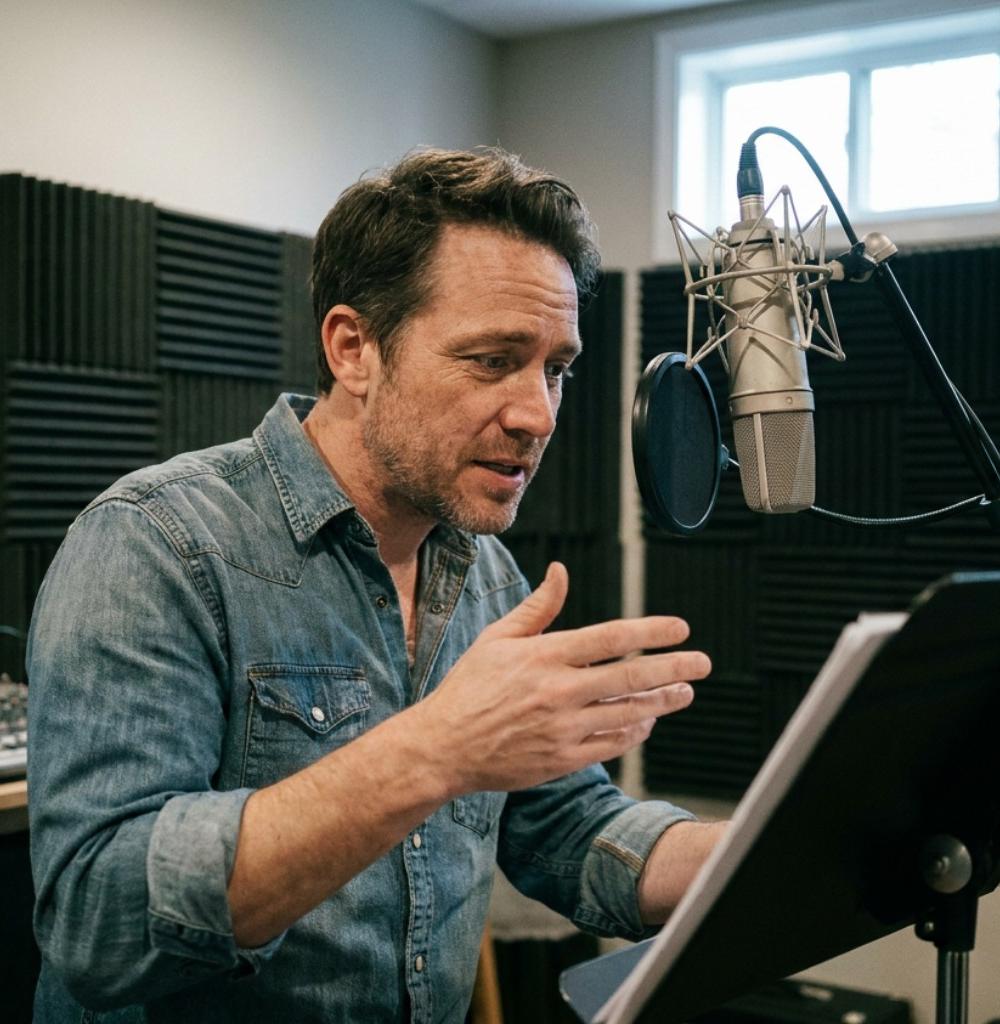
Technique carries real weight here too, and it's where a lot of good performances get killed by bad sound. Proximity is intimacy — lean in a hair toward the mic and the voice gets closer, warmer, more confidential; ease back and it opens up for a bigger, brighter line. Skilled commercial actors work the mic like blocking for the voice, using distance to shape the emotional temperature of a read. But you do it within control — you don't swing so wildly between a whisper and a shout that your levels are all over the place and the engineer can't use the file. Kill your plosives with a pop filter so your "P" and "B" sounds don't punch the mic. And watch the most common conversational-read mistake of all: casual does not mean flat. When a director says "keep it relaxed," beginners drain all the energy out and go limp. Conversational reads still need life underneath them — the energy of a person who's actually engaged in what they're saying. Intimate, yes. Dead, never. The same clean, controlled home-recording discipline you use for self-tapes is what makes these reads usable.
The Business Reality: Usage Drives Pay
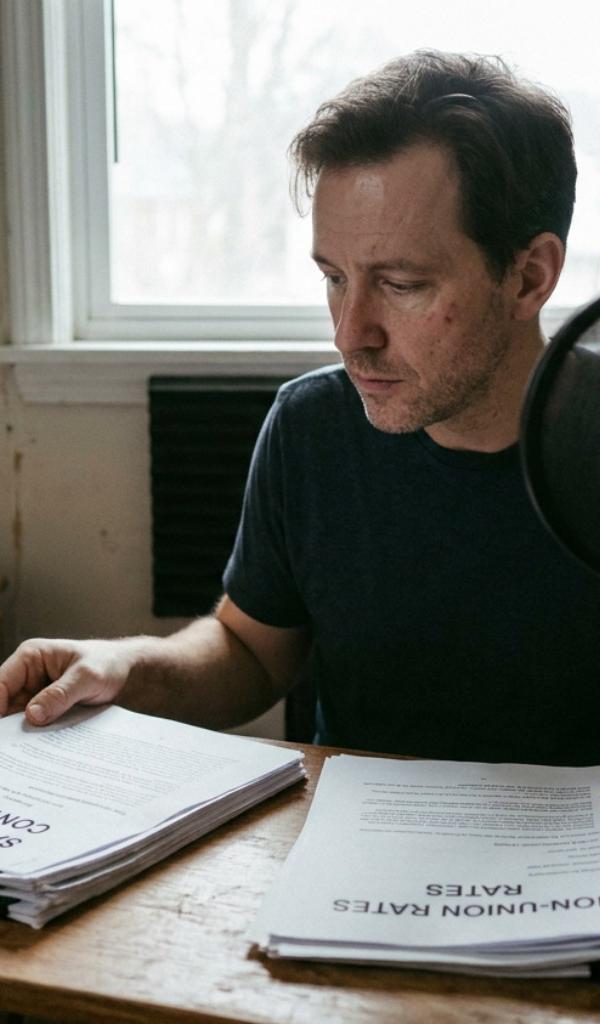
There's also a business reality worth knowing even at the craft level: commercial pay is driven by usage. A local spot pays modestly; a regional buy pays more; a national spot with heavy rotation pays a session fee plus residuals that can quietly out-earn everything else you do in a year. In union work especially, one commercial that keeps airing pays you again and again. That's the upside hiding inside the "bread and butter" — the steady category also holds the biggest sleeper paydays.
Keep reading: How to Become a Voice Actor: The Real Working Guide, Types of Voice Over: Which Genre Fits Your Voice, and Voice-Over Rates: What Each Category Actually Pays.
Why This Rewards On-Camera Actors
And this is exactly why commercial voice-over rewards on-camera actors more than almost anyone else. Everything you already know about intention and stakes still applies — you've just moved it from your face and body into pure sound. The best-friend confession is a scene. The confident expert is a character with a point of view. The "one person" you're talking to is a scene partner you're imagining. You're not learning a foreign discipline; you're doing the acting you already do, in a new medium. That's why the actors who book commercials are almost never the ones with the "prettiest" voice. Pretty voices are everywhere and nobody's hiring them. The actors who book are the ones who sound like a believable person having a real moment — and who can do it twelve genuinely different ways before lunch. That's an acting skill. You already have it. Point it at the copy.
The read is acting; the file has to be clean enough to prove it. HowToSelfTape is free to start and dials in the home-recording setup that makes your commercial reads land as good as they sound in your head.