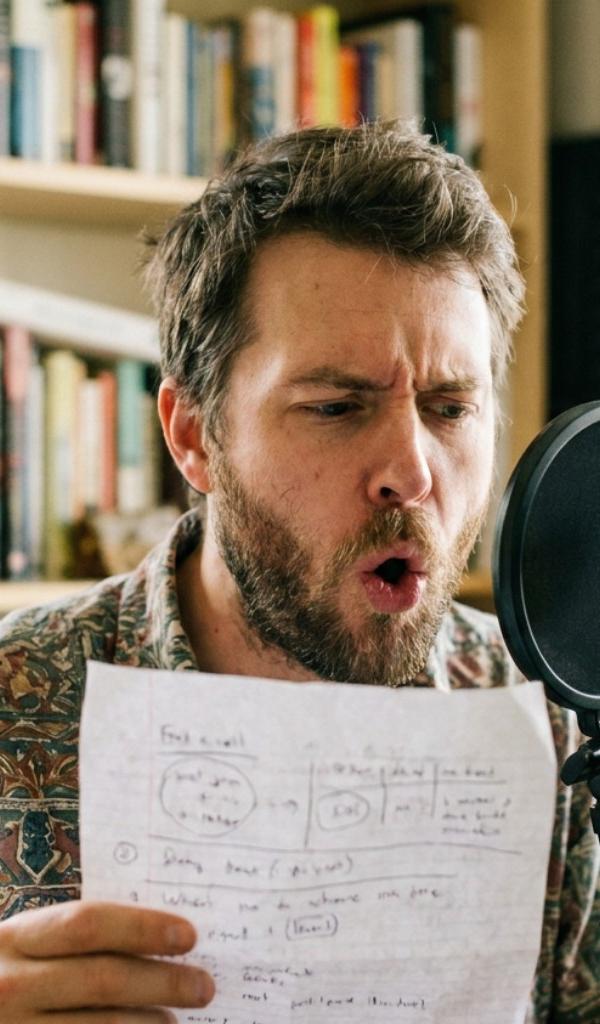
Video game voice acting is one of the fastest-growing corners of the entire performance industry, and most actors are sleeping on it completely. Games are now a bigger business than film and music combined, and every one of those games is stuffed with characters who need voices — protagonists, villains, sidekicks, and a small army of background NPCs muttering, shouting, and dying in the corner of every scene. That's a mountain of work, and it's growing every year. But here's the part that should make an on-camera actor lean in: of all the voice-over genres, games are the most friendly to performers who come from screen acting — because games increasingly cast people who can do both voice and physical work. Your on-camera training isn't a side qualification here. It's a competitive advantage.
Stamina Is Non-Negotiable
The demands, though, are specific and unforgiving, and you should understand them before you romanticize the dragons. First, stamina is non-negotiable. Game sessions are long — you can be in a booth for hours, and unlike a commercial where you nail a 30-second read and leave, you're grinding through pages of dialogue, alternate line reads, and combat barks. A voice that sounds great for ten minutes and shredded after ninety is a voice that doesn't get booked twice. Endurance is a trained athletic quality, not a gift, and games expose immediately who has it.
Range and Consistency
Second, range and consistency. You'll often voice several characters in a single day — the grizzled captain, the nervous merchant, the snarling beast — which means you have to find a distinct, believable character fast, commit to it, and then hold it consistently, sometimes returning to a character weeks later and having to match exactly what you did before. It's not enough to invent a great voice once; you have to be able to reproduce it on demand, session after session, or the character audibly drifts and the whole thing falls apart.
Efforts: Where Pros and Amateurs Separate
Third — and this is the one that trips up everybody who isn't trained — efforts. Efforts are the grunts, screams, death cries, jumps, throws, impacts, and exertions that fill every action moment in a game, and there are hundreds of them. Here's the brutal truth: done wrong, efforts will shred your voice for a week. Screaming from a tight throat, forcing exertions from the wrong place, pushing a death cry with no support — that's how you show up to your next session hoarse, unbookable, and possibly injured. Done right, every one of those sounds is produced from the body, supported by breath and core, protected the way a trained singer belts without wrecking their cords. And casting notices — instantly — who knows the difference between a supported scream and a self-destructive one. Efforts are where the pros and the amateurs separate in about thirty seconds of a session, because the amateur is already losing their voice while the pro has another four hours in the tank.
The Mocap Crossover That Makes This Genre Yours
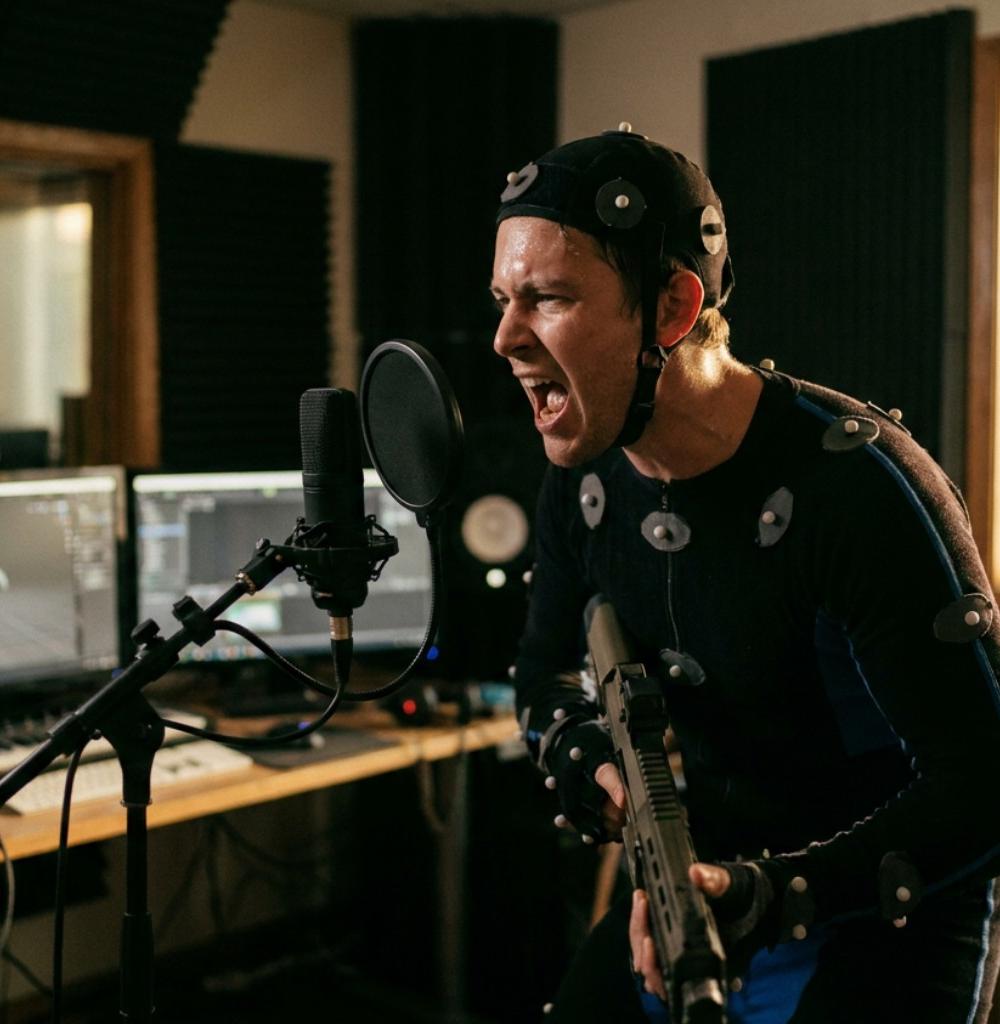
Now, the crossover that makes this genre yours. Many games are built on motion capture, where the performer acts out the scene physically — full body, on a stage, in a mocap suit — and the voice is captured or matched to that performance. This is on-camera acting with dots on your face. And even in pure voice sessions with no capture, a huge amount of great game performance is full-body even when the audience only ever hears the voice. The best game voice actors are physically committing in the booth — swinging the imaginary sword, taking the imaginary hit, planting their feet for the big line — because the body drives the truth of the sound. That instinct, to play the moment with your whole instrument instead of just your mouth, is exactly what on-camera actors already train. Screen actors don't have to learn it. They just have to bring it into the booth.
Acting Under Athletic Conditions
The craft challenge, then, is a specific combination: range, commitment, and endurance, all at once. You have to build the entire body of a character while standing still at a mic. You have to sustain that character and that energy across a marathon session without your voice or your focus degrading. And you have to take rapid, precise direction as a developer refines a scene in real time — "again, but he's more scared this time," "one more, angrier," "give me three deaths, different intensities." It's acting under athletic conditions: creatively demanding and physically demanding at the same time. That's why it filters people so hard, and why the ones who can do it work constantly.
How You Actually Break In
Entry is more relationship- and audition-driven than something like audiobooks — the big AAA titles cast through agents and established relationships, and breaking into that top tier takes time and reps. But do not let the AAA ceiling fool you into thinking there's no door. Indie games hire from self-recorded auditions constantly. There is an enormous and endless pipeline of independent developers, smaller studios, and passion projects casting characters right now, from self-tapes, with no agent required — exactly the permissionless on-ramp you're already equipped for. Pay is typically per session, and on a long project those sessions stack into real, recurring income. You start indie, you build a reel and relationships, and you climb.
Keep reading: How to Become a Voice Actor: The Real Working Guide, Vocal Health for Voice Actors: Breath & Stamina, and Types of Voice Over: Which Genre Fits Your Voice.
The Bottom Line
So here's the honest bottom line. If you have a flexible instrument that loves to play, a durable voice you know how to support, and the physical commitment you already bring to on-camera work, video games reward exactly the muscles you've spent years training — just louder, longer, and with more dragons. The stamina, the character work, the taking of rapid direction, the full-body commitment — you already do all of it on set. Games just put a mic in front of it and hand you a monster to play. That's not a foreign career you have to learn from scratch. That's your skill set, weaponized for the biggest and fastest-growing performance market on the planet.
The fastest door in is a self-recorded audition clean enough to compete with the indie pipeline. HowToSelfTape is free to start and covers the home-recording setup that makes your game auditions — and your on-camera self-tapes — sound bookable.