
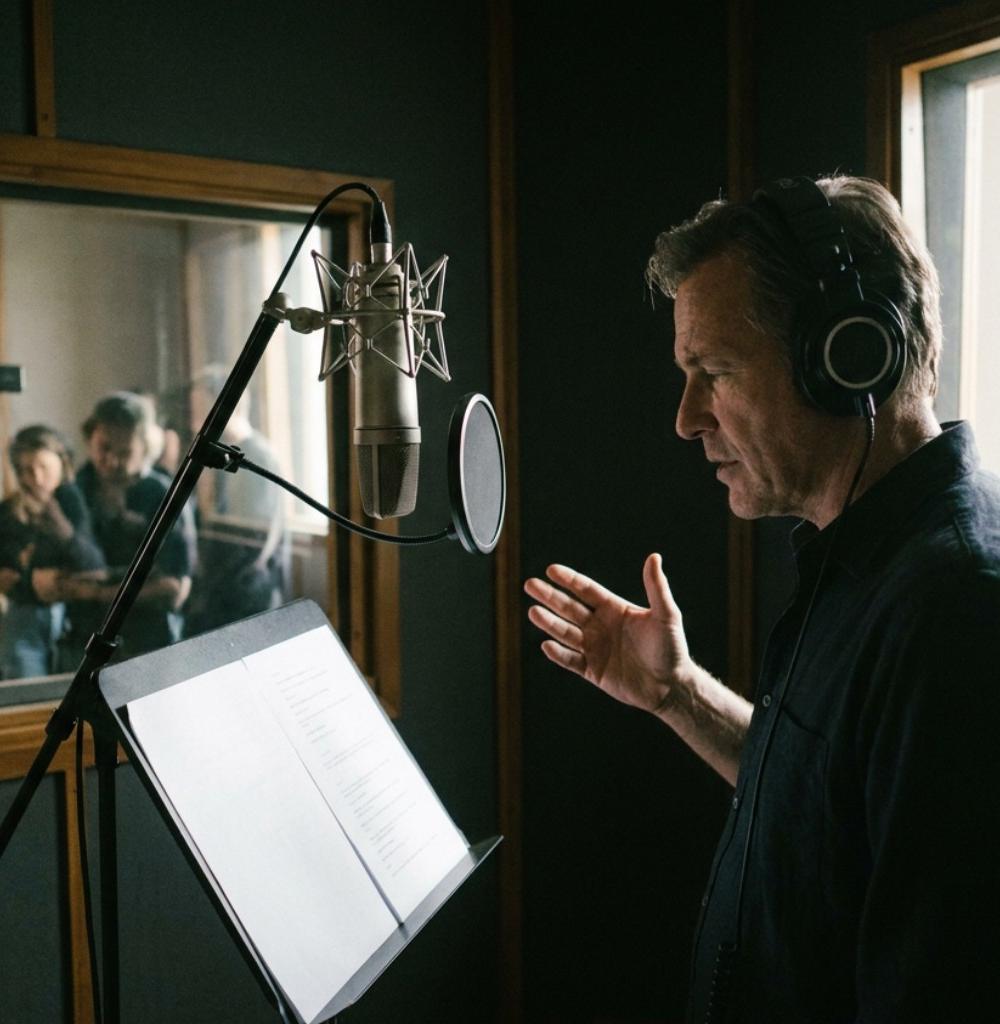
Most actors file voice acting under "someone else's career." It happens quietly, usually without a single conscious decision. Nobody ever sat down and chose to ignore half the industry — they just absorbed a story that voice work belongs to a different kind of performer, a "voice person," someone with a golden pipe and a demo reel full of cartoon characters. And because that story was never said out loud, it was never examined. So it just sits there, running in the background, costing them auditions, callbacks, and income every single week. That's the cruelest part of this particular blind spot: you can't miss a room you were never told existed. There's no sting of rejection, no lesson learned. The work simply goes to someone else, and you never even know it was on the table.
The Same Casting Directors Cast Both
Here's the mechanic that changes the math, and once you see it you can't unsee it: the same casting directors who book on-camera work also cast voice work. This isn't two separate industries with two separate gatekeepers. It's one industry, one set of decision-makers, and a firehose of content that is voice-first. Commercials — radio, TV, digital, social. Animation, from network series to indie shorts. Audiobooks, an exploding category. E-learning and corporate narration, the quiet money machine that never stops. Video games, one of the fastest-growing performance markets on earth. Promos, trailers, dubbing, explainers, medical narration. A huge slice of what a casting office moves through its pipeline in any given week is voice work — and the people deciding who gets it are frequently the exact same people watching your self-tapes.
What Your On-Camera Audition Secretly Asks
That's why this matters more than it looks. When a casting director watches your on-camera audition, part of what they're evaluating — consciously or not — is a bigger question about you as a performer: can this actor deliver with only their voice? Can they carry a moment on tone alone, no face, no eyes, no body? If you've never trained for that, you're answering "no" without saying a word. You're telling every CD who sees you that you're a one-channel performer, useful for one kind of job, invisible for the rest. And in a business built on relationships and rehires, being seen as a specialist when you could be seen as a utility player is a slow, silent tax on your entire career.
The Full Stack Actor: Not More Work, More Range
Now, the reflex here is to hear "add voice acting" as "add more work" — another skill to grind, another thing to be bad at before you're good, another demand on an already-stretched actor's life. That reflex is exactly backwards, and it's the heart of what we mean by the Full Stack actor. The Full Stack idea isn't "do more." It's "make the work you already do pay you in more directions." Look honestly at what you've already built to survive as a self-taping actor. You have a recording space you treated for sound. You have a cold-reading muscle you drill constantly. You have the ability to take direction and adjust on the fly. You have trained emotional access — the ability to summon a real feeling on command. Every single one of those assets transfers directly to voice work. You are not starting a second career from zero. You are picking up a second arrow for the same bow, aimed at the same targets, drawn with the same muscles you've already spent years building.
The Arithmetic That Should Make You Sit Up
And the argument that actually lands — the one that should make you sit up — is pure arithmetic. One skill set gives you access to two categories of audition instead of one, which roughly doubles the volume of work you're eligible for. Double the auditions, and you double the number of casting directors who see your name, hear your reads, and file you away as "someone who can deliver." Double the CD relationships, and now the compounding kicks in — because this business does not hire strangers. It hires the people it already knows can show up and get it right. Every audition is also an audition for the next audition. So doubling your at-bats doesn't just double your immediate shots; it accelerates the relationship flywheel that determines whether you work for the next ten years. The actor who's known by twice as many casting directors isn't twice as employable. Over time, they're far more than twice as employable, because trust compounds.
While You Decide, Someone Else Is Training
And here's the part that should genuinely light a fire, because it's not hypothetical — it's happening right now, while you decide whether to bother. Every week you're not training your voice, a competing actor is. Somewhere, someone with roughly your look, your range, your on-camera ability is quietly building the second skill you're ignoring. And one day, maybe in your market, maybe in a self-tape pile you'll never see, that actor is going to walk into the same casting director with everything you have — plus a voice reel. Same face-value talent. One extra arrow. Who do you think gets the callback? You will never even be in that comparison. You'll just quietly not book the thing, and you'll blame the read, or the look, or the timing, when the truth is you disqualified yourself months earlier by deciding voice work was someone else's game.
85,000 Searches a Month — and Almost Nobody Teaching It
Then there's the demand signal, and it's almost absurd. "Voice acting" pulls roughly 85,000 searches a month — eighty-five thousand people every month actively hunting for exactly this information — and almost nobody in the self-tape and actor-education space is teaching it. Sit with that imbalance. Enormous, hungry, permanent demand on one side; near-silence from the people best positioned to serve it on the other. For an actor, that's not a gap. It's a crater. It's a wide-open lane of opportunity sitting right next to the skills you already have — not across town, not in some other industry, but one small pivot away from the exact things you already practice.
The Permissionless Era Is Loudest in Voice
This is the permissionless era, and voice acting is where it's most obviously true. The old world — drive to a studio, stand in a booth, hope a gatekeeper likes your reel — is gone. It's been replaced by the thing you already do every day: perform, alone, into a recorded medium, from home. You already own the booth. You already have the instrument. You've already done the hardest part, which is learning to deliver a full performance with nobody in the room. All that's left is to point it at the half of the industry you've been ignoring.
Keep reading: How to Become a Voice Actor: The Real Working Guide, Types of Voice Over: Which Genre Fits Your Voice, and 30-Day Voice-Over Starter Plan: Break In Fast.
It Was Always Yours
So stop treating voice work as off-limits, as advanced, as somebody else's specialty. It was never a separate career. It's the other half of yours — the same casting directors, the same skills, the same permissionless tools, and roughly double the ways you get paid to do what you already love. That's not a maybe. That's math. And it was always yours.
You already own the booth and the instrument — the only move left is to point them at the other half of the industry. HowToSelfTape is free to start and dials in the home-recording setup that serves your on-camera and voice work at the same time.