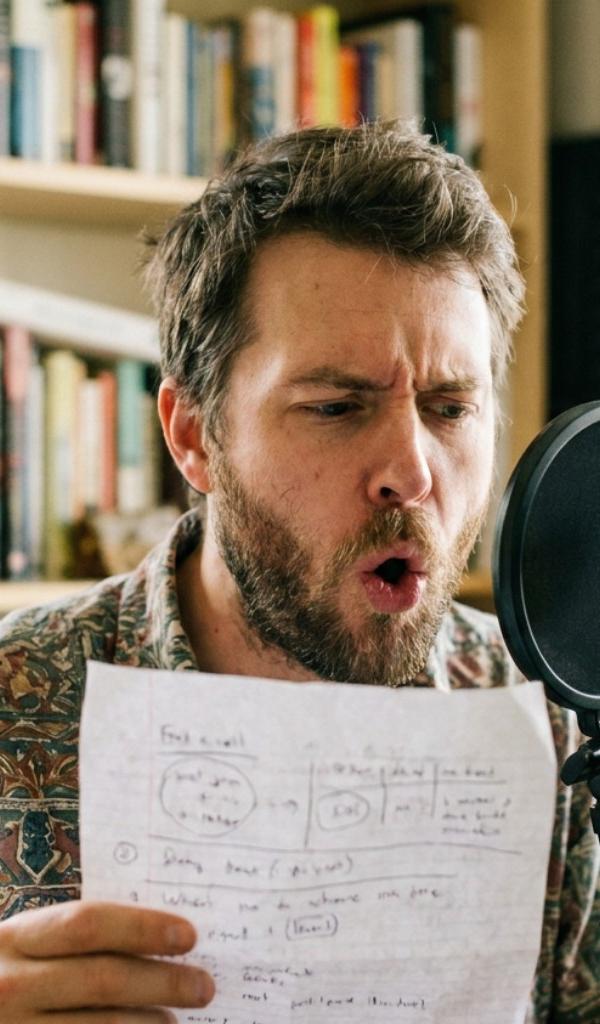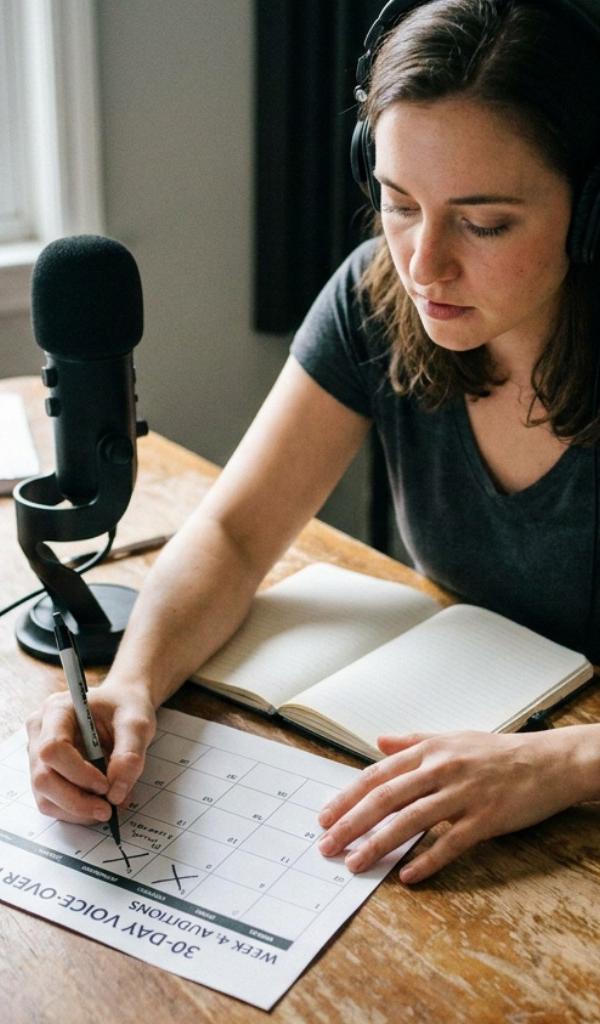
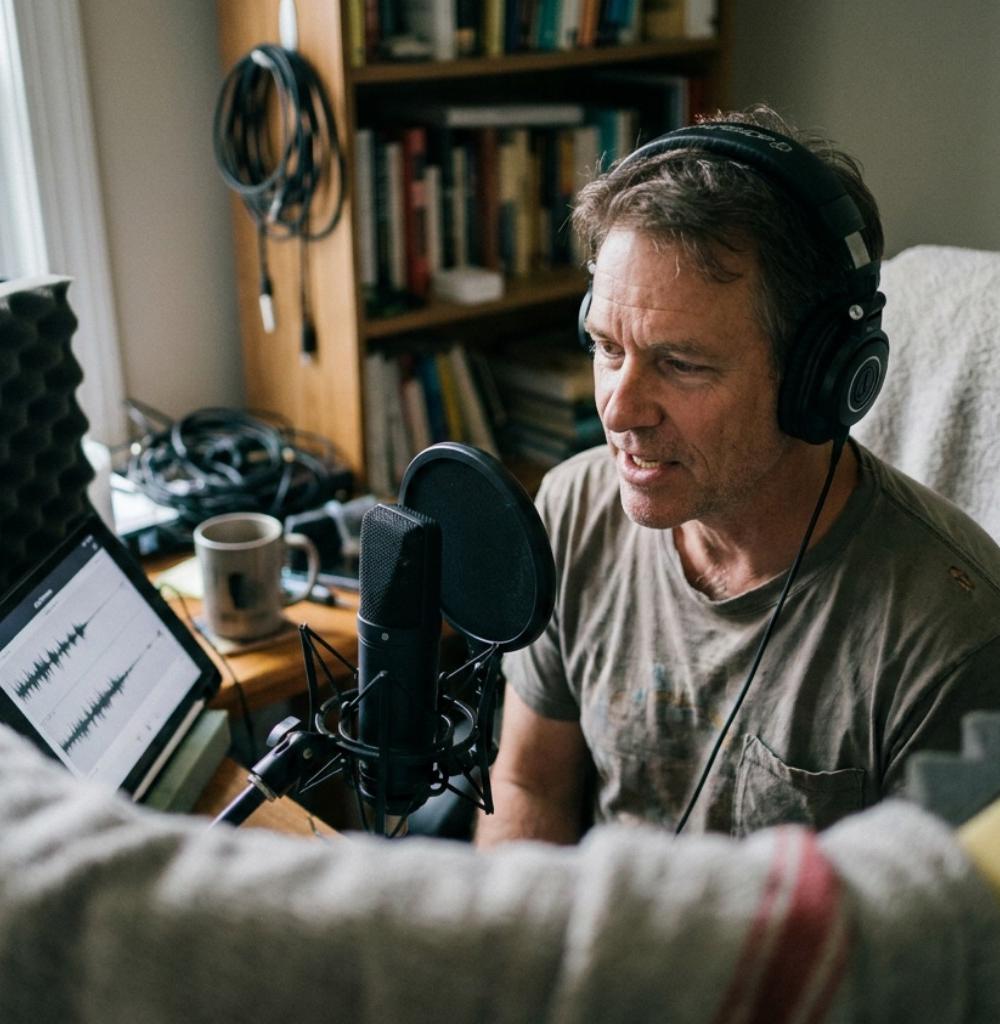
If you want the single clearest permissionless on-ramp into paid voice work — the one with the fewest gatekeepers, the lowest barrier, and the most direct path from "I have a home setup" to "I have a check" — it's audiobook narration. And the door is ACX, Amazon and Audible's marketplace, where authors and narrators find each other directly. Read that again and let it land, because it's the whole point: no agent, no union card, no demo required to begin. You audition from the exact home setup you already built for self-tapes, an author hears you, and they hire you. That's it. There is no person standing between you and your first paid job except the quality of your own audition. In an industry famous for gatekeeping, that's almost unheard of — and it's why audiobooks are where a smart actor starts.
How ACX Actually Works
Here's how it actually works, mechanically, so it's not a mystery. Authors and publishers post titles on ACX and include a short "audition script" — usually a page or two pulled from the book. You record that sample in your home space, upload it, and it goes into a pile the author listens through. If they like your voice and your interpretation, they offer you the project, you agree on terms, and you narrate the whole book. You're not pitching an agent or waiting for a manager. You're auditioning straight to the person who owns the material. It is, functionally, self-taping — with your ears instead of a camera.
It's a Distinct Skill — Don't Underestimate It
But make no mistake: audiobook narration is a distinct skill, and underestimating it is how people flame out. You are performing solo for hours — a single title can be eight, twelve, twenty hours of finished audio — which demands a specific kind of endurance most performers have never built. And it demands rock-solid consistency, because every character has to sound the same in chapter twenty as they did in chapter two. If your grizzled detective drifts halfway through the book, the listener notices, and it breaks the spell. This is not the animation game of forty wild cartoon voices. Audiobook character work is subtle — you're gently implying who's speaking, a shift in pace here, a slight weight there, just enough that the listener always knows without ever being yanked out of the story to admire your voices. The craft is invisibility, not showing off.
You're Doing It All Self-Directed
And you're doing all of it self-directed. There is no director in the room, no producer feeding you notes, no one to catch a flat read or a wrong choice. You are making thousands of tiny interpretive decisions — how does this line land, is this character being sarcastic or sincere, where does this chapter turn — entirely on your own, and then sustaining that judgment across a marathon. That self-direction is a muscle. The good news is that if you already self-tape, you've been building it for years: you're the only one in the room every time you make an on-camera choice, too.
The Technical Bar Is Actually a Gift
The technical bar is real, but it's learnable, and honestly it's one of the best things about starting here. ACX has strict, published requirements — target loudness (RMS), peak ceiling, and an extremely low noise floor — and your files get checked against them. At first that feels like a hassle. It's actually a gift, because meeting those specs cleanly forces you to master the two things that make you better everywhere else in voice over: your room treatment and your editing. You can't hit ACX's noise-floor requirement in an echoey, humming room, so you learn to treat your space properly. You can't deliver a clean chapter without learning to top-and-tail, remove clicks and stray breaths, and level consistently, so you learn to edit. That discipline transfers straight into commercial, corporate, and every other kind of VO you'll ever do. ACX basically trains your technical craft for you and pays you while it does.
A Reality Check: Audiobooks Are Labor
One reality check worth knowing going in: audiobooks are labor. A rough rule of thumb is that finished audio takes several times its length to produce once you count prep, recording, pickups, and editing — so a ten-hour book is a real project, not a weekend. Which makes the next part matter enormously.
Per Finished Hour vs. Royalty Share
Pay comes two ways, and the difference is the difference between a paycheck and a bet. Per finished hour (PFH) is a flat rate for each hour of finished audio — a known number, paid on completion, a paycheck. Royalty share means you and the author split the book's earnings over time — no money up front, and it only pays if the book sells, which most don't in a big way. Royalty share is a gamble on someone else's marketing; PFH is guaranteed work for guaranteed pay. Beginners often mix the two strategically: take some PFH work for reliable income, take the occasional royalty-share title on a book you believe in, and build your track record and — critically — your reviews and ratings on the platform, which are what get you hired for better projects at better rates over time. Your first jobs are as much about building that reputation as they are about the check.
Why Audiobooks Are the Smart First Move
So here's why audiobooks are genuinely the smart first move, above every other genre. They reward exactly what a home-recording actor already possesses: a treated space, patience, and interpretive skill. They require nothing you have to buy or beg for — no demo, no agent, no permission. And they let you build the three things every voice career needs — reps, reviews, and real income — before you ever spend a dollar on a reel. You start earning while you're still learning, which is the opposite of almost every other path in this business.
Keep reading: How to Become a Voice Actor: The Real Working Guide, E-Learning & Corporate Narration: Steady VO Money, and Cold Reading for Voice Over: The Sight-Read Skill.
Pick a Genre You Actually Enjoy
One last piece of advice that sounds soft but is deadly practical: pick a genre you actually enjoy reading. Romance, thriller, sci-fi, self-help, litfic — whatever it is, you are going to be living inside these books for many, many hours, and your enjoyment will show in the read. Narrating a genre you can't stand is a special kind of misery that the microphone will hear. Choose the shelf you'd browse anyway, and the endurance takes care of itself — because it stops feeling like a marathon and starts feeling like getting paid to read a good book out loud. Which, when you strip away all the technique, is exactly what it is.
ACX will hold your files to a real technical standard from day one — so start with a room and a workflow that can hit it. HowToSelfTape is free to start and walks you through the treated space, clean signal, and editing habits that pass ACX and sharpen every self-tape you make.