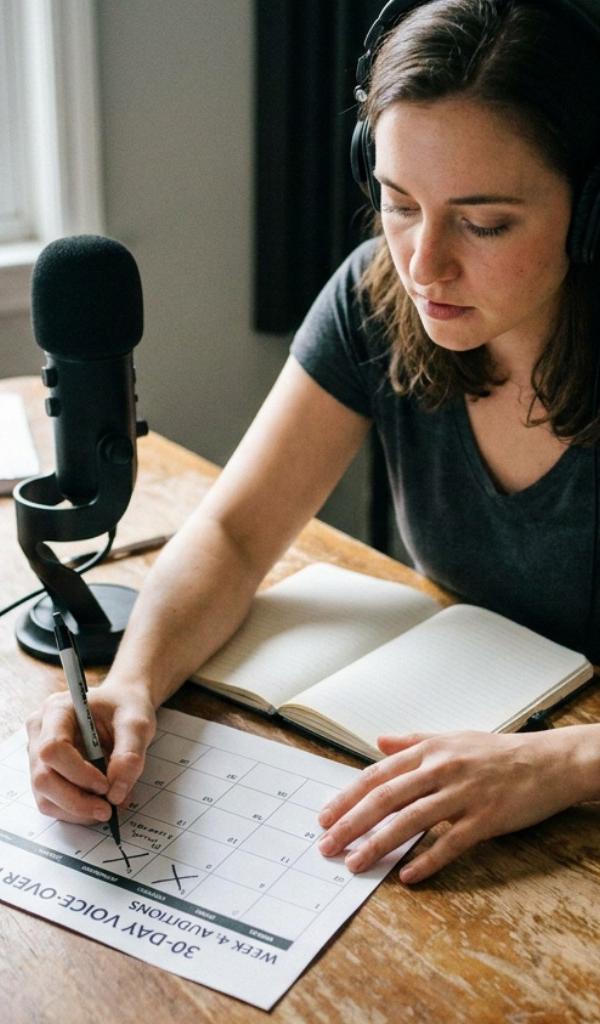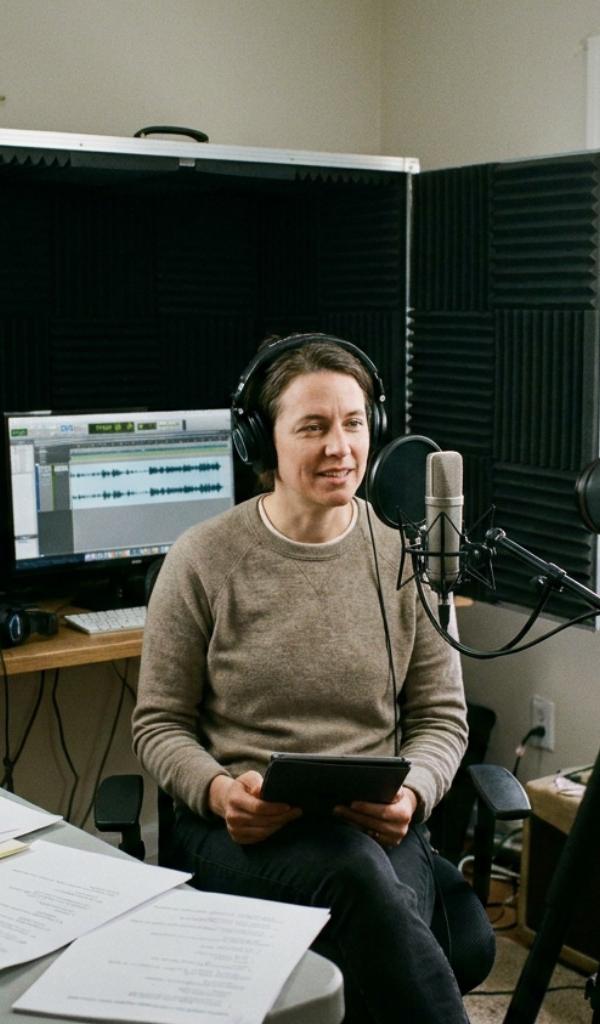
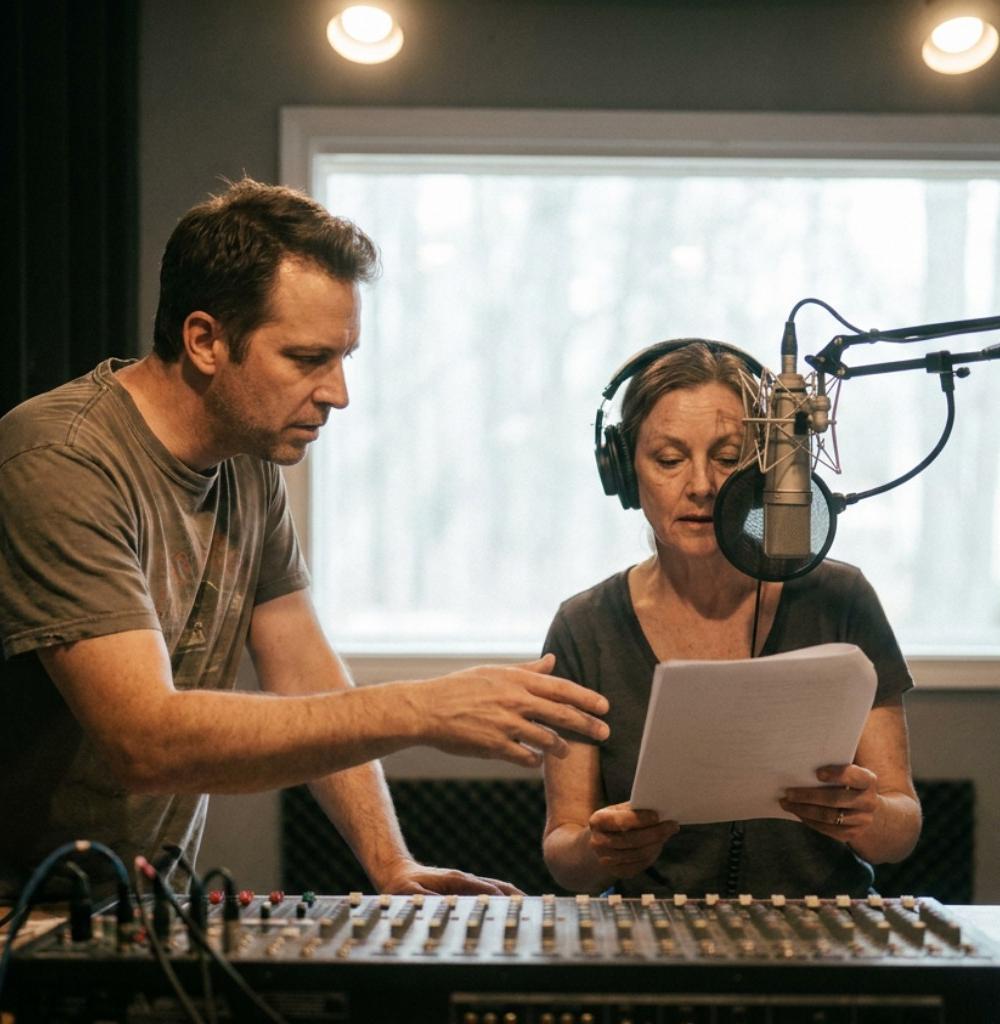
Walk into any actor forum and you'll find the same conversation running on an endless loop: which microphone should I buy? AT2020 or NT-USB? Is the Yeti good enough? Should I save up for an XLR setup? Actors obsess over gear because gear is buyable — it feels like progress you can purchase, a problem you can solve with a credit card. But here's what working voice actors obsess over instead, the thing no microphone on earth can fix for you, and the real heart of mic technique: consistency. The mic gets you a clean signal. Consistency gets you rehired. And in a business built entirely on rehires, that second thing is the whole career.
The Actual Discipline
So let's talk about the actual discipline, because it's simple to describe and surprisingly hard to hold. Same distance, every take — roughly a fist to six inches from the mic, a range you pick and then never drift out of. Same angle, every take — ideally slightly off-axis, meaning you speak just past the mic rather than dead-straight into it, so your plosive bursts of air blow past the capsule instead of punching it. Same gain level — set once at the start of the session and then left completely alone. And same position — your body, your posture, your mouth in the same spot relative to the mic, take after take after take, for the whole session and, ideally, from session to session. That's it. That's the "secret." It's not glamorous, and that's exactly why most people won't do it.
Why It Decides Who Works
Now, why does this matter so intensely — enough that it decides who works and who doesn't? Because of what happens downstream when you don't do it. If your distance wanders, your levels wander. If your levels or your tone drift between takes — one line loud and close, the next thin and far — then somebody on the other end has to fix it in post. They have to match levels, re-balance, re-EQ, clean up the inconsistencies you baked in. And "fix it in post" is not a neutral phrase — it costs the client time and money, every single time. Here's the brutal part: the client's solution to that problem is not to coach you. It's to hire a different actor next time, one whose files just drop in clean and require nothing. You will never even know why you didn't get rehired. You'll assume it was the performance. It was the smearing on your levels. In a rehire business, inconsistency is the quietest, fastest way to become a one-job actor — booked once, never called again, and never told why.
Mic Technique Is Also Performance
But here's the part that elevates this from mere technical hygiene to actual craft: mic technique is also performance. Distance doesn't just affect your levels — it changes the emotional character of your voice, through something called the proximity effect. Lean in a touch and the voice gets warmer, closer, bassier, more intimate and personal — perfect for a confidential line, a secret, a tender moment. Ease back a little and the voice opens up, brightens, gets more room and more scale — right for a bigger, more public line. Skilled voice actors "work the mic," using distance the way a stage actor uses blocking: it's physical staging for the voice, an extension of the same acting choices you already make about intimacy and stakes. The catch — and it's the whole skill — is that you do all of this while keeping your overall level usable. It's a controlled, deliberate move of an inch or two for emotional effect, not a wild lunge from a whisper at the grille to a shout across the room that leaves the engineer with an unfixable mess. Expressive within a controlled range. That's the pro move.
The Habits That Make It Automatic
So here are the practical habits that make it automatic. Set your gain so that your loudest read peaks safely below clipping — you never want the meter slamming into the red, because clipped audio is unrecoverable garbage. Set it for your biggest moment, and everything quieter takes care of itself. Mark your distance physically — a spot on the floor, a strip of tape, a mic-stand position you always return to — so "a fist away" is exact, not a guess that drifts as you get tired. Use a pop filter, always, both to kill plosives and to give yourself a consistent physical reference for distance. Do a quick level check before every session and after any break — read a couple of lines, glance at the meter, confirm you're sitting where you were. And if you can, monitor with headphones so you actually hear what the mic is capturing, not what you think you sound like in the room. Then protect that consistency like it's your reputation — because it quite literally is.
Reliability, Not the Mic
Let me leave you with the sentence that reframes the whole gear obsession: the mic doesn't make you bookable. Reliability does. Same distance, same angle, same level, clean files, every time — that unglamorous, almost boring habit is the thing that quietly turns a first job into a standing client, and a standing client into a career. The actor with the $1,000 mic and sloppy technique gets fixed-in-post and quietly dropped. The actor with the $100 mic and iron consistency gets the files that drop in clean, the "so easy to work with" reputation, and the phone that keeps ringing. It's the same reliability that makes your self-tapes land the same way twice. Stop shopping for a better microphone. Go be the same distance from the one you have.
Consistency is a habit you build into your space and your setup once. HowToSelfTape is free to start and covers the mic, distance, and monitoring habits that make every take — on mic or on camera — drop in clean.