The first acting course you pick probably won't be the one that breaks you open. But it might be the one that makes you quit — if you pick the wrong one. Every year, thousands of beginners hand over real money — anywhere from $200 to $2,000 for a single workshop — to programs that leave them more confused about acting courses for beginners than they were before they walked in. That's not a tragedy. It's a problem with a solution: knowing what you're actually buying before you buy it.
Let's fix that right now.
The Direct Answer: What Should a Beginner Take First?
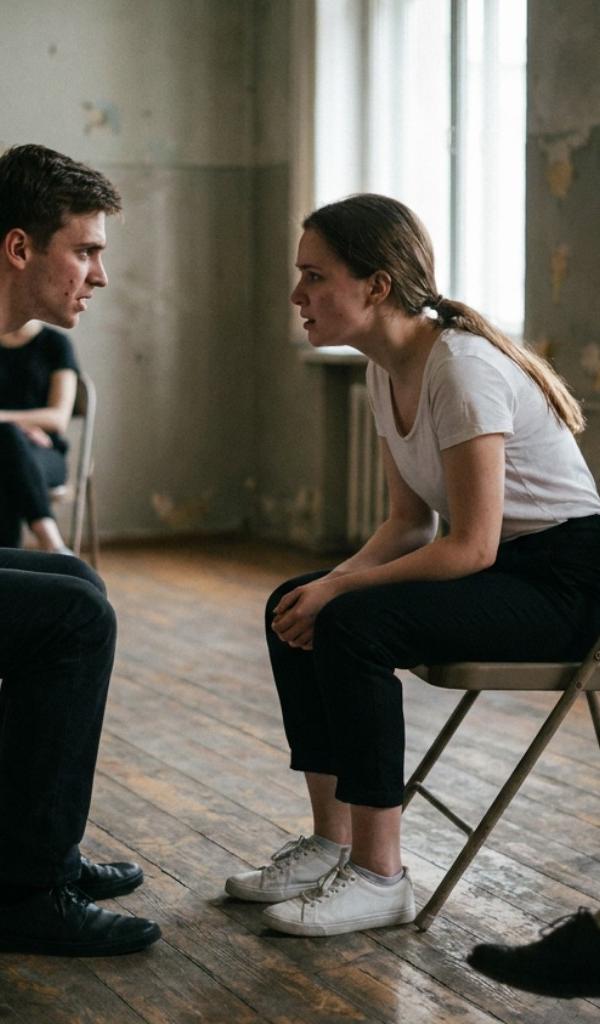
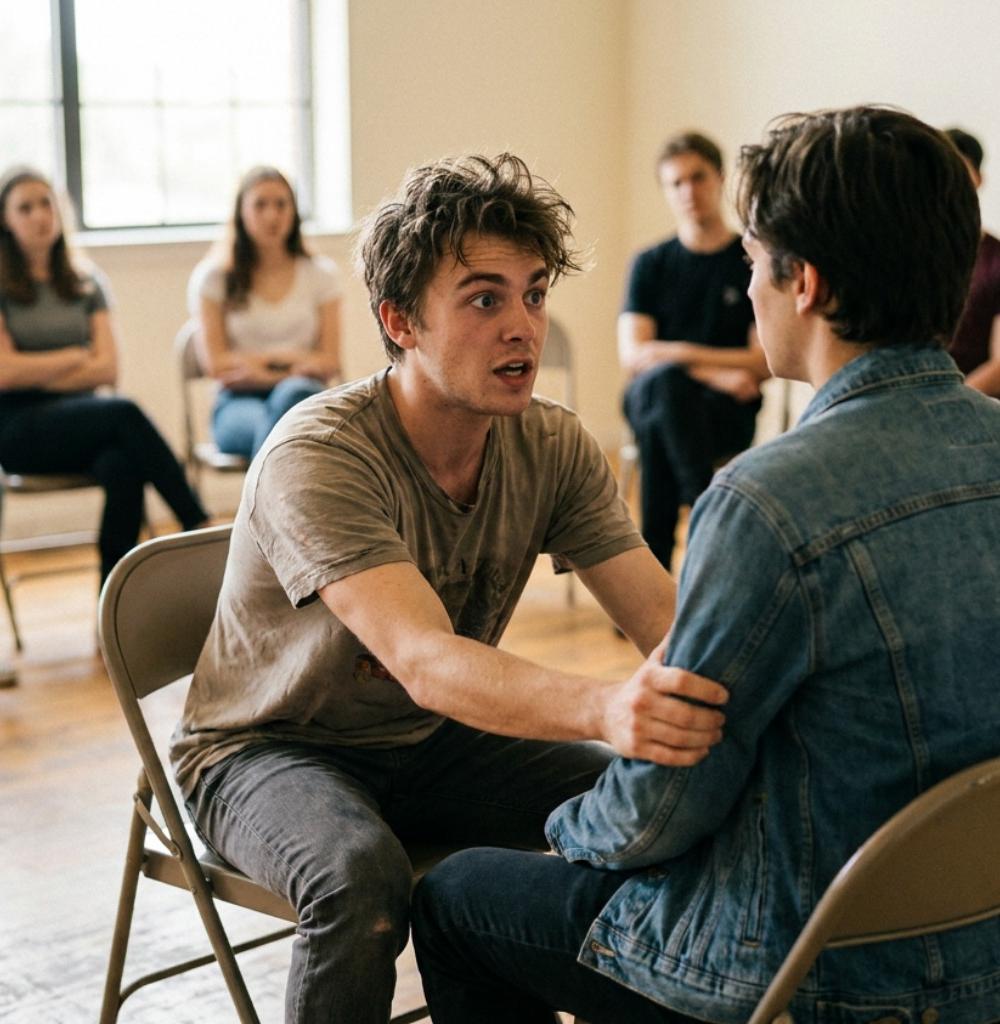
Start with a scene study or foundational technique class — not an audition workshop, not an improv intensive, not a "cold reading bootcamp." A Meisner-based or Stanislavski-grounded scene study class, running 8 to 12 weeks, teaches you to listen, respond, and live truthfully under imaginary circumstances. That's the foundation everything else is built on. Budget roughly $300–$600 for a reputable in-person class, or $30–$80/month for a solid online platform. Start there. Add everything else later.
Why Most Beginners Pick the Wrong Class First
The villain here isn't bad teachers. It's marketing. Audition workshops feel urgent — you want to be in front of casting yesterday. Cold reading classes sound practical. One-day "intensives" promise transformation before dinner. Those workshops aren't useless. They're just the wrong first step.
Imagine you've never cooked a meal in your life, and instead of learning knife skills, you sign up for a class on plating. You'll come home with beautiful photos of scrambled eggs that taste like cardboard. Audition workshops are the plating class. Scene study is the knife skills.
The one thing a beginner has to understand: technique isn't a limit on your instincts — it's the infrastructure that sets them free.
The Main Acting Techniques — and Which to Start With
There are a few major approaches you'll hear about constantly, and they aren't enemies — they're different roads to the same destination.
- Stanislavski's System — The original. Psychological realism, given circumstances, and truthful behavior. Nearly all modern Western training descends from it.
- The American "Method" — The US adaptation of Stanislavski. Strasberg, Adler, and Meisner each took his system in a different direction, so "the Method" is really a family of related approaches, not one thing.
- Meisner Technique — One of those descendants. Built on repetition and truthful, moment-to-moment behavior. Extraordinary for screen actors; the roots go deep.
- Practical Aesthetics (the Atlantic Theater approach) — Text-based and immediately actable, built for working actors who need results fast. Great for beginners who also do theater.
- Improv (Second City / UCB style) — Not a classical technique, but an incredible tool for presence, listening, and spontaneity. Casting can often see improv training on screen, in the best way.
For most beginners: start with Meisner or Stanislavski-based scene study. Add improv in your second or third term. Build from the inside out.
Acting Courses for Beginners: In-Person vs. Online
In-person training wins on one metric that matters enormously: a real human is watching your body, your breath, and your impulses in real time. A great teacher catches the moment you go into your head three seconds before you know it happened. That feedback is irreplaceable.
But online training has closed the gap dramatically. Platforms like MasterClass and Udemy, and dedicated actor-training sites, have genuine working actors teaching real craft. A $15/month subscription won't replicate a conservatory, but for a beginner in a city with no acting school, it's something real to work with.
The honest rule: if you can get to a reputable in-person class, do it. If geography or budget won't allow it, quality online training isn't second-best — it's the right tool for your situation, and it beats waiting.
The actor who trains imperfectly for two years will always out-book the actor who waited for perfect conditions.
What to Look For — and What's a Red Flag
A good beginner class has a clear methodology, a teacher whose credits and training you can verify, small class sizes (under 16), and a curriculum focused on scene work and exercises — not on your "type" or on marketing yourself.
Red flags that should make you walk away:
- Any program that bundles in headshots, an agent referral, or an industry showcase. That's a package deal, not a school.
- Class sizes over 20 with no teaching assistants. You won't get enough reps.
- A teacher who talks more than the students act. You learn by doing, not by watching someone explain Brando for 90 minutes.
- No refund policy and high-pressure enrollment. Legitimate studios don't need to hustle you.
- Promises of agent meetings or callback rates. No ethical school guarantees bookings.
Verify the teacher's credits and training lineage. A teacher who studied under a named master and has real working credits is worth more than a famous name phoning in a weekend seminar.
How to Find Reputable Acting Schools as a Beginner
In New York, studios like the Stella Adler Studio, the Atlantic Acting School, and the William Esper Studio have decades of credible training behind them. In Los Angeles, the Howard Fine Acting Studio and the Margie Haber Studio are consistently recommended by working actors. These aren't the only options — they're the benchmark.
Outside major markets, look for instructors with conservatory training (an MFA from a reputable program) who teach ongoing scene study, not one-off workshops. Your local theater company usually knows who the real teachers are. Ask an actor you respect who they trained with — that referral almost always beats a Google search.
For online study, look for foundational courses taught by verifiable working faculty. And build your on-camera skills alongside your technique work — because the audition room is increasingly your living room. Our self-taping guides show you exactly what casting is looking for on screen.
The Common Mistake That Kills Early Progress
Taking one class, deciding you "know it," and moving on. Training isn't a sprint toward a credential — it's the ongoing condition of a working actor's life. The actors who book consistently aren't the most talented in the room; they're the ones who kept training after they thought they knew enough.
Pick one methodology. Stay with it for at least two full terms before you switch. Let it frustrate you — that friction is the growth. Beginners who hop from Meisner to Stanislavski to improv to audition coaching inside six months end up with a shallow taste of everything and mastery of nothing. Go deep before you go wide. The resume follows.
When You're Ready to Add On-Camera Training
Somewhere in your first year — ideally month four to six — add on-camera work. The camera isn't a neutral observer. It reads your inner life with brutal precision and rewards stillness, specificity, and genuine listening in ways a live audience never demands. An actor who only trains in a room and never practices on camera is like a driver who only ever practiced in a parking lot.
Self-taping well is now a fundamental professional skill, not an optional extra — and framing, lighting, and screen presence can be the difference between a callback and a pass. The good news: you don't need a $5,000 camera. A modern phone, a cheap ring light, and a plain wall will do the job, if you know how to use them. HowToSelfTape is free to start and walks you through exactly that, so your on-camera auditions look as good as the craft behind them.
FAQ: Acting Courses for Beginners
Keep reading: Method Acting: What It Really Is (and Isn't) in 2026, Meisner Technique: What It Is and How to Use It, and Stanislavski the Method: What Actors Actually Need to Know.
How much do beginner acting classes cost?
In-person scene study at reputable studios runs roughly $300–$600 for an 8–12 week session in major markets. Community-college and conservatory-extension programs often offer comparable training for $150–$300. Online platforms range from $15–$80/month. Cost doesn't always equal quality — verify the teacher first.
Do I need experience before taking an acting class?
None. A legitimate beginner class is built for zero experience. If a studio requires prior credits for their entry-level course, that's a sales tactic, not a curriculum standard. Show up as you are — the class should meet you there.
Is online acting training actually worth it?
Yes, with caveats. It can teach technique, script analysis, and on-camera skills effectively. What it can't fully replicate is the live ensemble — the real-time chemistry of a scene partner across from you. Use it to build knowledge and supplement live scene work, not permanently replace it.
Should I study acting and improv at the same time?
Not in your first term. Get grounded in one technique first. After 8–12 weeks of solid scene study, adding improv in parallel is genuinely valuable for spontaneity and presence. Doing both from day one usually means you go deep in neither.
How do I know if my class is actually making me better?
You feel it in the work — scenes that start to surprise you, moments where you forget you're performing. Ask: am I getting more reps, more feedback, and more challenge each week? If you're praised but never pushed, find a teacher who respects you enough to tell you the hard truth.
Training is the long game — and the only game. The actors who get into the audition room and stay there aren't the ones who got lucky; they're the ones who built something real. Start with the right class, stay with it long enough to be changed by it, and let your on-camera work grow alongside your craft. That combination — technique plus camera confidence — is what turns a beginner into a working actor. Everything else is just waiting.