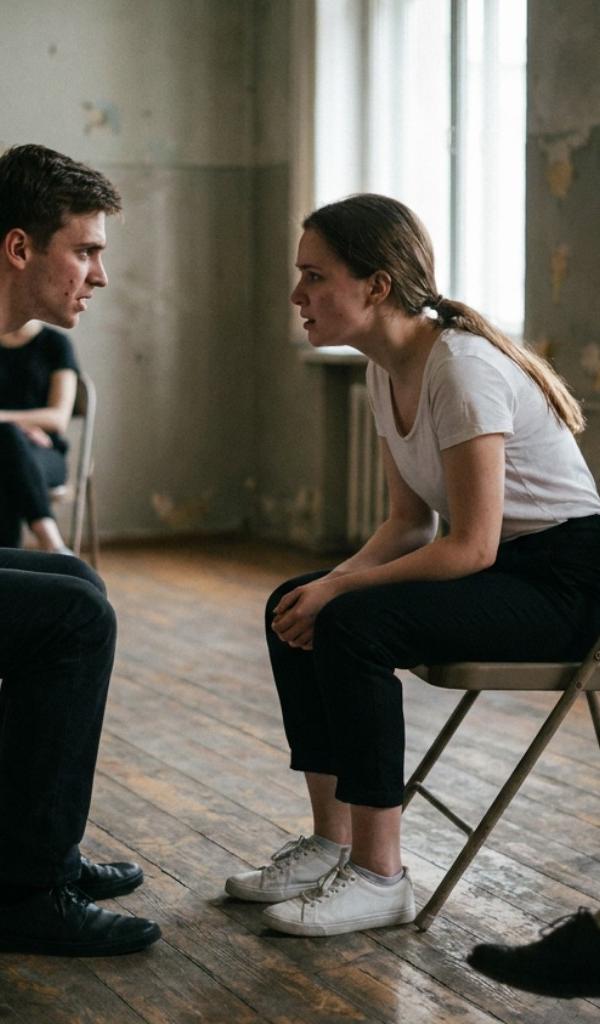

Say "method acting" and most people picture the same thing: an actor who refuses to break character for months, terrorizes the crew, and answers only to their character's name. That reputation makes for great press — and it has almost nothing to do with what method acting actually is. The technique is a serious, useful craft. The 24/7 immersion stunt is a caricature that the industry, in 2026, is largely done celebrating.
So let's separate the tool from the mythology, because the tool is genuinely worth understanding — and the mythology has hurt a lot of actors.
The short answer: Method acting is a family of techniques, rooted in Stanislavski and developed by teachers like Lee Strasberg, that help an actor produce truthful emotion by drawing on real experience, sensory memory, and deep imaginative work. It's about accessing genuine feeling on cue — not about staying in character at the grocery store or harming yourself for a role.
What method acting really is
The Method grew out of Konstantin Stanislavski's "system" and was adapted in America — most famously by Lee Strasberg at the Actors Studio. At its core, it's a set of tools for making emotion real rather than indicated. Instead of pretending to cry, you use techniques like emotional recall (drawing on a memory that produces the feeling) and sense memory (recreating physical sensations) to make the feeling actually happen.
The goal is truth. When it works, the audience isn't watching someone perform grief — they're watching grief. That's the promise of the Method, and why it reshaped screen acting.
The myth vs. the reality
The famous stories — an actor staying in a wheelchair for months, or refusing to answer to their real name — are extreme immersion, and they're the exception, not the technique. Most great "method" performances involve none of that. Immersion is one optional tool some actors reach for; it is not the Method itself, and treating it as a badge of seriousness has led to real harm on sets and to actors' mental health.
Truthful emotion is the goal. Suffering for months isn't the price of it — and the industry has stopped pretending it is.
What working actors actually use in 2026
Here's the part the mythology hides: most working actors treat the Method as a toolbox, not a religion. They borrow what serves the scene and leave the rest. In practice that looks like:
- Emotional and sense memory — used deliberately, then set down when the scene ends.
- Deep preparation — knowing the character's history, wants, and world cold, so choices feel lived-in.
- The "moment before" — building what happened one second before the scene so you enter full, not flat.
- Substitution and imagination — mapping a real relationship or stake onto the fictional one.
Notice what's missing: none of that requires you to lose yourself for a month. Modern craft blends the Method with other approaches — Meisner's truthful reaction, Practical Aesthetics, plain imaginative work — because the smartest actors use whatever gets them to truth fastest and most safely.
Should you use method acting?
It depends on what you need. The Method's real gift is emotional access and depth — invaluable for roles that live in feeling. Its risk is that the most intense techniques can blur the line between the actor and the character in ways that aren't healthy if used carelessly. The professional standard now is simple: use the tools that produce truth, and protect your wellbeing while you do it. A performance is never worth your mental health, and no serious teacher today argues otherwise.
If you're drawn to it, study it properly with a good teacher rather than imitating a headline. The technique is powerful; the tabloid version is a trap.
Common misunderstandings
- "Method acting means never breaking character." No — that's optional extreme immersion, not the technique.
- "It's the only 'real' acting." No — it's one powerful approach among several, and most pros mix it with others.
- "You have to suffer for the role." No — truth is the goal, not pain. Sustainable craft beats self-destruction.
- "It's just crying on cue." No — it's deep preparation and genuine emotional access, of which tears are only one possible result.
Keep reading: the Meisner technique, explained, what actors actually need from Stanislavski, and why you look fake on camera (and 6 fixes).
Frequently Asked Questions
What is method acting in simple terms?
It's a set of techniques for producing real emotion — using personal memory, sensory recall, and deep character preparation — so a performance feels truthful rather than pretended. It comes from Stanislavski and was developed by teachers like Lee Strasberg.
Do method actors really stay in character all the time?
Some do, some don't — and that extreme immersion is a personal choice, not a requirement of the technique. Most working "method" actors use the tools during work and step out of the character when the scene wraps.
Is method acting bad for your mental health?
The most intense immersive techniques can be, if used without care or support. The modern, professional approach treats the Method as a toolbox and prioritizes the actor's wellbeing — truth in the work, but never at the cost of your health.
How is method acting different from Meisner?
The Method leans on internal memory and emotional recall to generate feeling; Meisner focuses on truthful, spontaneous reaction to your scene partner. Many actors train in both and blend them.
Use the tool, skip the mythology
Method acting isn't a personality or a stunt — it's a serious craft for reaching real emotion, and it earned its place in screen history for good reason. Learn the actual techniques, use them deliberately, and leave the "never break character" theater to the headlines. The best actors chase truth, not suffering — and they go home as themselves.
However you get to a truthful performance, it still has to land on camera. HowToSelfTape helps you capture that work with clean framing, lighting, and sound — free to start — so the emotion you fought for actually reaches the people casting the role.