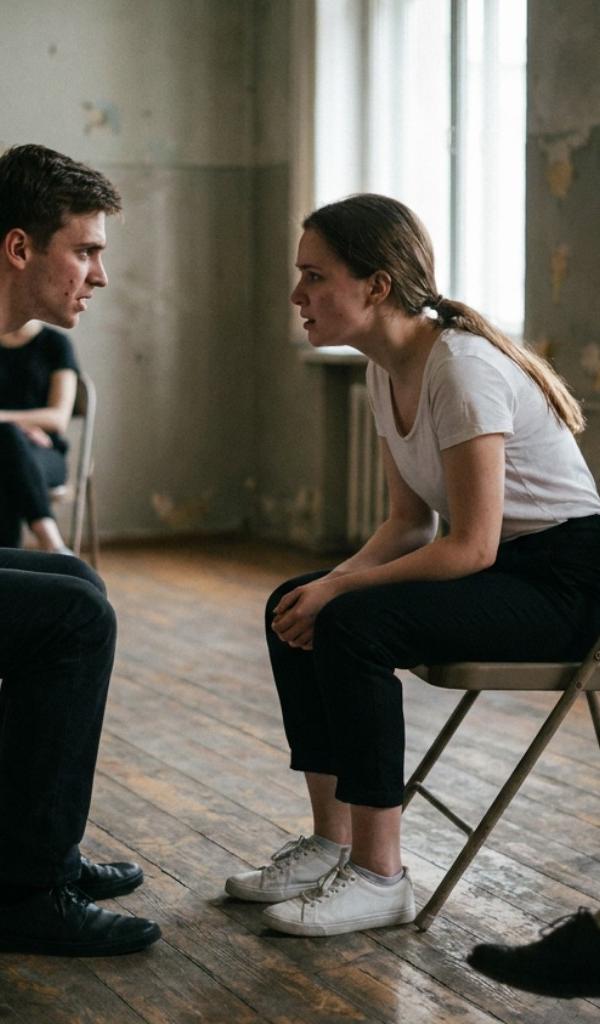

Most actors can say the name Konstantin Stanislavski like a password. They drop it in drama school interviews, cite it in artist statements, nod along when a director mentions it on set. But ask them to explain what Stanislavski the method actually demands of you — not the mythology, not the Brando stories, not the "stay in character for six months" folklore — and the room goes quiet fast. That silence is costing people jobs.
Here's the short version you can act on right now.
Stanislavski built a repeatable system for producing genuine emotional truth on demand. Not mood. Not feeling. Truth — available every night, for every take, whether you slept well or not. His entire project was making inspiration a skill, not a lucky accident.
What Stanislavski's System Actually Is (Not the Myth)
Let's kill the myth first. Stanislavski did not invent "The Method." He invented a system. Lee Strasberg took pieces of that system — specifically the emotional memory work — and built what Americans call Method Acting. They are not the same thing. Conflating them is like saying Edison invented the internet because he worked with electricity.
Stanislavski's system, developed over roughly four decades at the Moscow Art Theatre, has several interlocking parts. The through-line of action. The given circumstances. Units and objectives. Emotional memory. The magic "if." Physical action as the gateway to inner life. By the end of his career, he actually moved away from pure emotional recall toward physical action — a shift most people never learn.
The through-line is the spine. Every single choice your character makes in a scene should connect to one ruling desire Stanislavski called the "super-objective." Not the scene objective. The life objective. The thing your character would die chasing. When that's clear, everything you do on stage or on camera has a reason behind it that an audience feels even when they can't name it.
The Magic "If": The Most Usable Tool He Ever Gave You
Of all Stanislavski's ideas, the magic "if" is the one working actors can deploy in a cold audition room in about thirty seconds. The question isn't "How would I feel if I were this character?" — that's a trap that leads to generalized emotion and fake tears. The question is: "What would I do if these were my circumstances?"
Notice the shift. Doing, not feeling. Action, not mood.
Say you're playing a parent who just found out their child is missing. Stanislavski doesn't want you to manufacture grief. He wants you to ask: if this were real, what is the first physical thing I would do? Call someone. Go to the window. Check the door again. That physical impulse — honest, specific, small — unlocks something no amount of crying-on-command ever will. It's the difference between performing emotion and living through a situation.
The actor who chases feeling always misses it. The actor who chases action finds feeling waiting at the door.
Given Circumstances: The Homework Nobody Does
Given circumstances are every fact that exists in your character's world before the scene begins. Not just the plot facts the writer gave you — the full architecture. Where were you an hour ago? What's the temperature? What does this room smell like? What happened between you and this other person the last time you were alone together?
Most actors read the script, highlight their lines, and show up. That is not preparation. That is typing.
The actors who book — the ones you watch and think "how are they doing that?" — have done the given-circumstances work so thoroughly that their body already knows the world before the director calls action. They're not acting. They're remembering. A scene partner who has really done this work is impossible to ignore because everything they do lands like it already happened.
For your next audition prep, try this: write one dense paragraph — not a list, a paragraph — in your character's voice, describing the twenty-four hours before page one. You'll find three choices in that paragraph that you never would have found reading the script cold. Here's more on audition preparation approaches that casting directors actually notice.
Stanislavski the Method in the Self-Tape Era: Does It Still Hold?
Yes. Aggressively yes. In fact the self-tape format makes his system more essential, not less.
On a live stage, a big physical performance can carry a room. On a phone camera in your living room, anything untruth-ful reads as noise. The lens doesn't forgive generalized emotion. It rewards specificity — which is exactly what units, objectives, and given circumstances produce.
When you're setting up your self-tape, you have no director adjusting you, no scene partner feeding you real energy, no costume, no set. All you have is your internal life and your preparation. That is a Stanislavski problem. His system was built precisely for this: generating truth from the inside out, with nothing propping you up from the outside. If your self-tape process needs a full rebuild, start here.
The common mistake actors make in self-tapes is over-performing to compensate for the sterile environment. Bigger isn't better on camera. Truer is better. Use the magic "if." Lock in your given circumstances. Find the one physical action that your character would genuinely do in this moment. Then let the camera do its job.
Emotional Memory: The Part Everyone Gets Wrong
Emotional memory — sometimes called affective memory — is the part of Stanislavski's work that gets the most press and causes the most damage. The idea is that an actor can access a real past emotion by vividly re-living the sensory details of a personal experience that triggered that emotion. Recall the smell of the hospital. The texture of the chair. The sound in the hallway. The emotion follows.
Here's what Stanislavski himself came to believe: it's a tool for certain actors in certain situations, not a universal technique, and it carries real psychological risk when pushed too hard. He moved toward the "method of physical actions" in his later work precisely because it was more reliable and less psychologically punishing. Strasberg leaned into emotional memory anyway. That fork in the road is the entire history of American actor training in one sentence.
Use emotional memory carefully. If a personal memory is genuinely fresh or traumatic, do not drag it into an audition room as fuel. You need to be present, not processing. Find an older memory with enough distance that you can hold it at arm's length and use it. Or better yet — do the physical action work and let the emotion arrive on its own. It usually does. Dig deeper into emotional technique and on-set acting craft here.
Common Mistakes Actors Make With Stanislavski's System
- Treating objectives as nouns instead of verbs. "My objective is love" is not an objective. "I want to make her stay" is. Always phrase your objective as an active verb you can play.
- Skipping the super-objective. Scene work without a through-line is a collection of disconnected moments. Interesting in pieces, incoherent as a whole.
- Using emotional memory as a first resort. It's a last resort, and a careful one. Physical action is your workhorse.
- Confusing relaxation with passivity. Stanislavski was obsessive about muscular tension as the enemy of truth. Relaxed doesn't mean low-energy. It means available.
- Studying Stanislavski only through other people. His own books — An Actor Prepares, Building a Character, Creating a Role — are available and readable. Go to the source.
How to Start Using It This Week
You don't need a conservatory to use this system. You need a script and about an hour of honest work. Pick any scene you're preparing — an audition piece, a self-tape, a class scene. Run it through this sequence: What are my given circumstances? What is my scene objective (a strong, specific verb)? What is my character's super-objective — the one ruling desire of their whole life? What is the first physical action I would take if this were real?
Then record yourself. Not to perform. To see. Watch it back with the sound off first. Is your body doing something true, or is it decorating? Stanislavski would have loved the self-tape era for exactly this reason — you can see your own work honestly, without ego, and fix it.
If you want a process for building your self-tape practice around exactly this kind of truthful, camera-specific work, HowToSelfTape is free to start and built specifically for working actors who are tired of recording takes that don't land.
FAQ: Stanislavski the Method
Keep reading: Method Acting: What It Really Is (and Isn't) in 2026, Meisner Technique: What It Is and How to Use It, and Acting for Camera: Why You Look Fake & 6 Fixes.
Is Stanislavski's system the same as Method Acting?
No. Stanislavski built the original system in Russia. Lee Strasberg adapted elements of it — especially emotional memory — into what became Method Acting in America. Stanislavski himself later emphasized physical action over emotional recall. Calling them the same thing is a common and expensive oversimplification.
Do I need to read Stanislavski's books to use his system?
You don't need to, but you'll be glad you did. An Actor Prepares is genuinely readable — less like a textbook, more like a master class you sit in on. Start there. The core ideas will change how you approach every character you ever play. A used copy costs about the price of a coffee.
How does Stanislavski's method apply to on-camera acting specifically?
It might apply even more powerfully on camera than on stage. The lens picks up internal life in ways a theatre seat in row twelve cannot. Specific given circumstances, clear physical actions, and a locked-in objective show up as presence on screen — that magnetic quality people say an actor "has" but can't explain. It's not magic. It's homework.
What's the difference between an objective and a super-objective?
An objective is what your character wants in a specific scene or moment. A super-objective is what they want from their entire life — the one through-line that every scene objective connects back to. Think of the super-objective as the river and every scene objective as a tributary feeding into it. When they're aligned, a performance feels inevitable.
Is emotional memory dangerous?
It can be, if you're using recent or unresolved personal trauma as raw material. Mental health professionals who work with performers have documented real psychological strain from careless emotional memory work. Use it sparingly. If a memory is still raw, it belongs in a therapist's office, not an audition room. Protect your instrument first.
Stanislavski spent his whole life trying to answer one question: how does an actor tell the truth, every time, on purpose? The system he built isn't a historical artifact or drama school trivia. It is a living, working toolkit for anyone who wants to stop hoping inspiration shows up and start making it happen. Learn it. Use it. Book the job.