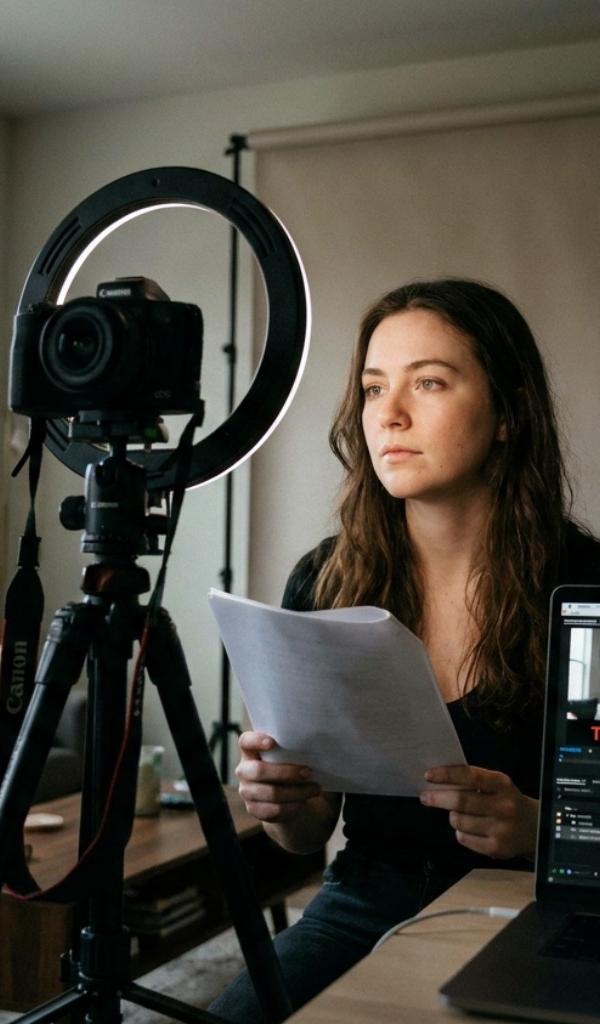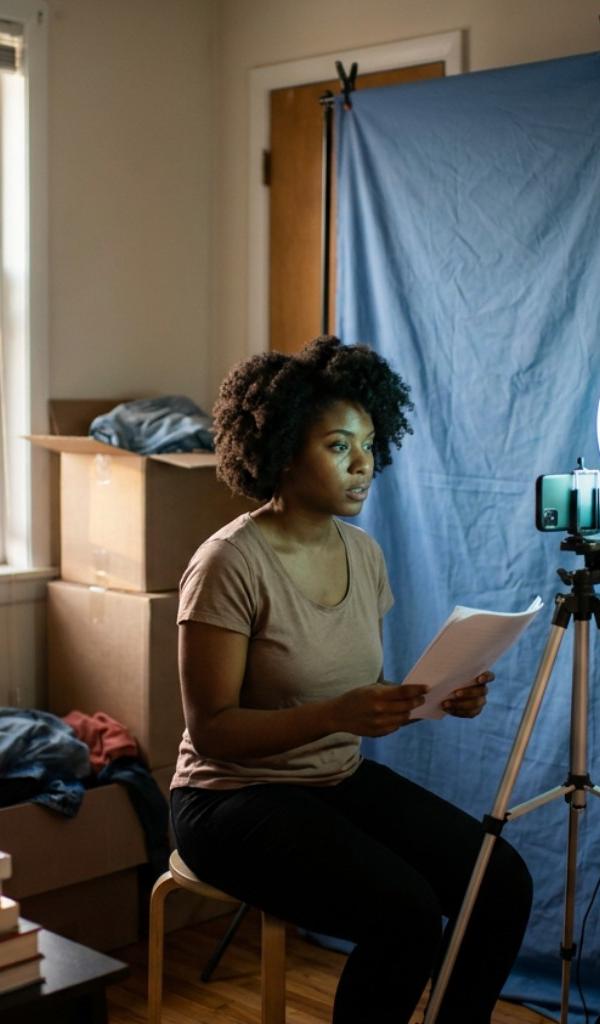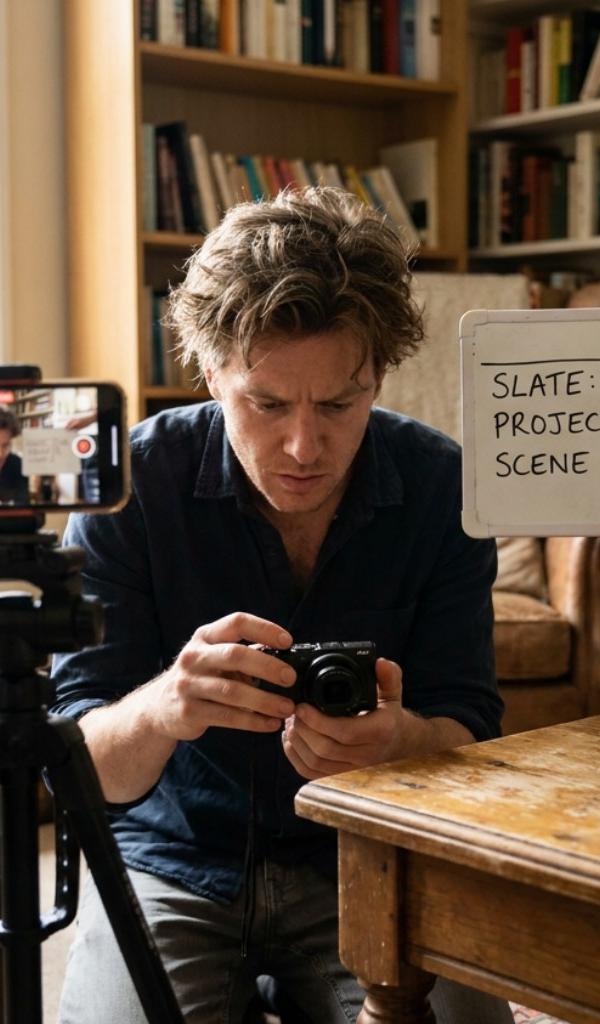
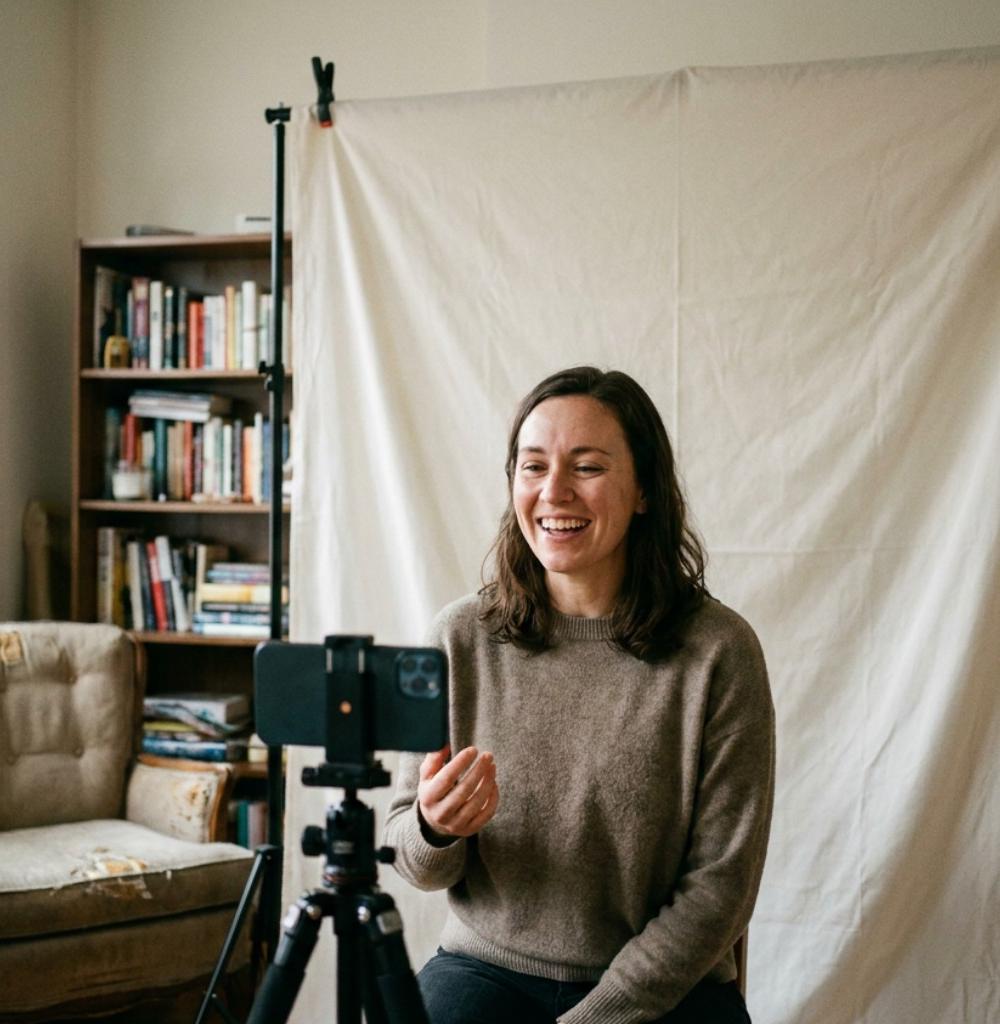
Acting for camera is a different instrument than acting for a room, and most actors never get told that out loud. You trained to fill a theater; then you pointed a phone at your face and brought the same energy — and the lens read it as fake. Not because you can't act. Because the size was calibrated for a building you weren't standing in. The good news: "looking real on camera" isn't a gift some people have. It's six separate dials, and once you know what each one controls, you can stop guessing.
Casting often decides on a tape within the first ten to fifteen seconds — before your scene even turns. So the settings below aren't polish. They're the whole audition.
The booked take doesn't do the emotion. It has the experience the emotion comes out of — and lets the camera come get it.
Why "Just Be Natural" Is Useless Advice
You cannot feel your own size from the inside. The volume that feels "just right" in the moment is usually too big on playback; the stillness that feels "dead" is usually exactly what the lens wants. The frame doesn't see what you feel — it sees what you show. A camera three feet away catches the eyebrow working to prove a feeling, the gesture that drifts out of frame, the empty space behind your eyes while you wait for a cue. The fix isn't a vague "smaller." It's a specific recalibration across six areas.
Dial One: The Eyes and the Thought (the master dial)
On camera the audience watches your thoughts, not your words. Your words are the proof; your thoughts are the performance. The single biggest upgrade to any tape is to actually think the thought — before the line lands and underneath it as you speak. A take that only says the words correctly is the amateur take. A take that is visibly having the experience the words come from gets the callback. Size your inner life up while you size your outer performance down.
Dial Two: Stillness (which is not the same as nothing)
Amateur tapes are busy — the head bobs, the eyebrows narrate every line. Booked tapes are still, and the stillness has pressure in it, like a held breath before something breaks. On a close lens, a loaded, held stillness is enormous. If you can't hold two seconds without adding a face, you're not acting — you're advertising.
Dial Three: The Voice — quiet and full, not quiet and empty
You're talking to one person at conversational distance, so drop the volume to real. But dropping volume is not dropping intensity — those are two different dials. You can whisper and still want something desperately. Quiet and urgent is the most powerful register on camera. Loud and urgent is a stage; quiet and empty is a corpse. If your scene work has been called "flat on tape" even though it felt alive in the room, this is usually the dial that's off.
Dial Four: Gesture and Body — cut ninety percent
The frame steals your bottom half. Big hand gestures either leave the shot or pull focus from your face, which is the actual event. Cut ninety percent of your gestures and let the body settle so the face becomes the most interesting thing in frame. It will feel like you're not "doing" anything. Good — you're not supposed to be doing; you're supposed to be being.
Dial Five: The Face — micro, not macro
A stage actor plays an emotion so it reads across forty rows. On camera you play the specific, not the general: not "sad face," but the one muscle near the eye that gives you away while the rest of you fights it. The camera loves the fight — the person trying not to cry reads truer than the person crying. That involuntary micro-moment is what makes casting say a tape "felt real."
Dial Six: Breath — the secret weapon
The camera hears and sees breath in a way a theater never could. A caught breath before a hard line, a held breath in a loaded silence, a slow exhale before the truth comes out — on a close lens, breath is text. Untrained tapes breathe generically; booked tapes place their breaths where the feeling is.
The Calibration Method That Actually Works
Knowing the dials is half of it; using them on yourself is the rest. Tape it, then watch it — sound off first, because sound off you can only see the size. Is the body busy? Are gestures leaving frame? Is anything moving behind the eyes? Then watch with sound: is the voice sized for the room or the lens? Then run the experiment: do a take, then one that's twenty percent smaller in body and voice and twenty percent bigger in thought and breath. Almost every time, the smaller-outside, bigger-inside version is the booked take.
Two related reads make this concrete: if your tapes keep getting skipped and you can't name why, start with the diagnosis of what makes a tape read amateur in the first seconds; then watch the difference play out side by side in a two-take breakdown in that same self-taping section. This guide is the method; those are the proof.
Common Mistakes
- Going monotone. Flattening the voice is not containing the emotion. Stakes stay high; only delivery changes.
- Killing the want. The objective doesn't shrink because the lens is close — it has to get sharper.
- Empty eyes. Energy moved inward but the thought isn't moving? The camera finds nothing to read.
- Performing restraint. "Smaller" done self-consciously is just a different kind of acting. Aim for freedom inside a smaller frame.
Keep reading: Self Tape Lighting Setup: A Simple 3-Point Guide, Method Acting: What It Really Is (and Isn't) in 2026, and How to Format a Self Tape Casting Will Accept.
Frequently Asked Questions
Why do I look stiff on camera even when I feel connected?
Feeling connected and showing it are different, and the camera only sees the second. The fix is usually more specific thought behind the eyes paired with less physical activity. Busy hands and faces mask the inner life instead of revealing it. Watch a take with the sound off and the stiffness will be obvious.
Does stage training hurt actors on camera?
It doesn't hurt — it needs specific unlearning. Stage craft is built for distance and projection; camera craft for intimacy and specificity. The emotional truth transfers; the size and instrument change. Many strong stage actors book screen work once they recalibrate these six dials.
Which dial matters most?
The eyes and the thought. When nothing is happening behind them, the tape reads hollow no matter how correct everything else is. Fix the thought first and the other five get easier.
How do I practice this without a coach?
Tape yourself, watch sound-off then sound-on, and run the twenty-percent experiment on real sides. Honest playback is the coach. Pair it with a clean self-tape setup so the frame isn't fighting the work.
The gap between looking fake and looking real on camera isn't a talent gap — it's a calibration gap, and calibration is trainable. If you want a system that builds this into every tape instead of hoping you remember six dials under pressure, HowToSelfTape is free to start. Stop making it smaller. Start making it contained.