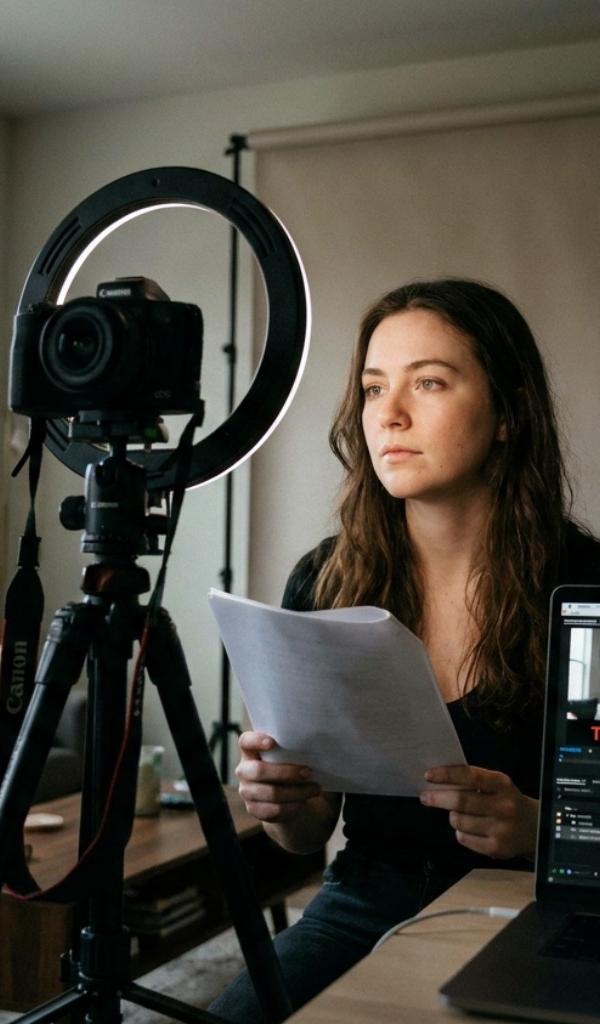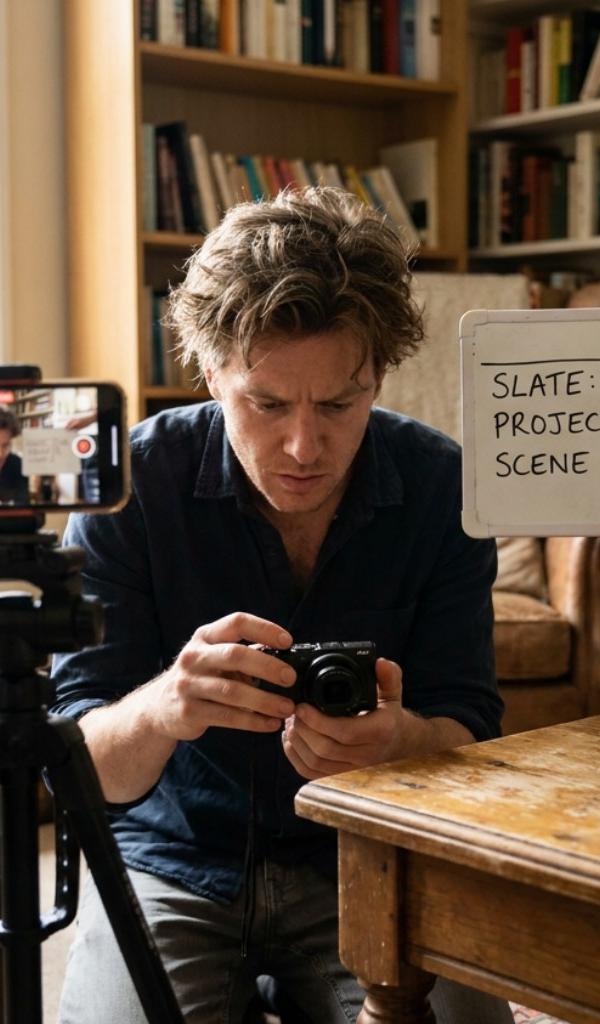
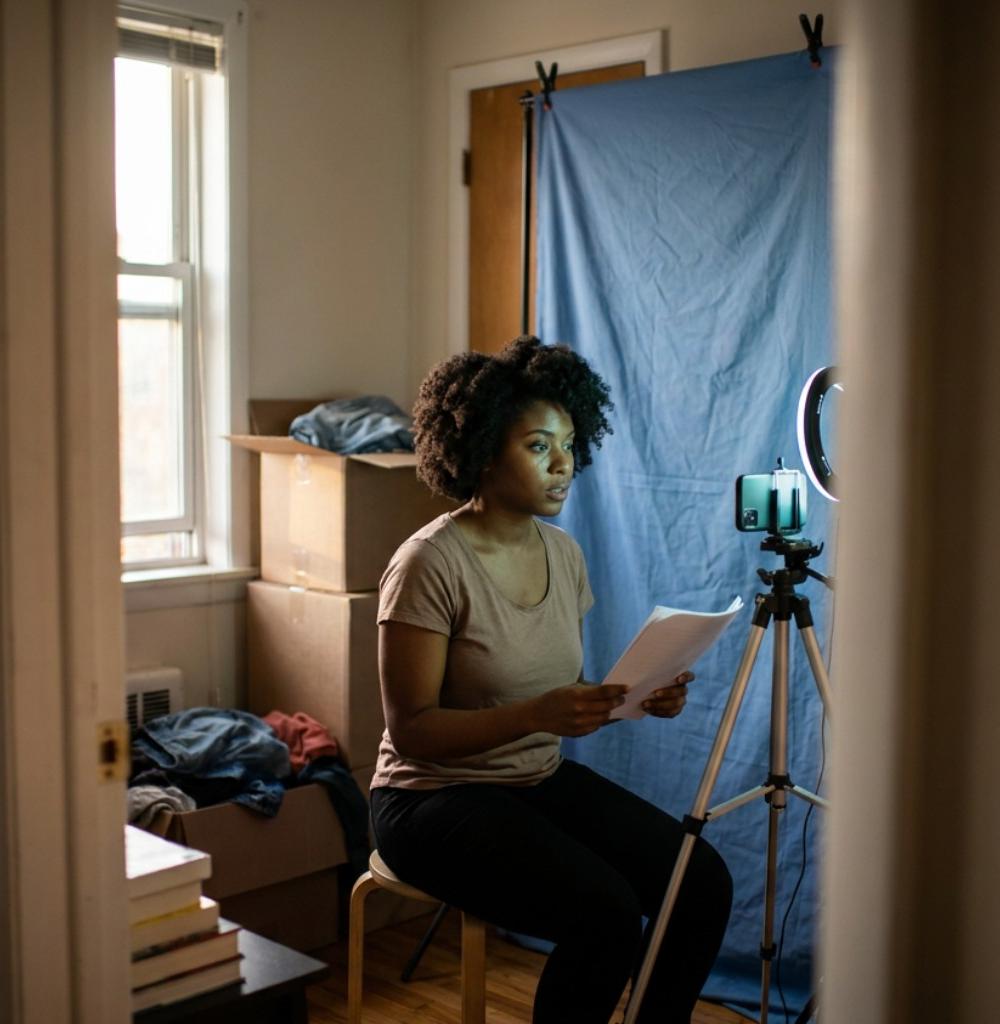
When a self-tape looks amateur, it's almost never the room, the ring light, or the backdrop. It's a feeling the casting director gets in the first few seconds — before your first line even lands — and then every choice after that confirms it. The frustrating part: your acting might be genuinely good. The tape still reads "bedroom experiment" instead of "professional audition," and they move on without knowing exactly why. This is the diagnosis of what triggers that reaction, and the one move that changes it.
Your room isn't what looks amateur. Your performance is sized for a building you're not standing in.
The First Three Seconds Are the Whole Audition
Casting isn't watching your tape the way you watch a movie — they're scanning. In the first three seconds they're not judging your line readings; they're reading your scale, instantly, the way you clock whether a stranger is calm or unhinged before they speak. If it's off, the rest of the tape doesn't get a fair hearing. The verdict — "this person doesn't know how to work on camera" — is already made at a gut level, and now every moment confirms it rather than challenging it.
Why It Feels "Amateur" Specifically
You learned to act somewhere that rewarded bigger — a class, a black box, a school play. You got the note "go further," you went further, and it worked. Then you pointed a phone at yourself and brought that same size, because it's the only setting you were ever trained to use. The lens, though, sits closer than anyone stands in real life except someone about to kiss you or fight you. At that distance, theater-sized work reads like someone screaming a secret. Casting feels it in their body before they can name it, and the name it gets is amateur.
Most actors don't even know they're holding the dial — which is the whole problem. You can't turn down something you can't see.
The One Move That Flips It
Relocate the performance up into your eyes. On a standard self-tape frame — a medium close-up, mid-chest to the top of the head — everything below your chest is cropped out. Hands, gestures, big physical choices: gone. So the acting has to migrate up into the face, the eyes, the thought moving behind them, the breath before you speak. Take the performance you'd send to the back of a theater and put it in the front of your eyes. That single relocation is what separates a tape that reads professional from one that reads amateur.
That's the first move. The full recalibration — voice, stillness, gesture, face, breath — is a six-part method worth learning in order; you'll find the complete six-dial breakdown of acting for camera in this same section. This piece is just the diagnosis and the first step.
Amateur Tells Casting Spots Instantly
- The eyebrow that narrates. Working overtime to prove a feeling the eyes should be carrying.
- Gestures that leave the frame. Energy spent in a region the lens can't even see.
- Volume sized for a room. It overloads the intimacy the mic was built to catch.
- Empty waiting. No thought moving behind the eyes between lines — the tape goes hollow.
- Playing the ending early. Grieving before the character's been told the news.
The Opposite Mistake: Going Dead
Hearing "smaller," many actors drain the life out and call it film acting. That's the other ditch. A professional tape isn't a small take — it's a contained one. Same stakes, same want, same intensity, but the pressure is inside the pipe instead of spraying everywhere. Stillness with a storm underneath reads as power; stillness with nothing underneath just reads as boring. The size comes down; the life must not.
Frequently Asked Questions
How do I know if my self-tape looks amateur?
Watch it back with the sound off. If your face and body are working harder than they would in a real, private conversation at close range, the scale is too big for the lens — and that's what reads as amateur. If your eyes look like they're waiting rather than thinking, it reads hollow, which is the other version of the same problem.
Isn't it really about my equipment and lighting?
Clean light, good sound, and a plain background matter — but they won't save a performance sized for a stage, and casting sees the performance first. Fix the size, then tighten the setup. In that order.
Does this apply to comedy too?
Yes. Comedic energy can be high, but it still has to be calibrated for the lens. Big comic choices that kill in a theater read as mugging on camera. The joke lands through precision, not projection.
I've had training. Why do I still look amateur on tape?
Because stage craft and camera craft aren't the same skill. Your training gave you truth; the lens needs that truth sized down on the outside and up on the inside. It's a calibration gap, not a talent gap — which means it's fixable fast.
If you want your tape to read like professional work — and stop losing the room before your first word lands — HowToSelfTape is free to start. It walks the technical setup and the performance side together, so the frame and the acting finally pull in the same direction.