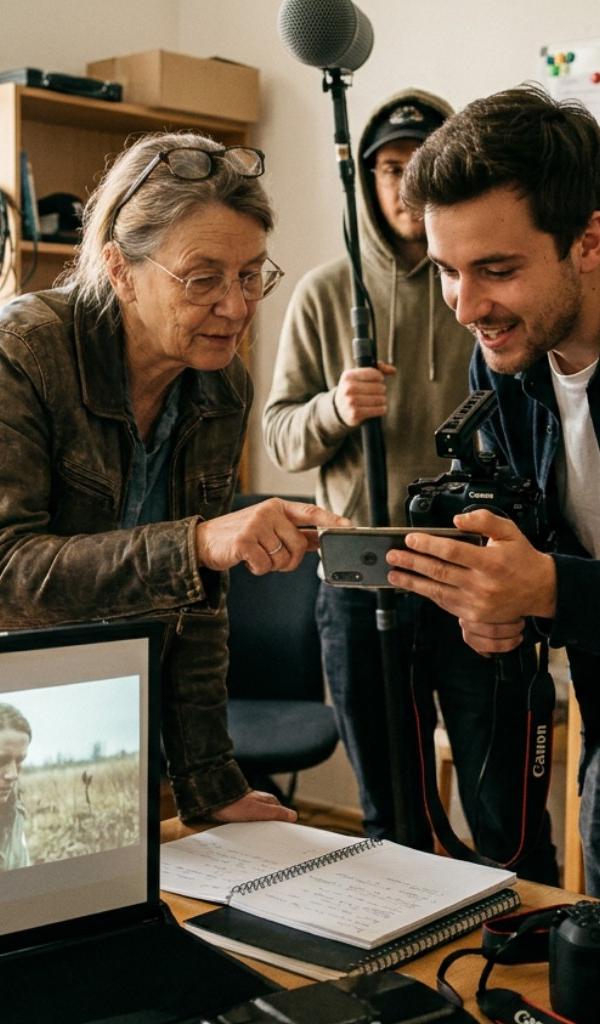

The email arrived on a Tuesday. Short, polite, and absolutely devastating: We appreciate your submission but it doesn't meet our current programming needs. If you've spent eighteen months making an independent film — scraped together a budget, called in every favor, lost sleep over color grades — that sentence lands like a punch to the sternum. Hulu rejected my film, and for about forty-eight hours, I was convinced it was over. It wasn't. What happened next taught me more about distribution than any film school class ever could, and it fundamentally changed how I think about getting an indie film seen.
What a Streaming Rejection Actually Means (It's Not What You Think)
Here's the uncomfortable truth the distribution gatekeepers don't advertise: Hulu, Netflix, Amazon Prime Video, and the other major streamers reject the overwhelming majority of films submitted to them — including genuinely excellent ones. Their acquisition teams are buying for a very specific algorithmic audience, a specific content gap, and often a specific release window that was mapped out six to twelve months in advance. A rejection has almost nothing to do with whether your film is good. It has everything to do with whether your film fits a slot that exists right now inside a machine that's bigger than all of us.
That reframe matters. A lot. Because the moment you stop treating the rejection as a verdict on your work, you start treating it as data about the market — and data is something you can act on.
A streaming pass isn't a grade. It's a scheduling conflict between your film and a spreadsheet you'll never see.
The First Thing to Do After Hulu Rejects Your Film
Don't resubmit immediately. Don't blast the other major streamers with the same package. And please, don't post a wounded rant on social media. All three of those moves burn bridges or waste momentum.
Instead, do this: pull up your submission package and look at it with fresh eyes. What did you submit? A screener link, a one-page synopsis, a trailer? Now ask: does that package tell a compelling acquisition story, or does it just describe the film? There's a brutal difference. Acquisitions executives aren't watching films the way audiences do — they're asking, within the first five minutes, "Who is already waiting for this movie, and how do I reach them?" If your package doesn't answer that question in plain language, the rejection was probably about the pitch, not the picture.
Before you do anything else, rebuild your one-sheet. Identify your core audience with real specificity — not "women 25–54" but "subscribers who binged Fleabag and immediately looked up the next Phoebe Waller-Bridge project." That level of clarity changes the conversation.
Hulu Rejected My Film — So Which Door Opens Next?
The streaming landscape is wider than the four logos everyone mentions in pitch meetings. Consider what's actually out there:
- AVOD platforms (ad-supported video on demand) like Tubi, Pluto TV, and Freevee acquire indie films regularly, often with faster turnaround and no exclusivity windows that lock you out for two years. You won't get a huge advance, but you'll get audience data and a release credit you can leverage.
- Niche SVOD services — platforms built around genre, identity, or interest — are often hungry for exactly the kind of film a major streamer passes on because it's "too specific." Specificity is a bug to a general audience algorithm; it's a feature to a passionate niche subscriber base.
- Educational and library licensing is invisible to most filmmakers and worth serious money. If your film has documentary elements, social justice themes, or historical subject matter, university libraries and nonprofit media organizations license films on multi-year deals. Reach out directly to film studies departments and media literacy organizations — the conversation is almost always welcome.
- International sales agents work the foreign territory market, where your film might have extraordinary value that the U.S. domestic algorithm simply can't see. A drama set in a specific cultural community might be a breakout acquisition in markets where that community has critical mass.
The common mistake is treating these as consolation prizes. They are not. A filmmaker who closes an AVOD deal, a library license, and two international territory sales has built a revenue stack — and a track record — that makes the next film's pitch dramatically stronger.
The Festival Route Isn't Dead — It's a Distribution Strategy
Say you're a filmmaker six months out from picture lock, and a major streaming rejection just landed. This is exactly the moment to think about building a festival strategy with distribution intent rather than prestige chasing. There is a difference.
Prestige chasing is submitting to Sundance, SXSW, and Tribeca and then waiting to see what happens. Distribution intent means mapping festivals by the acquisition executives who attend them, by the audience demographics they draw, and by the press coverage that moves from the screening room to an acquisitions conversation. Mid-tier festivals with strong genre identity — horror, documentary, LGBTQ+ cinema, faith-based — often have acquisitions executives in the room who are actively buying, not just scouting for next year's radar list.
A world premiere at a focused festival, followed by deliberate press coverage and a social media campaign built around real audience response, is often more persuasive to a streaming acquisitions team than a cold submission. You're not pitching a film anymore. You're pitching a film with evidence of an audience. That's a different conversation.
Self-Distribution: Scary Word, Powerful Tool
The streaming model trained us to think of self-distribution as the option you choose when no one wants your film. That's backwards. Self-distribution is what you layer on top of other deals to capture the audience those deals can't reach — or what you choose deliberately when you want to keep the economics in your own pocket.
Platforms that allow direct-to-audience digital sales let you sell or rent your film without surrendering rights. You keep the lion's share of each transaction, you own the customer relationship, and you can run targeted ads to the exact audience you identified when you rebuilt that one-sheet. A filmmaker with a tight, passionate fan base — even a few thousand people — can generate meaningful revenue on a direct platform. More importantly, that audience becomes the proof of concept for your next pitch.
The honest caveat: self-distribution requires marketing budget and marketing attention. It is not "upload and wait." Budget a real number — typically somewhere between $2,000 and $15,000 depending on your campaign scope — and treat it like a production cost, because it is one.
Common Mistakes Filmmakers Make After a Major Rejection
Three patterns show up over and over, and all three are understandable, and all three will hurt you:
- The shotgun resubmission. Blasting the same package to every streamer on the same day signals desperation to acquisitions teams, many of whom know each other. Slow down, refine, target deliberately.
- The indefinite hold. Waiting for a "better" moment to relaunch while your film sits on a hard drive. Films don't age well in a drawer. Momentum is a perishable resource — once the festival window closes and the cast's press cycle ends, it gets harder to generate noise, not easier.
- Ignoring the audience you already have. If you ran a crowdfunding campaign, you have backers who are already invested in your film. If you have social media followers who followed the production, you have a launch audience. Treating those people as an afterthought is the single most common and most expensive mistake in indie distribution.
Building the Next Film's Pitch Before This One Is Done
Here is the move most filmmakers wait too long to make: while you are navigating distribution for your current film, you should be documenting everything — every audience data point, every revenue figure, every festival response — and folding it into the pitch package for your next project. Streamers and financiers don't just buy films. They buy filmmakers with track records. Even a modest, well-documented distribution run on your current film is a track record. It proves you can find an audience. That proof is worth more than a single streaming deal that evaporated.
For a deeper look at how to build the financial architecture of your next project from the ground up, explore our funding and grants coverage — there are real dollars available that most indie filmmakers never apply for.
And if you want a structured framework for all of this — the distribution strategy, the pitch rebuild, the audience-first thinking — FilmmakerGenius is free to start and built specifically for working independent filmmakers who are done waiting for someone else to open a door.
FAQ: Hulu Rejected My Film — Real Answers
Keep reading: Film Distribution Platforms: The Indie Guide, What Hulu Actually Pays Indie Filmmakers, and Deliverables That Kill Distribution Deals (And How to Fix Them).
Can I resubmit to Hulu after a rejection?
Technically yes, but not immediately and not with the same package. Hulu's acquisitions team logs submissions. Resubmitting without meaningful changes — a stronger one-sheet, new audience data, notable festival laurels, or press coverage — is unlikely to produce a different result. Give it at least a year, and give them a reason to look again.
Does a Hulu rejection hurt my chances with Netflix or Amazon?
Not inherently. These platforms don't share rejection lists. What can hurt you is submitting a weak package to all three simultaneously before you've refined your pitch — because you only get one first impression per acquisitions executive, and those executives sometimes move between companies.
How long does streaming acquisition actually take?
When a deal happens, it can close in a matter of weeks. But the average time from submission to any kind of meaningful response — including a pass — often runs three to six months at major platforms. Build your distribution timeline around that reality, and never count a streamer deal as closed until contracts are signed.
Is a distribution deal better than self-distributing?
Neither is universally better. A distribution deal provides reach and credibility; self-distribution provides control and margin. Many successful indie films use both: a territorial or platform deal for core reach, and direct sales for the long tail. The right answer depends entirely on your film's audience, your marketing capacity, and your revenue goals.
Where should indie filmmakers look for distribution support and strategy resources?
Start with the distribution and pre-production planning resources at OnSet Report, and connect with your regional film office — most state and city film commissions maintain lists of distribution consultants and sales agents who work with low-budget independent projects. Industry organizations focused on independent film also run distribution workshops worth attending in person.
The rejection from Hulu was real. The forty-eight hours of despair were real. But so was everything that came after — the rebuilt pitch, the niche platform deal, the audience that found the film because we stopped waiting for permission and went to find them ourselves. Your film deserves to be seen. That is not a platitude. It is a logistical problem with a solvable answer, and the answer almost never lives behind the door that just closed.