
You can build a profile on five legitimate casting platforms before you finish your coffee — tonight, without an agent, without a manager, without a single credit to your name. The work is posted publicly. The submissions are open. The money is real. The only thing standing between you and your first submission is the mistaken belief that someone has to let you in first. Nobody does. So let's stop talking about "starting to audition" and look at the actual map: where you submit, what it pays, and how you climb the ladder from zero footage to a reel that books real jobs.
The Platforms Where Real Work Is Posted Right Now
The big three for actors are Actors Access, Backstage, and Casting Networks. Learn them like you know your home address.
Actors Access lets you build a profile and submit to a massive volume of projects — much of it free or nearly free per submission. It is the single highest-traffic submission platform for film and television work. Backstage runs on a modest monthly subscription and is packed with student films, indie features, commercials, and theater. Casting Networks is where casting directors post directly, particularly for TV and commercial work. Those three platforms alone will surface more legitimate opportunities this week than you have hours to pursue.
Then widen out. Project Casting and Casting Frontier both post commercial and film work. For background and extra work — which pays real money and teaches you how a professional set actually runs — Central Casting operates in the major markets, and regional background agencies cover the rest.
And do not skip the unglamorous gold mine: local Facebook casting groups, your state or city film office's production listings, and university film-school boards. This is exactly where student and indie projects cast. It is also where a complete unknown with a clean self-tape competes on a level field, because nobody else in that pool has an agent either. The playing field is genuinely flat. Take the shot.
Notice something: not one of those platforms required representation to access. You could have a profile on all of them by midnight.
The Honest Money Ladder — What Each Tier Actually Pays
Most actors avoid this conversation. That avoidance costs them. You need to know what you're saying yes to before you say it, so here is the ladder plainly.
Student films and micro-budget shorts. Many pay nothing, or a small meal stipend. But they pay in the currency that actually starts careers: footage, a screen credit, and a reel clip. Early on, "copy, credit, and meals" is not a scam — it is an entry ramp, as long as the project is real and the footage is usable. Take a handful of these strategically to build tape, then graduate.
Background and extra work. This pays real, if modest, money — often somewhere in the range of a hundred to a couple hundred dollars a day, depending on your market and whether the production is union or non-union. SAG-AFTRA background rates are set by contract and change, so verify current numbers at sagaftra.org rather than trusting any figure someone quotes you secondhand. The point stands regardless of the exact number: it is a paid day on a professional set, watching how departments move, sometimes edging you toward union eligibility.
Indie features, regional TV, new media, and commercials. Indie features run from low day-rates into real money as budgets grow. Commercials are the sleeper of the whole ladder. A booked commercial can pay from a few hundred dollars into the thousands once you factor in usage fees — and in union spots, residuals keep arriving in your mailbox long after the shoot day ends. These are the jobs that a stack of self-tapes and a couple of visible credits make genuinely reachable. They are not fantasy. They are the next rung.
Submit for volume now and submit up the ladder as your evidence grows — the tape is your argument, and the argument gets stronger every time you shoot.
The Strategy That Ties the Ladder Together
Here is the approach that connects all of it, and it is the heart of the whole system: submit for volume first, and aim higher as your evidence stacks up.
In your first month, you are not being selective. You are casting a wide net across the free platforms, the student films, the background gigs, and the local indie productions. You are building repetitions and building tape simultaneously. As the footage accumulates, you get selective. You point at the paying jobs your reel now actually qualifies you for. The ladder is real — you just have to be on it to climb it.
This is also why your self-tape quality matters from day one. Not because every student film requires a polished reel, but because the habit of doing it right — every single time — is what makes you dangerous when the paying audition finally lands in your inbox.
How You Submit Matters as Much as Where
Three rules. Follow them and you will immediately be ahead of the majority of submissions in any given breakdown.
Submit fast. Casting often reviews submissions in the order they arrive. A solid tape sent within the first day of a breakdown going live beats a better tape sent on day four. Speed is a competitive advantage that costs you nothing.
Read the breakdown and give them exactly what they asked for. The right type, the right tone, the slate format they specified, the runtime they specified. Most submissions get cut for ignoring the instructions — not for bad acting. Ignoring the breakdown is the single most common mistake, and it is entirely preventable.
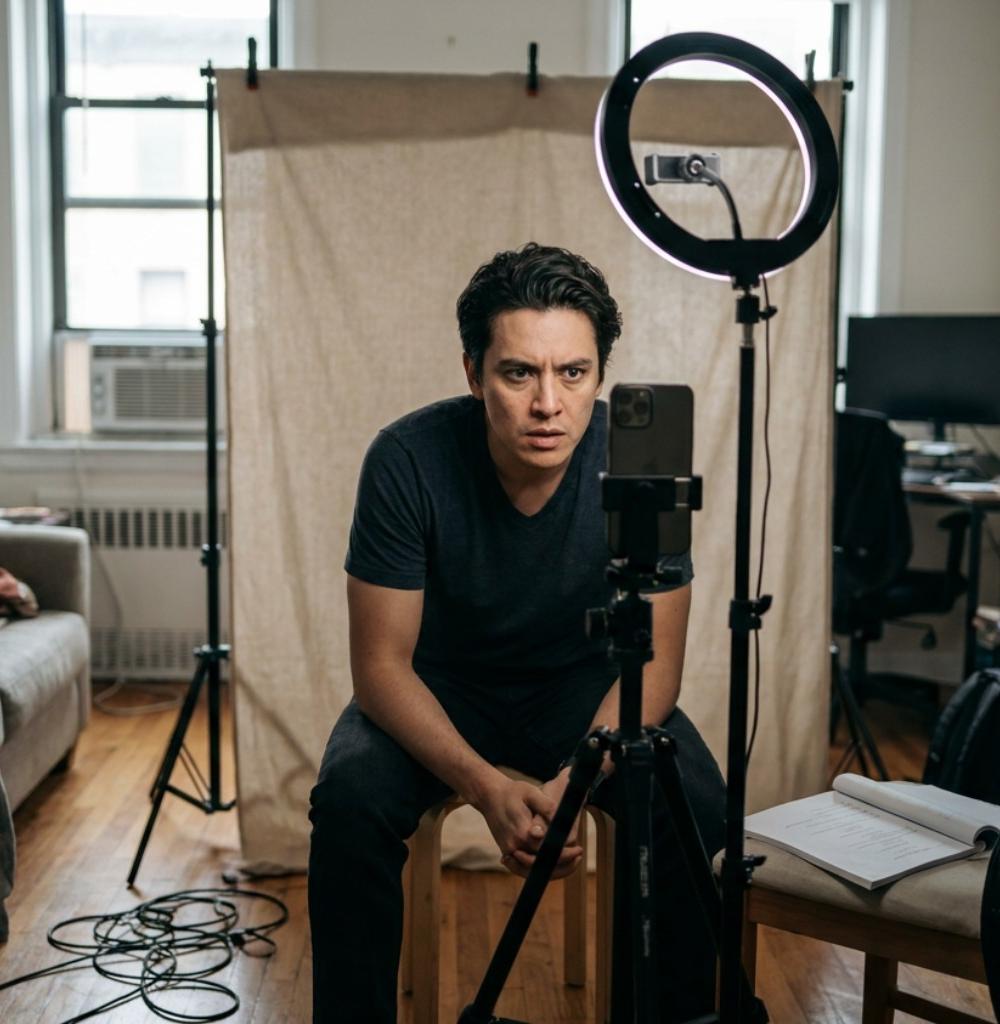
Make the tape clean. Decent light, a plain background, good sound, camera at eye level, and you actually listening — not performing at the camera, listening to your reader. You do not need a three-thousand-dollar rig. You need a phone, a quiet corner, and the discipline to do it right every time. That combination beats an expensive setup used sloppily.
Check out the full audition and casting strategy guides here for deeper dives into breakdown analysis and submission timing.
Common Mistakes That Kill a Submission Before Anyone Watches It
Skipping the slate instructions is number one. If the breakdown says "slated with your name and agent," and you have no agent, say your name and the city you're based in — don't just skip it. Number two: submitting a tape filmed in a cluttered room with an air conditioner running in the background. Casting directors are watching thirty tapes in a row. The one that sounds like a wind tunnel does not get a callback. Number three: waiting until you feel "ready." Ready is a moving target that never arrives. The tape you submit tonight — imperfect, human, real — is worth more than the perfect tape you never send.
And if your headshot or reel isn't pulling its weight on your profile, that is worth fixing before you submit volume — because the headshot is the first thing casting sees before they ever click play.
Your Assignment Tonight
Not this weekend. Tonight, before you sleep: create profiles on Actors Access, Backstage, and Casting Networks. Search your city's film office website for current production listings. Find one regional casting group. Then send your first submission — a student film, a background gig, a local indie. It does not matter which one. What matters is that you press submit before you go to bed, and then you set a target number of submissions to hit every single week from here forward. Volume is the mechanism. Consistency is the engine. One submission tonight becomes a rhythm. A rhythm becomes a reel. A reel becomes a career.
For actors who want to lock down their self-tape setup so every submission looks and sounds like it belongs in that casting director's yes pile, HowToSelfTape is free to start — it is the sharpest practical resource for getting your home studio submission-ready without overspending.
FAQ
Do I need to pay to submit on these platforms?
Actors Access allows many free submissions. Backstage requires a subscription — typically a modest monthly fee worth checking directly on their site for current pricing. Casting Networks pricing varies by market. Between free and low-cost options, you can submit actively before you earn a dollar from acting.
Is background work worth it, or is it a waste of time?
It depends what you're after. Background work pays real money — roughly a hundred to a couple hundred dollars a day in most markets, varying by union status — and puts you on professional sets learning how they operate. It does not build your reel. Treat it as paid education and income, not a stepping stone to principal roles on the same project.
How many submissions should I be sending each week?
There is no magic number, but "one when I feel like it" does not work. Start with a realistic weekly target — say, five to ten submissions — and hold yourself to it. Volume creates data. You learn which breakdowns you fit, which platforms respond to your type, and what your submission is missing. Consistency beats occasional effort every time.
Can I actually book real paying work without an agent?
Yes — and it happens regularly on independent films, commercials, student productions, and background work. Representation helps, especially for network TV and studio work, but the platforms listed here are fully accessible without it. Booking a paying job independently is also one of the strongest arguments you can make when eventually approaching agents.
What if my self-tape setup isn't good enough to submit yet?
Submit anyway, and fix it simultaneously. A quiet room with natural light and a phone propped at eye level is enough to compete for student films and local indie work — which is exactly where you should start. Upgrading your setup is worth doing, but "my setup isn't ready" is almost always fear talking, not honest technical assessment.