
The best commercial audition you'll ever give won't feel like acting at all. It'll feel like you reacted to something completely normal — a good sandwich, a lost sock, a lower interest rate — while a camera happened to be running. That's the whole game behind how to book a commercial: casting isn't hunting for range, it's hunting for a real human being who can sell a feeling in six seconds flat.
To book a commercial, match the brand's tone, submit through both agents and self-submission platforms, and master the self-tape since most first-round auditions happen at home now. Casting wants natural, relatable reactions over big acting. Nail the tagline, stay directable, and keep your materials current so you're ready the moment a breakdown fits you.
What Is Commercial Casting Actually Looking For?
Commercial acting runs on a different engine than film and TV. Nobody's grading your dramatic range. They're testing whether you can convincingly feel relief, delight, confidence, or warmth in the time it takes to read a stop sign. The actor who books is almost always the one who feels the most real and the least like they're performing.
Before your next audition, actually watch a few spots the brand already runs. Notice the tone: a fast-food chain wants big, loose, playful energy; a bank or insurance company wants calm and trustworthy. Matching that energy before you even open the sides is half the audition.
How Do You Get Seen: Agents vs. Self-Submission?
Most working actors use both paths at once.
- Commercial agents submit you to breakdowns you'd never see on your own. Landing one starts the same way getting any talent agent does — a short, professional email with a current headshot and any footage you have. Many actors sign commercial representation well before theatrical representation, since commercial rosters are larger and churn faster.
- Self-submission platforms like Actors Access and Casting Networks let you submit yourself directly to open commercial calls. A huge number of actors book their first paid regional or national spot this way, with no agent involved at all.
Either way, your headshot is doing more work in commercials than almost anywhere else — casting scrolls hundreds of thumbnails per role, and a bright, current, unmistakably-you shot (see our guide on what actually makes a headshot book work) is what stops the scroll.
How Do You Nail the Self-Tape, Since Most Auditions Live There Now?
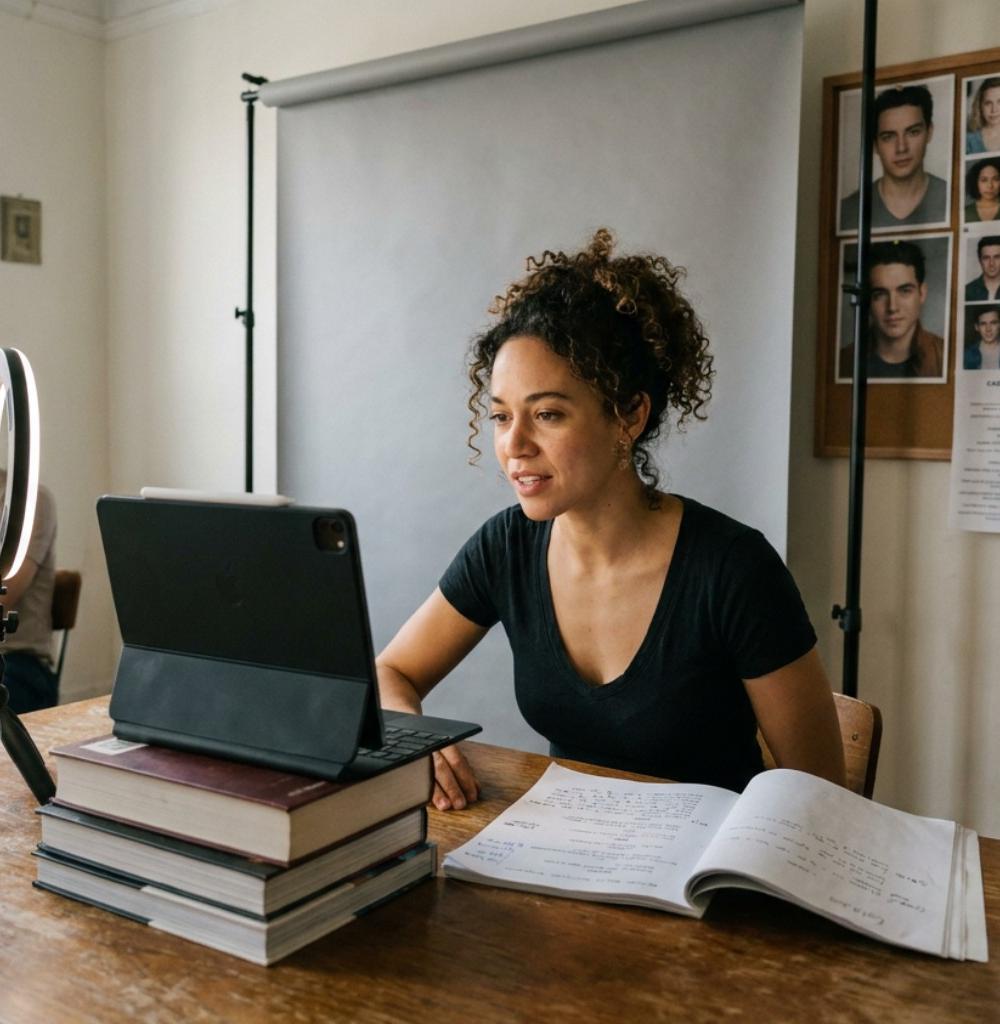
The majority of first-round commercial auditions never happen in a room anymore — they happen on your own camera, on your own time. That means your home setup directly affects how often you book. You don't need expensive gear. You need control over the fundamentals: correct framing (usually chest-up, eyes in the upper third), soft even light on your face, quiet clean audio, a plain background, and a reader feeding you lines off-camera so your reactions land honestly. Our full self-tape audition guide and quick pre-send checklist both walk through the setup in detail.
Read the breakdown closely and give them exactly what's asked for — commercial breakdowns are often specific down to the beat, like a "smile and say the tagline" moment or a "look and react" shot. Deliver that cleanly first. Then, if the instructions allow a second take, offer one genuinely different option.
What Actually Books the Room, or the Take?
A few habits consistently separate the actors who book from the ones who don't. Lead with your eyes and your reaction — so much of commercial work is nonverbal, and the product moment sells in your face before you say a word. Keep your energy up but grounded; camera flattens everything, so most actors need to bring slightly more life than feels natural without tipping into fake. Hit the tagline like you mean it, like you actually use the product, instead of throwing it away at the end. And stay directable — if you get an adjustment, whether live or as a redirect note on tape, make a visible, committed change. Casting is quietly testing whether you're easy to work with on a set where every minute costs money.
Common Mistakes That Sink Commercial Auditions
The most common one is playing it as a scene instead of a moment — overacting the "big" emotion instead of just having a real, specific reaction. A close second is ignoring the brief entirely and doing your own creative take on a role that had explicit direction attached. And a quiet dealbreaker: sloppy self-tape audio. Casting will forgive a modest background before they'll forgive audio they can't understand.
The actor who books the toothpaste ad isn't the best actor in the room. They're the one who forgot they were selling toothpaste.
How Do Callbacks and Bookings Actually Work?
A callback means you're one of a handful being seriously considered, often in front of the client and the ad agency. Wear the same or a very similar wardrobe to your first audition — they liked that version of you, so give them that version again rather than reinventing your choices. If you book, you'll be asked about availability for fitting and shoot dates. Commercials pay through session fees and, for union work, usage or residuals tied to where and how long the spot runs — always get the details in writing before the shoot.
Frequently Asked Questions
Do I need a commercial agent to book commercials?
No. Self-submission platforms let non-represented actors book real, paying commercial work every day. An agent expands your access to breakdowns you'd never see otherwise, but it isn't required to start — plenty of actors build a commercial résumé through self-submission first and sign representation later.
How much do commercials actually pay?
It varies enormously by market and usage. A non-union local spot might pay a flat few hundred dollars. A union national commercial can pay a session fee plus residuals that add up to thousands over the life of the campaign, depending on how widely and how long it airs. See our realistic breakdown of what actors actually earn for the full picture.
What's the difference between union and non-union commercial work?
Union commercials, covered under SAG-AFTRA agreements, guarantee minimum session pay and residuals when the spot airs. Non-union work often pays a single flat fee with no residuals, regardless of how often the ad runs. Both are legitimate ways to build credits, but union work generally pays more over time.
How many commercial auditions does it take to book one?
It's a numbers game layered on a skill. Even full-time working commercial actors typically audition far more often than they book — a ratio where booking one out of every ten to twenty auditions is considered solid. Treat every audition as a rep that sharpens your read, not a referendum on your talent.
Booking commercials consistently comes down to reps: refine your self-tape setup, study the brand's tone before every audition, and be the easiest, most pleasant person in the process. A tool like GotAuditions can help you build those reps faster, with self-tape practice and direct casting submissions, free to start. Stay consistent and the bookings follow.